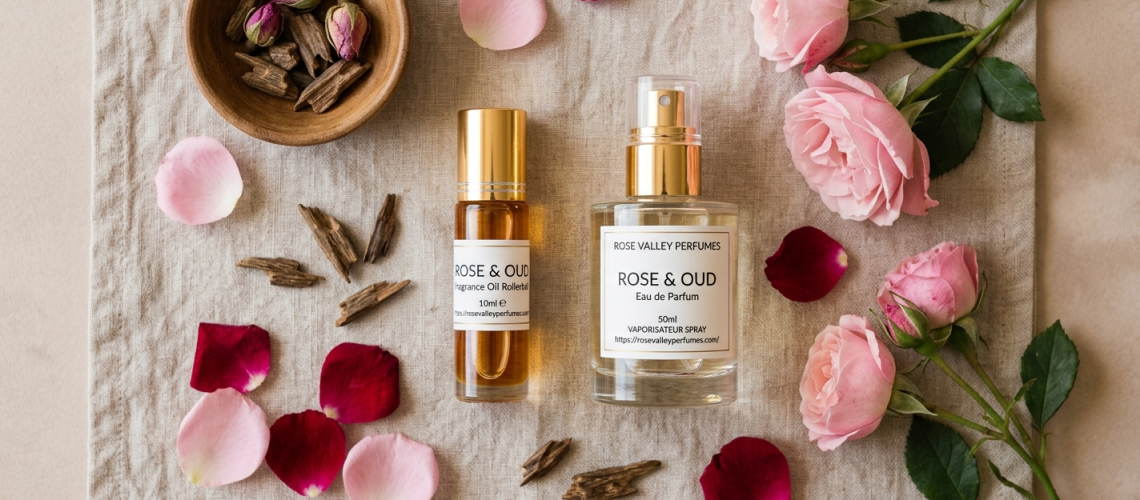
Fragrance oil is a concentrated, alcohol-free aromatic compound suspended in a carrier oil base such as jojoba or fractionated coconut oil. Spray perfume is an alcohol-and-water solution infused with aromatic compounds. The core difference is the delivery system – fragrance oils release scent slowly and intimately against the skin, while spray perfumes project scent outward with a stronger burst that fades as the alcohol evaporates.
Fragrance Oil vs Perfume: Side-by-Side Comparison
| Feature | Fragrance Oil | Spray Perfume |
| Base Carrier | Carrier oil (jojoba, coconut, DPG) | Denatured alcohol + water |
| Alcohol Content | None | Yes |
| Scent Projection | Intimate, close to skin | Strong and wide-reaching |
| Longevity on Skin | 8–12+ hours | 3–8 hours (tier-dependent) |
| Best Skin Type | Sensitive, dry, reactive | Normal, oily, combination |
| Application Method | Dabbed on pulse points | Misted on skin, hair, clothing |
| Travel-Friendly | Excellent (spill-proof rollerball) | Good (subject to 100ml rules) |
| Cost Per Wear | Often more economical | Variable by brand |
| Best For | Daily wear, sensitive skin | Events, social occasions |
Why the Fragrance Oil vs Perfume Debate Actually Matters
Here is a scenario most fragrance buyers have experienced. You find a scent you love online. It is listed in two formats – a 10ml fragrance oil rollerball and a 50ml spray perfume. Same name, completely different products, different prices, and absolutely no explanation of why both exist or which one performs better for your lifestyle.
This is not accidental. The fragrance industry has long left this distinction blurry, because a confused buyer often ends up purchasing both. This guide cuts through all of that.
Understanding the fragrance oil vs perfume difference matters because:
- The two formats differ fundamentally in chemistry, skin biology, and longevity mechanics.
- The wrong choice for your skin type can mean a scent that fades within two hours instead of lasting all day.
- The wrong choice for your climate – especially in Dubai and the UAE – can waste your money on a spray that evaporates before you leave home.
- Knowing how each format works on your skin gives you a genuine advantage when buying online or in-store.
Whether you are in Dubai looking for an authentic alcohol-free Arabic fragrance oil, or anywhere in the world seeking the right scent for your skin and lifestyle, this complete comparison covers everything you need to make a confident, informed decision.
What Is a Fragrance Oil? (The Full Definition)
Defining Fragrance Oil – Beyond the Marketing Label
A fragrance oil is a concentrated aromatic compound – synthetic, natural, or a blend of both – suspended in a carrier oil base. The carrier oil is the delivery vehicle that makes alcohol-free fragrance possible.
Common carrier bases used in quality fragrance oils:
- Jojoba oil – closely resembles human sebum, non-comedogenic, and offers excellent compatibility with all skin types including sensitive and acne-prone skin.
- Fractionated coconut oil – lightweight, absorbs quickly into the skin, and leaves no greasy residue after application.
- Sweet almond oil – naturally emollient, well-suited for dry and mature skin, and helps extend fragrance longevity.
- DPG (dipropylene glycol) – a synthetic, odorless, and colorless base with excellent skin absorption properties, widely used in professional and niche fragrance oil production across the Middle East.
The most important structural characteristic of any fragrance oil is simple: there is no alcohol in it. This is not a bonus feature or a marketing angle – it is the foundational chemical difference that drives every other performance distinction between oils and sprays.
Key concentration facts about fragrance oils:
- Aromatic compound concentration typically ranges from 15% to 30% of the total formula.
- This is significantly higher than EDC and EDT spray formats.
- It is directly comparable to EDP and Extrait tiers of spray perfumes.
- Because aromatic compounds sit in oil rather than alcohol, they do not evaporate rapidly on skin contact.
- They release gradually as your body heat warms the oil layer – giving fragrance oils their characteristic slow, steady, all-day performance.
Two Types of Fragrance Oil That Most Articles Never Distinguish
Not all fragrance oils are the same product. Grouping them together without distinction causes real confusion when comparing performance and safety.
Synthetic and Blended Fragrance Oils
These are lab-engineered aromatic compounds designed either to replicate natural scents such as rose, oud, or sandalwood, or to create entirely new accords that do not exist in nature.
Key characteristics of synthetic and blended fragrance oils:
- More chemically stable than pure botanical extracts.
- Longer shelf life and consistent batch-to-batch performance.
- Available in a wider range of scent profiles than natural alternatives.
- The majority of commercially sold fragrance oils – including Arabian fragrance oils, oriental fragrance oil blends, and designer-inspired oils – fall into this category.
Natural Essential Oil Blends (Attars and Ittars)
These are fragrance oils derived directly from botanical sources through steam distillation or hydrodistillation, then fixed into a natural base oil – traditionally sandalwood.
Key characteristics of natural attars and ittars:
- Derived entirely from flowers, herbs, spices, barks, and roots.
- Fixed in a sandalwood or wood-based carrier that itself adds depth and longevity.
- Represent one of the oldest fragrance traditions in human history, rooted in South Asia, the Middle East, and North Africa.
- Premium Kannauj attars – the gold standard of the attar world – are produced using the same traditional deg-bhapka copper distillation method practiced for over 400 years.
- Deeply personal in wear because they interact uniquely with each person’s individual skin chemistry.
Skin-Grade Fragrance Oil vs. Non-Skin-Grade – A Critical Distinction
Fragrance oils are also widely used in candles, room diffusers, soap making, and cleaning products. These are not the same as skin-grade fragrance oils, and this difference is more important than most buyers realize.
Key facts every fragrance oil buyer should know before purchasing:
- Non-skin-grade fragrance oils are formulated for diffusion into air or soap bases – not for direct skin contact.
- They may contain aromatic compounds at concentrations not approved under IFRA (International Fragrance Association) guidelines for dermal application.
- Applying candle or diffuser fragrance oil directly to your skin can cause contact sensitization in susceptible individuals.
- Always confirm that a fragrance oil is explicitly labeled for skin use before applying.
- Reputable fragrance brands and stores selling skin-grade fragrance oils will indicate IFRA compliance clearly on the product listing or packaging.
- When in doubt, contact the seller directly and ask whether the oil is formulated for skin contact.
What Is a Spray Perfume? (Everything You Need to Know)
The Precise Definition of Spray Perfume
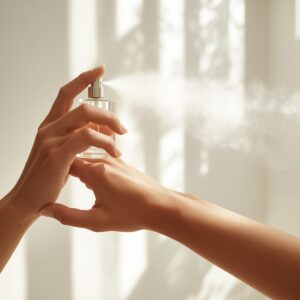
A spray perfume is an alcohol-water-aromatic compound solution. Denatured alcohol – most commonly SD Alcohol 40-B in fine fragrance formulations – serves as the primary delivery carrier. When you spray a perfume onto your skin, the alcohol evaporates within seconds, projecting aromatic molecules outward into the air around you. This rapid evaporation is the precise mechanism behind the strong opening burst and wide scent projection that spray perfumes are known for.
Three things alcohol does in a spray perfume:
- Carries and projects aromatic molecules into the air immediately upon application.
- Creates sillage – the scent trail and cloud that others experience as you move through a space.
- Controls evaporation speed – the rate at which scent layers unfold and transition on the skin.
Alcohol in spray perfume is not a filler. It is a deliberate, engineered delivery technology. Without it, aromatic compounds would not project, would not create sillage (the scent trail you leave behind in a room), and would not perform the way a spray perfume is designed to.
Fragrance Concentration Tiers – What the Percentages Actually Mean for Your Wear
Most people are familiar with terms like EDP and EDT, but understanding what the percentages mean for real daily wear is where the genuine value of this knowledge lies.
| Concentration Tier | Aromatic Compound % | Expected Longevity |
| Eau Fraîche | 1–3% | Under 1 hour |
| Eau de Cologne (EDC) | 2–4% | 1–2 hours |
| Eau de Toilette (EDT) | 5–15% | 2–4 hours |
| Eau de Parfum (EDP) | 15–20% | 4–6 hours |
| Parfum / Extrait de Parfum | 20–40% | 6–8+ hours |
Critical insight: The real fragrance oil vs perfume performance debate is not simply oil versus spray – it is oil versus equivalent concentration spray. A well-formulated EDP or Extrait at 20–30%, applied to moisturized skin, can approach or even match the longevity of a standard fragrance oil. The widely repeated claim that “oils always outlast sprays” is only reliably true when the spray is an EDT or lower.
The Fragrance Note Pyramid – How Sprays Reveal Scent Differently

Spray perfumes reveal their composition in three distinct layers, following the fragrance pyramid that every perfumer works with. This is one area where sprays offer a sensory experience that oils structurally cannot replicate in the same way.
The three stages unfold in this sequence:
- Top Notes – The lightest, most volatile molecules: citrus, herbal, green, and fresh compounds. They evaporate first, usually within 15 to 30 minutes, and create the immediate opening impression that defines your very first encounter with a fragrance. Common top notes include bergamot, lemon, lime, and green tea.
- Heart Notes (Middle Notes) – These emerge as the top notes fade and form the core identity of the scent – florals, spices, and woody accords. They typically last one to three hours before transitioning into the base. Common heart notes include rose, jasmine, oud, and cardamom.
- Base Notes – The heaviest, slowest-evaporating molecules that linger longest on the skin. They form the dry-down that stays on skin for hours after application. Common base notes include agarwood and oud, musks, resins, amber, sandalwood, and vanilla.
Fragrance oils tend to compress or blend all three note layers simultaneously, delivering a more unified, rounded scent profile from the moment of application. Neither experience is superior – they are genuinely different olfactory expressions, and many fragrance enthusiasts deliberately choose between them based on this distinction alone.
Fragrance Oil vs Perfume: The Science Behind How Each One Works on Skin
This is the section most fragrance oil vs perfume comparisons skip entirely – and it is the one that explains everything else about why these two formats perform so differently.
How Fragrance Oil Behaves on Your Skin
When you apply fragrance oil to your skin, the carrier oil creates a thin occlusive layer on the skin surface. This layer slows the evaporation of aromatic molecules – the primary physical reason fragrance oils outlast low-to-mid-concentration spray perfumes.
Key things that happen when you wear a fragrance oil:
- Your body heat gradually warms the oil layer throughout the day, releasing aromatic molecules at a continuous, steady rate rather than all at once.
- This creates the characteristic “skin scent” effect – an intimate fragrance presence that feels like it comes from the wearer, not a cloud surrounding them.
- The oil interacts deeply with your natural skin sebum and individual biochemistry, which is why the same fragrance oil can smell noticeably different on two different people.
- Published research exploring the physical and chemical interactions between skin and perfume confirms that scent molecules deposited in a lipid base interact with the skin surface and can undergo subtle transformations based on individual body chemistry.
- This personal scent transformation is precisely why Arabian fragrance oils and traditional attars feel so signature-like – the oil locks into your skin chemistry and becomes uniquely yours over time.
How Spray Perfume Behaves on Your Skin
Denatured alcohol evaporates within seconds of contact with skin. During that brief window, it carries aromatic molecules rapidly upward and outward – creating the projection burst that defines the opening moments of any spray perfume.
The exact sequence after you spray a perfume:
- Alcohol contacts skin and begins evaporating within seconds of application.
- Volatile top note molecules are carried upward and outward into the air, creating the immediate burst of sillage and projection.
- Within 15 to 30 minutes, the alcohol has largely evaporated from the skin surface.
- The remaining aromatic compounds – the heart and base notes – settle onto the skin.
- From this point, the fragrance behaves increasingly like a dry oil phase, releasing slowly as body heat continues to activate the remaining compounds.
- The final dry-down phase can last 3 to 6 hours or more, depending on concentration tier and skin type.
The perceived “fading” that many people notice after the first hour is simply the normal transition from top notes to dry-down – it is not a defect in the fragrance. It is exactly how spray perfume was designed to perform.
The Skin pH Factor – The Angle Almost No Fragrance Article Covers
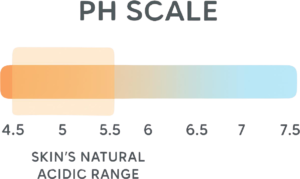
Human skin naturally maintains a pH of 4.5 to 5.5, making it mildly acidic. This acidity forms the protective acid mantle that regulates the skin microbiome and barrier function. It also actively influences how fragrance compounds develop on your skin – a fact that explains why the same scent smells different on different people.
How your skin’s pH affects fragrance performance:
- More acidic skin (lower pH) breaks down fragrance molecules faster, causing scents to fade more quickly on some people regardless of the format used.
- Higher pH skin can enhance certain notes such as amber and vanilla while diminishing others – this is why the same perfume can smell richer on some people and sour on others.
- Oily skin produces more sebum, which acts as a natural fixative for fragrance molecules and significantly extends wear time for both oils and sprays.
- Dry skin has fewer lipids for fragrance molecules to bind to, causing faster evaporation and shorter overall wear – moisturizing before application is the single most effective practical fix for this.
- Alcohol in spray perfumes temporarily disrupts the skin’s acid mantle on the application site, which directly affects how the middle and base notes develop during dry-down.
- Dehydrated skin on any given day can cause the same EDP to smell noticeably different compared to a day when the skin is well-moisturized.
Practical tip: Apply a thin layer of unscented moisturizer before using either fragrance format. This creates a neutral lipid layer that extends longevity for both oils and sprays while protecting the skin barrier against repeated alcohol exposure.
Fragrance Oil vs Perfume: Which Lasts Longer?
Correcting the Most Common Misconception in the Fragrance World
“Fragrance oils always last longer than spray perfumes.”
You have read this claim countless times. It is not universally true, and accepting it without question leads to poor purchasing decisions. The honest answer depends on four specific variables:
- Concentration tier – A 30% Extrait spray can rival or exceed a standard fragrance oil in longevity.
- Skin type – Oily skin extends both formats; dry skin reduces both.
- Climate – Heat accelerates alcohol evaporation in sprays far more than it affects carrier oils – a critical factor in Dubai and the UAE.
- Application method – Rubbing wrists together, spraying at the wrong distance, and applying to the wrong areas all reduce performance for both formats.
When fragrance oils reliably win on longevity:
- When compared against EDC and EDT spray formats.
- When worn on dry or sensitive skin in hot or dry climates, such as the UAE and Dubai environment.
- When applied correctly to pulse points without rubbing.
- When the wearer relies on a single application throughout the full working day.
- When the oil is a high-quality mid-range to premium formulation rather than a budget mineral-oil base.
When a spray perfume can match or exceed a fragrance oil:
- High-concentration EDP or Extrait formats on well-moisturized, normal-to-oily skin.
- In cooler, more humid climates where alcohol evaporates more slowly.
- When the fragrance is rich in heavy base notes such as oud, resins, musks, and sandalwood – all natural fixatives that strongly resist evaporation.
- When applied to multiple pulse points rather than a single wrist.
Longevity vs. Sillage – Two Different Metrics That Most Articles Confuse
Most fragrance oil vs perfume comparisons treat longevity and sillage as the same measurement. They are not – and understanding the difference is essential for choosing the right format.
Longevity defined:
- How long the scent remains detectable to the wearer.
- What you notice when you catch your own fragrance throughout the day.
- Oils typically win here.
Sillage (pronounced “see-yazh”) defined:
- How far the scent projects and the trail it leaves behind for others to detect.
- What people mean when they say someone smells incredible as they walk past.
- Sprays typically win here.
The practical takeaway:
| Your Priority | Better Choice |
| Wearing fragrance all day without reapplying | Fragrance Oil |
| Making a strong impression when you enter a room | Spray Perfume |
| Both longevity and presence | Layer oil + spray together |
Fragrance Oil vs Perfume Performance by Real-World Context

| Context | Better Choice | Why |
| Office – 8-hour workday | Fragrance Oil | All-day wear without reapplying; intimate projection suits close-contact settings. |
| Evening event or date night | Spray Perfume (EDP) | Strong opening impression and clear sillage for social environments. |
| Hot climate or outdoors (Dubai summers) | Fragrance Oil | Heat evaporates alcohol almost instantly; carrier oil is far more thermally stable. |
| Travel and flights | Fragrance Oil | Rollerballs pass security screening and are spill-proof at altitude. |
| Cold weather and indoor events | Spray Perfume (EDP/Extrait) | Cooler air slows alcohol evaporation and extends projection significantly. |
| Gym or physical activity | Light Spray (EDT) | Heat and movement activate the spray beautifully; oil can feel heavy under exertion. |
| Sensitive or dry skin | Fragrance Oil | No alcohol means no barrier disruption or drying effect. |
The Layering Technique: The Best of Both Fragrance Worlds
This is the technique used by professional fragrance consultants, experienced collectors, and fragrance lovers across the Middle East and South Asia for generations. Yet it is rarely mentioned in mainstream comparisons.
Here is exactly how to do it:
- Apply the fragrance oil first to your pulse points – inner wrists, base of the throat, behind the ears.
- Wait one to two minutes for the oil to settle fully into the skin.
- Apply a light mist of a matching spray perfume over the oil layer from a distance of 15–20cm.
What this layering technique achieves:
- The oil provides the longevity anchor – the scent stays present on your skin throughout the entire day.
- The spray provides the sillage burst – the opening projection and scent trail that creates a strong first impression on others.
- The combination delivers all-day wear with a memorable opening – something neither format achieves alone at standard concentrations.
- Layering two compatible scents from the same olfactory family creates a depth and complexity that a single product cannot replicate.
Pro tip: Use the same fragrance in both formats if available. If not, pair scents from the same family – oriental with oriental, oud with oud, floral with floral – to ensure the combination works harmoniously on your skin rather than competing.
Fragrance Oil vs Perfume: Which Is Better for Your Skin?
Fragrance Oil and Skin Health – The Real Benefits and the Honest Caveats
The alcohol-free nature of fragrance oils gives them a structural skin health advantage that is backed by dermatological principle, not just marketing claims.
The genuine skin benefits of quality fragrance oils:
- No dehydrating alcohol means the skin barrier is not disrupted with daily use – a meaningful benefit for anyone applying fragrance every single day.
- Carrier oils such as jojoba closely resemble human sebum and are non-comedogenic, making them compatible with most skin types including acne-prone skin.
- Fractionated coconut oil absorbs quickly without leaving any greasy residue.
- Carrier bases actively support the skin barrier rather than simply carrying scent as a passive vehicle.
- People who apply fragrance daily to the neck or wrist notice improvements over time when switching from spray to oil, particularly if their skin has shown signs of dryness or irritation from regular spray use.
The honest caveats – oils are not automatically safe for everyone:
- Synthetic aromatic compounds in low-quality or candle-grade fragrance oils can and do cause contact dermatitis in susceptible individuals.
- The quality of the aromatic compound blend and the carrier oil base matters enormously to actual safety outcomes.
- A poorly formulated, cheap oil in a mineral oil base can be more irritating than a well-formulated high-quality EDP.
- The absence of alcohol does not automatically mean hypoallergenic.
- Always patch test any new fragrance oil before full use.
Best suited for these skin types:
- Sensitive skin.
- Dry and mature skin.
- Reactive and eczema-prone skin.
- Post-shave skin where the barrier is temporarily compromised.
- Post-procedure skin during recovery.
Spray Perfume and Skin Health – What the Evidence Actually Shows
Denatured alcohol in spray perfumes – most commonly SD Alcohol 40-B in fine fragrance formulations – is a known cutaneous irritant with repeated high-volume use on the same skin area.
What the evidence consistently confirms:
- Frequent alcohol application on the same skin patch can cause progressive acid mantle disruption over time.
- People who spray heavily on the same neck area daily without moisturizing may develop surface dryness or minor irritation, particularly in dry climates like the UAE during cooler months.
- Many modern fine fragrance formulations now include skin-conditioning additives such as glycerin, panthenol, and hydrolyzed proteins that partially offset drying effects – so not all sprays are equally drying.
- If you spray once or twice daily on clean, moisturized skin, the drying effect of a well-formulated EDP is unlikely to be significant for most people with normal skin.
- The drying risk increases proportionally with application frequency, not just format.
Best suited for these skin types:
- Normal skin.
- Oily and combination skin.
- Skin that tolerates alcohol-based products without visible irritation.
- Hair and clothing application, where skin drying is not a concern.
The Allergen Reality – What Most Fragrance Guides Never Tell You
This is the aspect of the fragrance oil vs perfume conversation that almost no mainstream article discusses honestly – yet it matters for every buyer regardless of skin type or format preference.
What EU and international regulation confirms:
- The European Union, under Regulation (EC) No. 1223/2009, originally mandated individual labeling of 26 recognized fragrance allergens on product packaging.
- In 2023, EU Regulation 2023/1545 expanded this requirement to more than 80 allergens and groups, with compliance deadlines running through July 2026.
- This regulation applies to both fragrance oils and spray perfumes – the format makes no legal difference to the allergen labeling obligation.
- An estimated 1% to 9% of the EU population is allergic to at least one fragrance allergen, according to European Commission scientific committee assessments.
The fact that surprises most people:
- Fragrance oils marketed as “natural,” “pure,” or “botanical” are not automatically safer from an allergy standpoint.
- Natural compounds including linalool, limonene, and eugenol – all found in plant-derived attars and essential oil blends – are among the most frequently documented contact allergens in clinical dermatology.
- A “100% natural” attar or ittar requires the same patch test diligence as any synthetic option.
- Clean and natural labeling does not equal hypoallergenic.
The practical rule for every buyer – every single time:
- Read the full ingredient list before purchasing, regardless of format.
- Apply a small amount to the inner forearm.
- Cover loosely and wait 24 to 48 hours.
- Check for redness, itching, or any skin reaction before full use.
- Never skip this step regardless of price point, “natural” labeling, or skin type marketing claims.
How to Apply Fragrance Oil and Spray Perfume Correctly
Most people apply both formats in ways that directly reduce performance. These are not trivial details – they make a measurable, real-world difference in how long a scent lasts and how well it develops on your skin.
How to Apply Fragrance Oil Correctly – Complete Step-by-Step Guide
 Start with clean skin.
Apply to recently washed skin, either fresh from a shower or after cleaning the pulse-point area. Old fragrance residue and accumulated skin oils will interfere with the new scent’s development and may alter how it smells on your skin.
Apply to slightly damp skin for better results.
Apply the oil within one to two minutes of patting your skin dry after a shower. The slight residual moisture helps the carrier oil bind more effectively and can noticeably improve longevity – particularly beneficial for dry skin types in hot, low-humidity climates like Dubai.
Target your pulse points precisely.
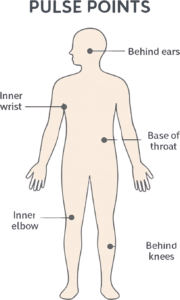
Pulse points are areas where blood vessels run close to the skin surface, generating consistent warmth. This warmth continuously activates the oil layer and diffuses aromatic molecules throughout the day.
Primary pulse points for fragrance oil:
- Inner wrists.
- Base of the throat.
- Behind the ears.
- Inner elbows.
- Behind the knees.
Dab – do not rub. This single step makes the biggest difference.
- Place the rollerball or bottle stopper directly on the pulse point.
- Press gently to deposit the oil.
- Do not rub your wrists together afterward.
- Rubbing generates friction heat that accelerates evaporation of top note compounds – the molecules responsible for the opening impression.
- You effectively destroy part of the fragrance experience before it has a chance to develop.
Layer over unscented moisturizer if you have dry skin.
- Apply a thin layer of fragrance-free moisturizer on the pulse points before the fragrance oil.
- This creates a lipid base that dramatically improves longevity.
- The oil has more surface to bind to and releases more slowly throughout the day.
- For anyone with dry skin in a hot climate like Dubai, this is the single highest-impact application technique available.
Store your fragrance oil correctly.
Fragrance oils degrade significantly faster than spray perfumes when exposed to heat, UV light, or air.
- Keep in the original dark glass bottle.
- Store away from windows, bathroom counters, and radiators.
- A cool, dark drawer or cabinet is the ideal storage location.
- Avoid leaving rollerballs in hot cars – the UAE summer heat can degrade aromatic compounds quickly.
- Properly stored, quality fragrance oil remains stable for one to three years.
important warning most guides skip: Carrier oils can leave oil-based stains on fabric, particularly on light-colored, silk, or delicate materials. Apply fragrance oil to skin only – never directly onto your clothing or accessories.
How to Apply Spray Perfume Correctly – Complete Step-by-Step Guide
Hold the bottle at the correct distance.
- Keep the bottle 15 to 20 centimeters (6 to 8 inches) from the skin.
- Spraying too close deposits a concentrated wet spot rather than an even, dispersed mist.
- The mist needs airspace to properly disperse into a fine cloud before landing on the skin.
- Too far away wastes product into the surrounding air.
Apply to skin before clothing.
- Spray onto skin first, particularly if you want the full note progression from top to base.
- Fabric application skips the top note phase entirely – you jump straight to heart and base notes.
- Skin application allows the full aromatic arc to develop as the perfumer intended.
- Apply to pulse points: inner wrists, base of the throat, and behind the ears.
Do not rub wrists together after spraying.
- The same friction-and-heat principle that applies to oils applies to sprays equally.
- Let the fragrance air-dry naturally on the skin surface after application.
- Never blot spray perfume with a tissue – this removes the top note layer prematurely.
Use the brush technique for hair application.
Hair holds fragrance molecules beautifully, releasing them with every movement throughout the day. But spraying alcohol-based perfume directly onto hair can cause protein damage with repeated use.
Do this instead:
- Spray the perfume onto a clean hairbrush.
- Run the brush through your hair as normal.
- Enjoy the scent-holding benefits with no direct alcohol contact on the hair shaft.
- This technique works especially well with Oriental and Arabic perfumes that have heavy base note character.
Do not spray into the air and walk through it.
- This popular technique disperses approximately 70 to 80% of the product into the surrounding air.
- Negligible fragrance actually deposits on the skin.
- It wastes the majority of the product and performs significantly worse than direct pulse-point application.
- Reserve this technique for fragrance-scenting your hair only, and only if you do not have a brush available.
Fragrance Oil vs Perfume: The Real Cost Comparison
The Cost-Per-Wear Calculation That Changes Everything
Fragrance oils appear expensive per milliliter compared to spray options. A 10ml rollerball at AED 150 looks steep against a 50ml EDT at AED 200. But the per-milliliter framing collapses entirely when you calculate cost per actual application.
Fragrance oil breakdown:
- A 10ml rollerball at one to two dabs per use = approximately 100 to 150 applications.
- At AED 150, that equals roughly AED 1.00 to 1.50 per wear.
- One small bottle at this rate covers roughly four to five months of daily use.
Spray perfume breakdown:
- A 50ml EDP at three to five sprays per full application = approximately 400 to 600 sprays total.
- This works out to roughly 80 to 200 full applications depending on how generously you apply.
- At AED 200, that equals approximately AED 1.00 to 2.50 per wear.
The bottom line on cost:
- At realistic usage rates, fragrance oils are often more economical per application than their per-milliliter price implies.
- Oils are frequently more economical than mid-range spray perfumes, particularly EDPs and above.
- The per-milliliter pricing framing that most sellers use consistently obscures this reality.
- Calculate cost per application, not cost per milliliter, before making any fragrance purchase.
The Quality Spectrum Across Both Formats
Both fragrance oils and spray perfumes exist across an enormous quality range. Price is a more reliable quality indicator in fragrance than in many other product categories.
Fragrance oil quality tiers at a glance:
| Quality Tier | Price Range (AED) | What You Get |
| Budget | 20–60 | Synthetic compounds in mineral oil; limited skin benefits and performance depth. |
| Mid-Range | 75–220 | Jojoba or coconut carrier; IFRA-compliant compounds; solid longevity and skin compatibility. |
| Premium / Attar-Grade | 200–1,800+ | Traditional distillation methods; centuries of craft; among the most refined fragrances in the world. |
The Cultural Heritage That Completely Reframes the Fragrance Oil vs Perfume Comparison

Oil-based fragrance is not a budget alternative to spray perfume. It is an older, parallel, and in many traditions far more prestigious form of fine fragrance that predates alcohol-based perfumery by thousands of years.
The story of attars and ittars – a brief historical timeline:
- 5,000+ years ago – The oldest known still for aromatic plant distillation was found in the Indus Valley (present-day Pakistan).
- 3300–1300 BCE – The attar tradition of hydrodistilling botanicals into a sandalwood oil base has roots in the Indus Valley Civilization.
- 16th century – The Mughal Empire elevated attar-making to a high art form, centered in the city of Kannauj, India – still the global center of traditional attar production today.
- 10th–11th century – The Persian physician Ibn Sina (Avicenna) is credited among the first to formally document rose attar distillation and the broader science of aromatic extraction.
- Islamic tradition – The Prophet Muhammad is widely documented to have valued fragrance, and attar remains central to Islamic cultural practice across celebrations, prayers, and sacred ceremonies throughout the Gulf region.
- Middle Eastern hospitality – Offering a guest a touch of attar has been a traditional gesture of respect and hospitality across the Arab world for centuries, a custom that continues throughout Dubai, the UAE, and the broader Gulf today.
- Present day – The Arabian Oud tradition – combining precious oud wood resin with attar oils, including the revered Dehnal Oud – represents the pinnacle of oil-based fragrance artistry and remains the preferred format for the most discerning fragrance connoisseurs across the Arab world.
When someone assumes fragrance oil is the “less refined” choice, they are looking at a tradition that predates their entire cultural reference point by thousands of years. The premium attar and Arabic fragrance oil market is a world unto itself, and understanding it genuinely reframes the oil versus spray comparison as a choice between two equally legitimate, rich, and storied traditions – not a choice between luxury and budget.
Fragrance Oil vs Perfume: Which One Is Right for You?
Choose Fragrance Oil If Any of These Apply to You
- You want consistent, all-day scent without needing to reapply throughout the day.
- You work in close-contact environments – healthcare, education, open-plan offices, or any setting where strong projection would be socially inappropriate.
- You have sensitive, dry, reactive, mature, or eczema-prone skin where daily alcohol exposure causes dryness or barrier irritation.
- You live or spend significant time in a hot climate such as Dubai or the UAE, where alcohol in sprays evaporates almost instantly in the heat.
- You prefer a personal, intimate scent signature – a fragrance others notice only when physically close to you.
- You are interested in authentic Arabian fragrance oils, traditional attars, or oud-based oils carrying centuries of craftsmanship and cultural heritage.
- You enjoy layering scents – oils blend far more easily on skin than sprays, allowing complex, personal fragrance accords.
- You want a travel-friendly fragrance – rollerballs pass security screening without going into your liquids bag, never spill on long-haul flights, and are not affected by cabin pressure changes.
Choose Spray Perfume If Any of These Apply to You
- You want an immediate, strong first impression – events, date nights, professional appearances, or any situation where your fragrance should be clearly and publicly noticeable.
- You enjoy experiencing the full olfactory arc of a fragrance – the fresh citrus opening, the floral heart that develops after 20 minutes, the warm woody base that lingers through the evening.
- You prefer applying fragrance to clothing and hair rather than directly onto skin.
- You want access to the widest possible selection of designer, niche, and mainstream fragrances – spray format dominates the global fragrance market overwhelmingly.
- You have normal or oily skin that handles alcohol-based products without irritation or dryness.
Use Both Together – The Expert Approach
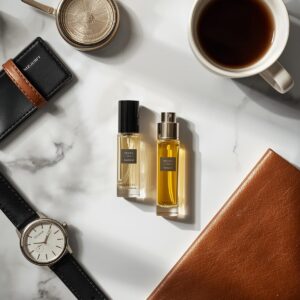
This technique has been used by fragrance consultants, professional perfumers, and fragrance lovers across the Middle East and South Asia for generations. It is the single most practical piece of advice in this entire guide, and the one most mainstream comparison articles consistently fail to include.
The exact method:
- Apply fragrance oil to your pulse points first.
- Wait one to two minutes for the oil to settle fully into the skin.
- Apply a light mist of a matching or complementary spray perfume over the oil layer.
The result you get from this combination:
- All-day longevity from the oil anchor beneath – the scent does not leave you.
- Strong opening projection from the spray on top – the scent announces your presence.
- Layered scent complexity that a single product cannot achieve alone.
- The personal depth of an oil with the social presence of a spray – both working simultaneously.
- Reduced total product consumption because the oil base means you need far less spray than usual to achieve full sillage.
Complete Fragrance Oil vs Perfume Comparison Table
| Feature | Fragrance Oil | Spray Perfume |
| Base Carrier | Carrier oil (jojoba, coconut, DPG) | Denatured alcohol + water |
| Alcohol Content | None | Yes (SD Alcohol 40-B typically) |
| Aromatic Concentration | 15–30% | 2–40% (varies by tier) |
| Longevity on Skin | 8–12+ hours | 3–8 hours |
| Projection / Sillage | Intimate, close to skin | Strong to moderate, wide reach |
| Note Progression | Compressed, blended simultaneously | Clear top → heart → base arc |
| Skin Feel | Slightly emollient, moisturizing | Dry, lightweight post-application |
| Best Skin Types | Sensitive, dry, reactive, mature | Normal, oily, combination |
| Application Method | Dabbed on pulse points | Misted on skin, hair, or clothing |
| Fabric Safety | Can stain – skin only | Generally safe for fabric |
| Travel Practicality | Excellent (rollerball, spill-proof) | Good (100ml liquid rules apply) |
| Cost Per Wear | Often more economical | Variable by brand and format |
| Layering Suitability | Excellent as base layer | Better as top layer |
| Cultural Heritage | Attar/Ittar tradition (5,000+ years) | Western fine fragrance tradition |
| Ideal Climate | Hot/dry (Dubai, Gulf, South Asia) | Temperate and cooler climates |
| Environmental Footprint | Lower (no aerosol propellants) | Higher (alcohol, pressurized formats) |
Fragrance Oil vs Perfume: Frequently Asked Questions
These are the exact questions people search on Google when researching the fragrance oil vs perfume topic – answered clearly and to the point.
Is fragrance oil the same as perfume?
No. Fragrance oil is an alcohol-free aromatic compound suspended in a carrier oil base such as jojoba or coconut oil. Spray perfume is an aromatic compound dissolved in denatured alcohol and water. They differ in composition, delivery mechanism, skin feel, projection, longevity, and skin health impact. Both products carry aromatic compounds – but they deliver them in fundamentally different ways to the skin.
Does fragrance oil last longer than perfume?
Generally yes – compared to EDT and EDC spray formats, fragrance oils last longer because the carrier oil slows evaporation significantly. However, high-concentration EDP and Extrait sprays on moisturized skin can match or rival fragrance oil longevity. Skin type, climate, and application method all affect the final outcome. In hot climates like Dubai, fragrance oils consistently outperform sprays because heat evaporates alcohol almost immediately.
Is fragrance oil better for your skin than perfume?
For sensitive, dry, or reactive skin, fragrance oils are generally the better choice because they contain no alcohol that could dry or irritate the skin barrier. That said, low-quality fragrance oils with unvetted aromatic compounds can still cause contact reactions. The safest approach for any skin type is to patch test before full use, regardless of which format you choose.
Can I use fragrance oil as a daily perfume?
Yes. Skin-grade fragrance oil works perfectly as a daily perfume with no dilution required. Apply one to two dabs to your pulse points and the scent lasts throughout the day. The result is more intimate and longer-lasting than most EDT alternatives – with steady, all-day performance rather than a dramatic opening burst that fades quickly.
Why does fragrance oil smell different on my skin than in the bottle?
Fragrance oil interacts with your unique skin chemistry – specifically your skin’s natural pH (4.5 to 5.5), sebum levels, and body temperature. The carrier oil creates prolonged contact with your skin’s lipid surface, meaning the aromatic compounds react with your individual biology throughout the day. The same oil genuinely smells different on two different people. This personal transformation is one of the most appealing qualities of oil-based fragrance.
Is fragrance oil stronger than spray perfume?
Fragrance oil is more concentrated than most spray formats, but not “stronger” in the sense of loudness or projection. Fragrance oils sit closer to the skin and project intimately. Spray perfumes project further and announce themselves more publicly. The difference is intimacy versus presence – not weakness versus strength. Both are powerful in their own right.
What is the difference between perfume oil and cologne?
Perfume oil is alcohol-free with 15–30% aromatic concentration and lasts 8 to 12+ hours on skin. Cologne (Eau de Cologne) is an alcohol-based spray with only 2–4% aromatic concentration that lasts 1 to 2 hours. Perfume oil delivers far more value for everyday wear and all-day performance – cologne is better suited for a quick, light freshen-up rather than a lasting signature scent.
Can fragrance oil stain clothes?
Yes – and this is a practical point most fragrance guides overlook entirely. Carrier oils are oils by nature and can leave oil-based stains on fabric, particularly on light-colored, silk, or delicate materials. Always apply fragrance oil directly to skin only. If you want to apply fragrance to your clothing, use a spray perfume instead – its alcohol base dries cleanly without leaving an oily residue on most fabric types.
The Final Word on Fragrance Oil vs Perfume
This is not an either/or decision – and it never should be treated as one. Fragrance oil and spray perfume are two fundamentally different delivery systems, engineered for different experiences, optimized for different contexts, and rooted in entirely different cultural and scientific traditions.
In summary:
- Fragrance oils give you longevity, a skin-friendly formula, intimate projection, and a direct connection to one of the oldest and most refined fragrance traditions in the world.
- Spray perfumes give you immediate projection, the full olfactory arc of top through base notes, versatility for hair and fabric, and access to the widest fragrance selection on the market.
- The smartest move is to use both together – fragrance oil as the base layer for all-day longevity, a complementary spray as the top layer for sillage and opening projection.
Before committing to any full bottle in either format, experience the difference on your own skin first. Your skin chemistry is the final ingredient in every fragrance – and no article, review, or paper tester strip can predict exactly how a scent will perform in that last, most important variable.