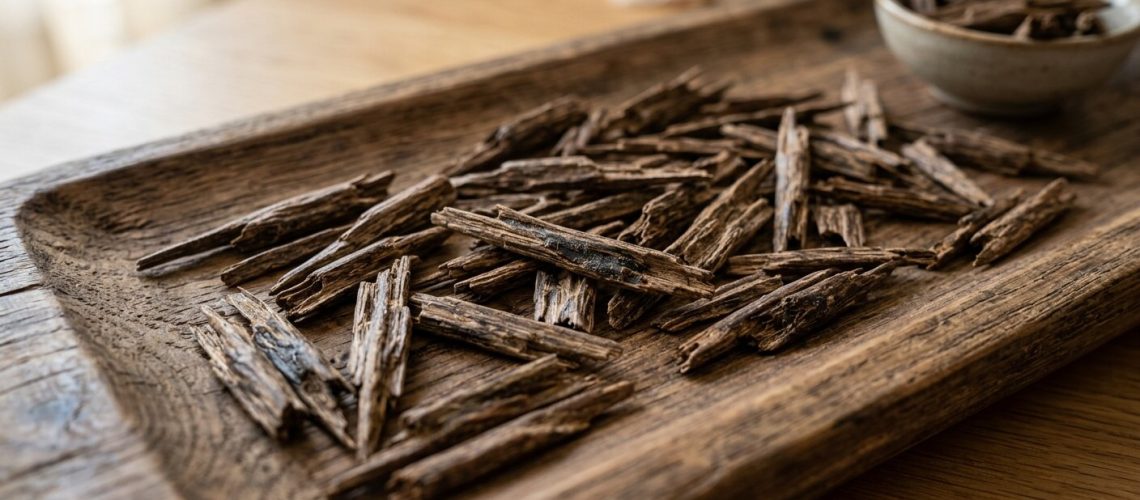
Hindi Sollah oud chips are premium needle-shaped agarwood slivers cut from the heartwood of long-aged Aquilaria trees grown in Assam, in Northeast India. They carry a deep, earthy, leathery aroma with resinous, slightly spicy undertones. They are meant to be heated over charcoal or an electric burner rather than burned directly, releasing their fragrance slowly as aromatic smoke. Among agarwood connoisseurs across the Gulf, Sollah is regarded as one of the boldest and most traditional expressions of Hindi oud available today.
If you have ever picked up a handful of these dark, needle-thin slivers and wondered why they cost so much more than ordinary wood chips, or why the scent seems to change every few minutes once it hits the coal, this guide walks through all of it. You will learn where Sollah comes from, how to tell a genuine batch from a diluted one, what the smoke actually smells like stage by stage, and the right way to heat it so you get the full aroma instead of a scorched, bitter cloud.
What Is Hindi Sollah Oud?
Sollah is not a grade of oud. It is a cut. It refers to a specific shape and size that agarwood is sorted into once it has been harvested and processed. The word itself comes from Hindi, where “Sollah” or “Salla” roughly translates to small sticks or needles. That is exactly what the finished product looks like: thin, splinter-like slivers of dark, oil-rich heartwood, usually a few centimetres long.
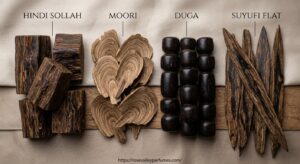
This distinction matters more than it sounds. A lot of buyers assume “Sollah,” “Moori,” and “Duga” are quality tiers, the way “Super” or “Triple Super” are. They are not. Here is how the main cuts actually differ:
- Sollah: Fine, needle-cut slivers, prized for an even, controlled burn and typically reserved for the most oil-saturated wood.
- Moori: Chunkier, more irregular pieces from the same raw agarwood.
- Duga: A coarser, larger piece, generally used where a stronger, more intense smoke output is wanted.
A few things define what you are actually looking at when you buy Hindi Sollah:
- Shape. Long, thin, needle-like slivers rather than chunks or blocks.
- Wood-to-resin ratio. Genuine Sollah has very little visible white or pale wood. The slivers should look almost uniformly dark.
- Oil content. Because the cut is thin, oil-rich agarwood shows its saturation clearly along the grain, often with a faint sheen.
- Origin claim. “Hindi” specifically points to agarwood sourced from Aquilaria trees native to India’s Northeast, as opposed to Cambodian, Malaysian, or Indonesian agarwood, which have their own distinct cuts and aromas.
If you’re comparing cuts side by side, our breakdown of Hindi oud vs Cambodian oud covers how regional origin changes the smell profile even when the cutting style is similar. For a look at how Sollah compares to Hindi’s other main cut, the Hindi Moori chips are a useful reference point, since both come from the same wood but are sorted differently.
Common Myths About Hindi Sollah Oud
Because Sollah is expensive and widely imitated, a lot of inaccurate information circulates about what it actually is. Clearing up a few of these myths makes it easier to shop for it with confidence.
- Myth: “Sollah” is a grade, like “Super” or “Triple Super.” In reality, Sollah is a cutting style, describing the shape and size of the chip. Grading terms describe oil density and quality within any given cut, including Sollah itself, so you can find both higher-grade and lower-grade Sollah depending on the specific batch.
- Myth: All Hindi oud smells the same. In practice, the scent varies noticeably depending on which district the wood was grown in, how old the tree was, and how the resin was induced. Two bags labelled “Hindi Sollah” from different suppliers can smell meaningfully different from one another.
- Myth: Darker chips are always better. Colour is a useful indicator, but it is not the only one. Some lower-oil wood is artificially darkened to look more resinous, which is why the weight test and the cold-smell test matter just as much as visual colour.
- Myth: Burning more chips at once gives a stronger, better scent. Overloading a burner usually produces a heavier, muddier smoke rather than a more intense version of the same aroma. Quality tends to come through more clearly with restraint than with volume.
- Myth: Oud chips and oud oil are interchangeable. Chips are heated to produce aromatic smoke, while oud oil (dehnal oud) is a distilled extract meant to be worn directly on the skin. They come from the same source material but serve different purposes and are used in different ways. Browse our Dehnal Oud range if you want the wearable version of this same scent family.
Origin: Where Hindi Sollah Oud Actually Comes From
Hindi Sollah is harvested from Aquilaria malaccensis trees growing across Assam and the wider Northeast Indian belt, a region that has produced some of the world’s most sought-after agarwood for centuries. Traders across Assam, Meghalaya, Tripura, Manipur, and Nagaland have long described Assam oud as one of the most sought-after varieties in the eastern agarwood trade. The region’s climate and soil conditions are part of why the resin that forms in these trees is considered so distinct from Southeast Asian agarwood.
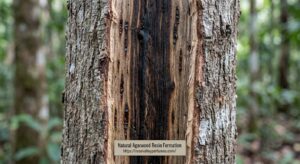
How the resin actually forms
Aquilaria trees do not naturally contain fragrant resin. A healthy tree is, in commercial terms, worth very little. Here is the process, step by step:
- The tree is wounded or infected. This can happen naturally, through lightning strikes, insect damage, or fungal infection, or it can be induced deliberately on plantations.
- The tree responds defensively. Researchers describe agarwood formation as a biochemical cascade triggered by injury or infection, in which the tree produces sesquiterpenes and other aromatic compounds as part of its immune response.
- Resin accumulates slowly in the heartwood. In the wild, this process could take decades to produce a commercially usable amount of resin.
- On modern plantations, the timeline shortens. Growers create controlled wounds or introduce specific fungal agents, prompting the tree to lay down resin over months to a few years rather than decades.
This induced approach is standard practice across the agarwood industry today. It is not a shortcut unique to lower-grade product. It is one of the main reasons cultivated agarwood has become central to keeping the global trade both legal and sustainable. You can see the results of this careful cultivation and sorting process directly on our Agarwood category page, where each cut is graded individually.
Assam’s agar belt: the districts behind the wood
Agarwood cultivation in Assam is not spread evenly across the state. It concentrates in specific districts where the climate and long-standing farming knowledge have made agarwood a viable crop for generations. A few points worth knowing:
- Historic growing areas. Districts such as Sivasagar, Nagaon (formerly Nowgong), Darrang, Goalpara, and Cachar have been recorded as agarwood-producing areas for well over a century, alongside similar pockets in Meghalaya’s Garo Hills.
- Family-run cultivation. Much of the region’s agarwood still comes from small and mid-sized family farms rather than large industrial plantations, which is part of why sourcing relationships and direct supplier knowledge matter so much in this trade.
- Skilled labour, not automation. Wounding trees, monitoring resin development over months or years, and hand-sorting harvested wood into cuts like Sollah, Moori, and Duga all remain manual, skill-dependent processes rather than mechanised ones.
- A living regional economy. Agarwood cultivation supports farming households across generations in these districts, which is one reason India’s agarwood policy has increasingly focused on formalising and protecting legal plantation-based trade rather than restricting it further.
From tree to Sollah chip
Once a tree has developed enough resin-soaked heartwood, the process of turning it into a finished chip follows a fairly consistent path:
- Harvesting. The tree is cut down once enough resin has developed in the heartwood.
- Separation. Harvesters separate the resinous, dark material from the pale, unscented sapwood.
- Sorting. Processors sort the resinous chunks into different cuts and grades, based on size, shape, and oil density.
- Selection for Sollah. The needle-thin pieces with the highest oil saturation relative to their surface area are set aside specifically for the Sollah cut.
The Aquilaria species behind Hindi oud
India is home to only two native Aquilaria species that produce commercially significant agarwood, and understanding the difference helps explain some of the variation you will find between suppliers.
- Aquilaria malaccensis. This is the primary species behind Hindi oud, including Sollah, Moori, and Duga cuts. It is the species most widely cultivated across Assam, Tripura, Manipur, Meghalaya, and Nagaland, and it is the one specifically listed under CITES Appendix II.
- Aquilaria khasiana. A less widely cultivated species found in more limited pockets of Northeast India, generally traded in smaller volumes than A. malaccensis.
Because virtually all commercial Hindi Sollah on the market today comes from Aquilaria malaccensis, when a supplier says “Hindi oud,” they are almost always describing resin from this species, cultivated under the regulatory framework described below.
Why Assam specifically
Assam sits within a belt of Northeast India, along with Tripura, Manipur, Meghalaya, and Nagaland, that has become one of the most active agarwood cultivation zones in the world. A few figures put that in perspective:
- Scale of cultivation. Government-backed estimates cited in Indian policy reporting put the number of agarwood plants under cultivation in non-forest areas across this region at close to 140 million, spread across farms and community plantations rather than protected wild forest.
- Regulatory status. Agarwood from Aquilaria malaccensis has been listed under Appendix II of the Convention on International Trade in Endangered Species (CITES) since 1995, a listing that regulates, but does not ban, international trade in the species.
- Wild harvesting restrictions. Harvesting from forests and protected areas remains prohibited in India. Export quotas have historically applied only to agarwood grown on private and community land.
- Recent policy shift. In 2024, following a scientific non-detriment finding conducted by India’s Botanical Survey of India, the country’s export quota for agarwood chips and powder was raised substantially, from 25,000 kg to just over 151,000 kg annually, to reflect the volume of legally cultivated stock now available.
- Economic impact. Reporting on India’s agarwood policy has also noted that several hundred thousand farming households across Assam and neighboring states now depend on legal agarwood cultivation as a source of income, with industry estimates suggesting the sector could roughly triple in value by 2030 if plantation-based supply continues to scale.
This shift toward plantation-grown agarwood is not incidental. It is the direct result of decades of trade restriction on wild-harvested agarwood, and it is directly relevant to anyone buying Sollah today. It is the reason legitimate Hindi oud sellers can source and export chips legally, and it is also why documentation and traceable sourcing matter more in this category than in almost any other natural fragrance ingredient.
How to Identify Genuine Hindi Sollah Oud Chips
Because Hindi Sollah sits at the expensive end of the agarwood market, it attracts more counterfeiting and adulteration than lower-priced cuts. Knowing what to check before you buy protects you from paying premium prices for diluted or synthetic material.
Direct answer: genuine Hindi Sollah feels dense for its size, looks consistently dark along the grain, carries a faint natural scent even unheated, and is priced in line with its oil content rather than sold as a bargain.
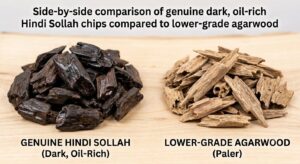
Run through this checklist before or right after you buy:
- Do the weight-in-hand test. Pick up a small handful. High-oil Sollah feels noticeably heavier than its size suggests, because the resin has displaced much of the lighter wood fibre. Chips that feel light and papery usually have low oil content or a high proportion of unscented wood mixed in.
- Check colour consistency. Look along the length of each sliver, not just at the surface. Genuine high-grade Sollah is dark brown to near black in a fairly even tone. Streaky or patchy pieces, with visible pale wood running through the centre, indicate lower resin saturation.
- Do a cold-smell test. Rub a chip gently between your fingers or warm it briefly in your palm. Real Sollah releases a faint sweet, woody, slightly musky note even without heat. If a chip smells flat, dusty, or faintly chemical before any heat is applied, be cautious.
- Look for oil sheen. Held at an angle to the light, quality Sollah often shows a subtle oily sheen along the cut surface. This is the resin itself, not a coating.
- Treat price as a signal, not a guarantee. Genuine Hindi Sollah is a premium cut precisely because so little of a harvested tree qualifies for this grade. Extremely low prices for “Hindi Sollah” almost always mean the product has been blended with lower-oil wood, sourced from a different region and mislabelled, or treated with added fragrance oils to mask a weaker base material.
- Ask about origin and grade documentation. Reputable Hindi oud sellers can tell you which region the wood was sourced from and how the batch was graded. This alone will not prove authenticity, but a seller unwilling or unable to answer basic sourcing questions is a red flag.
If you’re unsure how a given batch compares to other grades, it can help to look at higher and adjacent grades side by side. The Oud Sri Lanka Super Top and Malaysia Triple Super listings show how oil density and grading language typically map to price across different origins, which gives you a useful reference point when judging whether a Sollah price feels reasonable.
Scent Profile: What Hindi Sollah Oud Actually Smells Like
Hindi oud in general, and Sollah in particular, is widely considered the boldest and most traditional expression of agarwood available on the market, especially compared to the softer, sweeter profiles associated with Cambodian or Indonesian ouds. Describing it only in terms of top, heart, and base notes, the way a lot of fragrance write-ups do, misses what actually happens when you heat a real Sollah chip. The scent does not sit still. It moves through distinct stages as the chip heats, and knowing what to expect at each stage helps you tell a good burn from a scorched one.

The burn-stage timeline:
- First two to three minutes: dry and woody. As the chip first makes contact with the heat, the smoke is dry, sharp, and distinctly woody. This is the surface oil activating. It is not the chip’s best moment, and if this is the only note you are getting even after several minutes, the heat is probably too high or the chip too small to sustain a longer burn.
- Five to ten minutes: the leathery peak. This is where Hindi Sollah earns its reputation. The aroma deepens into something leathery, earthy, and distinctly musky, often carrying a vintage or balsamic undertone. This is the character connoisseurs are chasing when they specifically ask for Hindi over Cambodian or Indonesian oud: less fruity, less sweet, more raw and grounded.
- After fifteen minutes: the smoky base. As the chip continues to smoulder gently, the smoke settles into a smoky, resinous base that lingers in the room and clings to fabric long after the visible smoke has cleared. This is the stage that gives Sollah its reputation for longevity, since the scent left on clothing, hair, or curtains can remain noticeable for hours.
On skin and fabric versus in open air:
- In open air, Sollah’s smoke fills the space with the woody, leathery character described above, but the scent fades relatively quickly once the chip stops smouldering.
- Passed directly through fabric or hair, the same smoke leaves a much longer-lasting trace, because the aromatic compounds bind to fibres rather than simply dispersing into the air. This is part of why the traditional method of “scenting” garments through smoke, rather than just letting a burner sit in a room, remains so common across the Gulf.
For a direct comparison of how this profile differs from other major oud regions, our Hindi oud vs Cambodian oud guide breaks down the sweeter, fruitier character typically associated with Cambodian agarwood against the deeper, more traditional Hindi profile described here.
How to Use Hindi Sollah Oud Chips
Oud chips are never meant to be set on fire the way you would light an incense stick or a candle wick. Doing so burns the wood outright, destroying the resin and producing a harsh, acrid smoke instead of the layered aroma described above. The chip needs to be heated gently, so the essential oils vaporise slowly rather than combust.
Using a traditional charcoal burner (mabkhara)
- Prepare the coal. Light a small charcoal disc, either the quick-light type or traditional lump charcoal, and let it burn until the surface turns grey with ash. This usually takes several minutes and means the coal has reached a steady, even heat rather than an open flame.
- Place the coal in the mabkhara. Set it into your incense burner using tongs, not your fingers, and let it settle for a minute before adding anything.
- Add one or two Sollah slivers. Place them directly on the hot coal, slightly off to one side rather than right in the centre if the coal is very hot. Using more than two or three small slivers at once tends to overwhelm the aroma rather than intensify it, producing a heavier, muddier smoke instead of the clean, layered scent described earlier.
- Let it smoulder, do not fan it. The chip should smoke gently rather than visibly char or blacken quickly. If you see the wood catching or flaring, move it slightly further from the hottest part of the coal.
Using an electric burner
- Set a low-to-medium heat. Electric burners give you more control than charcoal, since the temperature stays constant rather than gradually cooling. Start low. You can always increase the heat if the chip is not releasing enough aroma.
- Place the chip on the heating plate or dish. Follow your specific burner’s instructions for placement.
- Give it a few minutes before judging the scent. Electric burners tend to release aroma more slowly and evenly than charcoal, so the fuller profile can take a little longer to develop.
Scenting spaces, clothes, and hair the traditional way
Once the smoke is rising steadily, there are two common ways to use it:
- Ambient room scenting. Let the aromatic smoke drift naturally through the room.
- Direct fabric and hair scenting. Pass garments, hair, or an abaya directly through the smoke so the fragrance clings to the fibres.
This second method is not just practical. In Gulf hospitality culture, offering a guest the mabkhara to pass their clothes or hair through is considered a core gesture of welcome, traditionally offered alongside coffee and dates. It remains common practice at homes, weddings, and even in five-star hospitality settings across the region today.

Common mistakes that ruin the burn
- Using too much heat. This scorches the wood outright, producing a bitter, smoky smell instead of the leathery, resinous aroma Sollah is known for.
- Overloading the burner. Piling on too many chips at once creates a heavier, murkier smoke that masks the individual character of the wood rather than layering it.
- Letting the chip touch open flame. This combusts the wood directly rather than heating it, destroying the aromatic compounds almost instantly.
- Judging the scent too early. The best part of the aroma typically develops several minutes in, not in the first thirty seconds.
If you don’t already have a mabkhara or electric burner set up at home, our accessories range includes both traditional and electric options suited to burning chips like these.
Ventilation and safety tips
Burning any agarwood chip produces real smoke, and a few basic precautions make the experience safer and more pleasant.
- Keep the room ventilated. A slightly open window or door lets the smoke circulate rather than building up in a closed space.
- Use a heatproof base under the burner. Whether you are using a mabkhara or an electric burner, place it on a stable, heat-resistant surface away from curtains or paper.
- Never leave burning charcoal unattended. Charcoal retains heat long after it appears to have cooled, so let it burn out fully in a safe location rather than discarding it immediately.
- Keep it away from children and pets. Both the hot burner and the charcoal itself can cause burns if handled directly.
- Be mindful of smoke sensitivity. If anyone in the room has asthma or a sensitivity to smoke, an electric burner set to a gentle heat produces a milder amount of visible smoke than charcoal.
Factors That Affect Hindi Sollah Pricing
Buyers new to premium agarwood are often surprised by how much price can vary between two bags that both claim to be “Hindi Sollah.” A few factors typically explain that gap:
- Oil concentration. The single biggest driver of price. Chips with a higher proportion of resin relative to wood cost significantly more, because they represent a smaller, more selectively sorted portion of the harvested tree.
- Tree age. Older Aquilaria trees generally produce a richer, more complex resin than younger, rapidly induced ones, and wood from mature trees commands a premium.
- Sourcing and district. Wood from certain historic growing districts within Assam is more sought after by traders and collectors, which can affect price even among chips of similar oil content.
- Batch consistency. A batch with uniform colour, size, and oil saturation typically costs more than a mixed batch with variable quality, since sorting to that level of consistency takes additional labour.
- Supply chain and documentation. Suppliers who can verify legal, CITES-compliant sourcing and traceable origin often price their product to reflect that added transparency and accountability.
- Market demand. As with any luxury natural material, demand from connoisseurs and collectors in the Gulf, South Asia, and increasingly Europe and North America can push prices for top-tier Sollah higher during peak seasons such as Ramadan and the wedding season.
Our Hindi Sollah listing breaks these grades and price points down directly, so you can compare oil concentration against cost before buying.
Storing Hindi Sollah Chips to Preserve Their Potency
Because Sollah sits at the premium end of agarwood pricing, how you store it directly affects how much of that investment you actually get to enjoy. Oud oil degrades gradually when exposed to air, heat, and light, and the same applies to the oil-saturated wood itself.
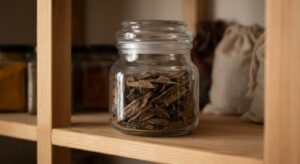
- Keep it in an airtight container. Glass jars with tight-fitting lids work well, and are far better than paper bags or loosely closed boxes, which let the volatile aromatic compounds evaporate over time.
- Store away from direct sunlight and heat. A cupboard or drawer away from windows and radiators keeps the resin stable. Direct sun and heat accelerate oil evaporation and can dry the wood out faster than normal.
- Avoid humid environments. Excess moisture can encourage mould on natural wood, particularly in coastal or tropical climates. A dry, stable room temperature is ideal.
- Handle it with clean, dry hands. Oils and moisture from skin can transfer onto the chips over repeated handling, subtly affecting the surface scent.
- Expect a long shelf life if stored properly. Unlike synthetic fragrance materials, well-stored natural agarwood can hold its potency for years rather than months. This is part of why serious collectors treat a bag of quality Sollah as a long-term purchase rather than something to use up quickly.
When Hindi Sollah Is the Right Choice
Not every occasion calls for the same cut of agarwood, and Sollah in particular tends to suit certain situations better than others. A few common use cases:
- Personal daily scenting. A small burn session in a bedroom or study, where the goal is a controlled, precise aroma rather than filling a large space.
- Gifting. Because it is a premium, easily recognisable cut, Sollah is a common choice for gifts during Eid, weddings, or as a housewarming present within Gulf and South Asian households.
- Small, intimate gatherings. A majlis session with a handful of guests, where a refined, layered scent matters more than sheer smoke volume.
- Special personal rituals. Many people reserve their best-quality Sollah specifically for Fridays, Ramadan evenings, or other occasions with personal or spiritual significance, rather than using it as an everyday air freshener.
For larger gatherings, weddings, or events where a stronger, more far-reaching aroma is the priority, a chunkier cut like Duga or a flat cut like Suyufi tends to be more practical and cost-effective, since Sollah’s fine, oil-dense chips are better suited to smaller, more deliberate sessions. If gifting is the goal, our Hindi Sollah range comes in sizes suited to both personal use and presentation gifting.
Hindi Sollah vs Other Agarwood Cuts: Which Should You Choose?
If you’re new to buying oud chips directly rather than pre-made bakhoor, it helps to see how Sollah stacks up against the other cuts commonly sold alongside it.
| Cut | Typical Shape | Burn Character | Best For |
| Hindi Sollah | Thin, needle-like slivers | Bold, leathery, earthy, long finish | Personal scenting, connoisseur use, gifting |
| Hindi Moori | Chunkier, irregular pieces | Similarly deep but often slightly softer opening | Everyday home scenting, longer burn sessions |
| Hindi Duga | Larger, coarser pieces | Heavier, more intense smoke output | Large rooms, majlis-style gatherings |
| Oud Suyufi Flat | Flat-cut slabs | Slower, steadier release | Extended burn sessions, gatherings |
| Moori Vietnam | Chunky, Vietnamese-sourced | Sweeter, softer than Hindi cuts | Those who prefer a milder, less smoky profile |
Direct answer: choose Sollah when you want the boldest, most traditional Hindi character for personal use or as a gift. Choose Moori or Duga when you want a similar regional profile but need a larger volume of chips for longer sessions or bigger spaces.
None of these cuts are strictly “better” than the others. They serve different purposes, and many households keep more than one on hand:
- Sollah for personal use or special occasions.
- Moori or Duga for everyday home scenting where volume matters more than precision.
- Suyufi Flat for longer, steadier sessions during gatherings.
You can browse the full range on our Agarwood category page if you want to compare cuts and origins side by side before deciding.
A Quick Glossary of Oud Terms
Agarwood shopping comes with its own vocabulary, and mixing up these terms is one of the most common sources of confusion for first-time buyers.
- Agarwood. The general term for the resin-infused wood produced by Aquilaria trees, also known as oud or aloeswood.
- Oud. The Arabic name for agarwood, used interchangeably with “agarwood” in most fragrance contexts.
- Sollah (or Salla). A needle-shaped cut of agarwood, prized for its high oil concentration relative to its size.
- Moori. A chunkier, more irregular cut of agarwood from the same tree types as Sollah.
- Duga. A larger, coarser cut, generally used where a stronger smoke output is preferred.
- Dehnal oud. Distilled agarwood oil, extracted for wearing on skin rather than burning as incense. See our Dehnal Oud range for wearable options.
- Bakhoor. A blended incense product, often combining wood chips with fragrance oils, resins, and spices, distinct from pure, unblended oud chips like Sollah. Browse our Bukhoor & Oud Muatter collection for ready-made blends.
- Mabkhara. The traditional incense burner used across the Gulf for burning bakhoor and oud chips over charcoal. Our accessories range includes both traditional and electric burners.
- CITES. The international convention that regulates cross-border trade in agarwood and other species at risk of overexploitation.
Sustainability and Responsible Sourcing
Because Aquilaria trees are classified as vulnerable in the wild, sustainability is not a peripheral issue in the oud trade. It directly affects how the industry is allowed to operate.
- Wild populations remain protected. Harvesting from forests and protected areas in India is prohibited, and export from wild-harvested stock has effectively been reduced to zero.
- Cultivation has become the primary legal source. The vast majority of legally traded Hindi agarwood today, including Sollah, comes from plantation-grown trees on private and community land rather than wild forest.
- Regulatory oversight continues to evolve. India’s periodic non-detriment findings and CITES export quota reviews are specifically designed to ensure that legal trade volumes do not outpace what cultivated supply can sustainably provide.
- Buyers play a role too. Choosing suppliers who can speak to sourcing and documentation supports the legal, cultivated side of the trade rather than the black-market demand that continues to threaten wild Aquilaria populations. You can read more about how we source directly on our About Us page.
How climate and humidity affect the burn
The same chip of Hindi Sollah will not always behave identically from one room, or one season, to the next. A few environmental factors change how the burn actually plays out:
- Humid climates slow the release. In coastal or tropical settings, higher ambient moisture can make the smoke feel heavier and slightly slower to develop the leathery peak notes, since the chip itself may hold a small amount of absorbed humidity.
- Dry, air-conditioned rooms sharpen the aroma. In drier indoor conditions, common across much of the Gulf, the same chip tends to release its top and heart notes a little faster and more sharply.
- Cold weather concentrates the scent indoors. With windows and doors closed during cooler months, the smoky base notes build up more noticeably in enclosed rooms, which is worth factoring into how many chips you use per session.
- Altitude and airflow matter less than most people assume. Minor differences in room size or air circulation have far less impact on the scent than the quality of the chip itself and how carefully the heat is controlled.
None of this changes what Hindi Sollah fundamentally smells like. It simply means that the same chip can feel a little different depending on where and when you burn it, which is worth knowing if you are comparing notes with a friend who has the exact same bag from the exact same batch.
Pairing Hindi Sollah with Other Fragrance Rituals
Sollah chips are rarely the only fragrance element in a household that uses them regularly.
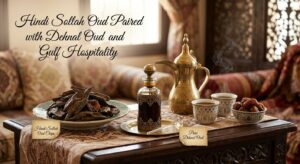
A few common pairings worth knowing about:
- Alongside dehnal oud on skin. Many households burn Sollah to scent a room or an outfit, then apply a small amount of oud attar directly to the skin for a longer-lasting personal fragrance. The two work as complementary layers rather than substitutes for each other.
- Before or after bakhoor. Some hosts burn a pure Sollah session first, for the room, and follow with a blended bakhoor later in an evening, since bakhoor’s added spices and resins create a different, often sweeter, atmosphere.
- With coffee and dates during hospitality. In traditional Gulf hospitality, the mabkhara is frequently brought out either just before or just after serving Arabic coffee and dates, tying the scent experience to the wider ritual of welcoming guests.
- As part of Friday or Ramadan routines. Many households reserve their best Sollah specifically for Friday prayers preparation or Ramadan evenings, pairing the scent with clean clothing as part of a broader routine rather than using it as a casual, everyday air freshener.
If you want to build out a fuller fragrance routine around your Sollah chips, our Dehnal Oud range and Bukhoor & Oud Muatter collection are both designed to complement pure agarwood chips rather than compete with them.
Frequently Asked Questions
What does Hindi Sollah oud smell like?
Hindi Sollah smells deep, earthy, and leathery, with a resinous, slightly spicy character that develops in stages as it heats. It opens dry and woody, peaks as leathery and musky within the first ten minutes, and settles into a smoky, lingering base note afterward.
Is Hindi Sollah the same as Hindi Moori?
No. Both come from the same region and often the same raw agarwood, but Sollah refers specifically to the fine, needle-shaped cut, while Moori is a chunkier, more irregular piece. They are cutting styles, not separate grades of quality.
How long do Hindi Sollah oud chips last when burned?
A single small session on a hot coal typically releases noticeable aroma for fifteen to twenty minutes. The scent left on fabric or hair can linger for several hours afterward. Unopened and properly stored, the chips themselves can retain their potency for years.
Can Hindi Sollah oud chips be worn as perfume, or only burned?
Sollah chips are designed to be heated and used as incense rather than worn directly on skin. If you want a wearable version of the same scent family, oud attars and oils, like those in our Dehnal Oud range, are extracted specifically for skin application.
Why is Hindi Sollah more expensive than other oud chips?
Sollah is reserved for the wood with the highest oil concentration during sorting, and only a small proportion of any harvested tree qualifies for this cut. Combined with regulated, often plantation-grown sourcing under CITES oversight, that scarcity is reflected directly in the price.
How can I tell if my oud chips are genuine agarwood?
Check the weight, since genuine chips feel dense for their size. Check colour consistency along the grain. Look for a faint natural scent even before heating. Be cautious of prices that seem unusually low for the grade being advertised. Buying from a seller who can speak to the wood’s origin and grading is one of the more reliable safeguards.
How many Hindi Sollah chips should I use per session?
One or two small slivers is usually enough for a single burn. Using more does not intensify the scent proportionally, and it often produces a heavier, less refined smoke instead.
Is Hindi Sollah legal to buy and export?
Yes, when it is sourced from legally cultivated, non-wild agarwood and traded under the applicable CITES permits. India’s export quotas apply specifically to plantation-grown stock, which is why sourcing transparency matters when buying from any Hindi oud supplier.
Does Hindi Sollah smell different from batch to batch?
Yes, slightly. Because agarwood is a natural material, factors like tree age, growing district, and how the resin was induced all influence the exact character of a given batch, even when it is labelled the same cut and grade.
What is the difference between Hindi Sollah and bakhoor?
Hindi Sollah is pure, unblended agarwood, while bakhoor is a blended incense product that combines wood chips with additional fragrance oils, resins, or spices. Sollah gives a purer, more traditional agarwood aroma, while bakhoor is designed for a fuller, often sweeter scent profile.
Final Thoughts
Hindi Sollah earns its reputation the honest way, through scarcity, careful sorting, and a scent profile that has stayed genuinely distinct from the sweeter, softer ouds coming out of Southeast Asia. Once you understand what you are actually looking at, a specific cut from Assam’s Aquilaria trees rather than a generic “oud chip,” it becomes much easier to judge quality, spot a fair price, and get the burning method right so the full leathery, earthy character actually comes through.
If you’re ready to try it for yourself, our Hindi Sollah range is graded and sourced directly, with options across different price points depending on oil concentration. And if you would prefer a ready-made blend rather than raw chips, our Bukhoor & Oud Muatter collection offers the same Hindi oud character in a form that is ready to burn straight out of the box.