What Is Agarwood Oud? The Complete Beginner’s Guide for Dubai Buyers
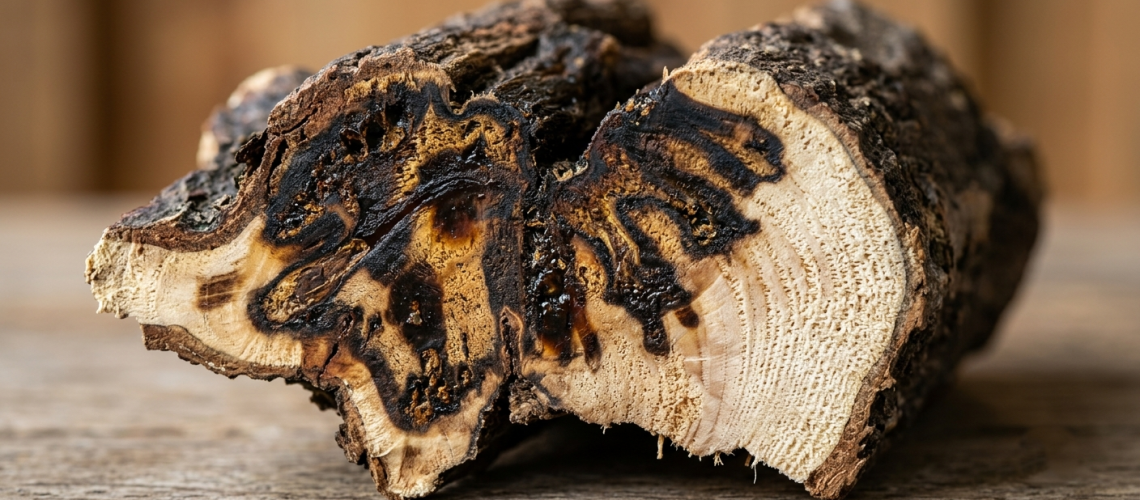
Agarwood (Oud) is a rare, dark, resin-saturated heartwood produced inside Aquilaria trees when they become infected by a specific mould. The tree responds by generating a dense, intensely fragrant resin as a biological defence – slowly transforming pale, odourless wood into one of the most precious and costly aromatic materials on earth.In Dubai and across the Gulf, “Oud” refers to both the raw resin-infected wood and to the concentrated oil (Dahn Al Oudh) distilled from it. It is burned as incense (Bakhoor), worn as a personal perfume oil, and gifted as a symbol of deep respect in Emirati culture.Dubai price range: AED 100 (entry blends) to AED 20,000+ (rare, aged, single-origin oils) per 10g.
You step into a Dubai hotel lobby. Before your eyes adjust to the cool, golden light, something invisible stops you completely. It is warm. It is deep. It is impossibly ancient – like old wood, dry earth, and something you have no words for, all wrapped in heat and silence. You look around and find the source: a mabkhara in the corner, a curl of white smoke rising from a glowing charcoal disc, a single dark wooden chip resting on top, quietly transforming the entire room.
That scent is oud.
It has filled the homes, majlises, mosques, and palaces of this region for over a thousand years. It travelled along the ancient Silk Road from the deep forests of Southeast Asia into the heart of the Arab world. It was documented by Islamic scholars as the fragrance favoured by the Prophet Muhammad ﷺ. It has been gifted between rulers, burned at weddings, and woven without interruption into the daily domestic life of the Gulf.
Today, in 2026, it remains the most coveted natural fragrance material on earth – and Dubai sits at the very centre of its global trade.
Whether you are visiting Dubai for the first time and wondering what that extraordinary scent is, or you have lived here for years and are finally ready to truly understand it, this guide is written for you. We cover everything from the biology of the Aquilaria tree to the six field-tested authenticity checks that protect your money – and point you toward the specific products and origins worth exploring at every price point.
What Is Agarwood (Oud)? – The Complete Definition
Agarwood (Oud) is a rare, resin-infused heartwood produced inside Aquilaria trees – found primarily across South and Southeast Asia – when the tree becomes infected by a specific fungal pathogen. This infection triggers a biological defence response that gradually transforms ordinary pale wood into one of the world’s most prized and expensive aromatic substances.
Where Does Agarwood Come From? – Producing Countries
The Aquilaria genus is a group of tropical evergreen trees native to a wide arc of countries across Asia. The key producing countries actively traded in Dubai’s market today include:
- India – particularly the Assam, Manipur, and Nagaland regions. Source of the boldest, most traditional oud profiles.
- Cambodia – the Cardamom Mountains and surrounding lowland forests. Produces the sweetest, most beginner-friendly profiles.
- Vietnam – the Nha Trang coast and Hội An hinterlands. Widely regarded as producing the most complex and refined oud.
- Indonesia – Sumatra, Kalimantan (Borneo), and Papua. Known for smoky, dark, and intensely resinous characters.
- Malaysia – Sabah, Sarawak, and Peninsular Malaysia. Produces lighter, crisper, herbaceous profiles.
- Sri Lanka – a historically significant origin actively traded across Deira Dubai today, offering clean and accessible quality.
- Bangladesh – and parts of northeastern South Asia, producing profiles close to Indian oud in character.
- Papua New Guinea – an emerging commercial origin gaining increasing traction in Gulf markets.
There are 21 known Aquilaria species. The three most commercially traded in Dubai include:
- Aquilaria malaccensis – Indian and Malaysian origin. Listed as Vulnerable on the IUCN Red List.
- Aquilaria crassna – Cambodian and Vietnamese origin. Critically Endangered in parts of its native range.
- Aquilaria sinensis – Chinese origin. Primarily used in East Asian medicine and incense traditions.
Each species produces a genuinely different aromatic character – a fact that becomes critically important once you begin selecting oud by origin.
The Biology of Agarwood – How It Actually Forms
Under healthy growing conditions, an Aquilaria tree produces pale, completely odourless heartwood. There is nothing remarkable about it. The transformation – and the rarity – begins only when the tree is damaged or infected.
Here is exactly what happens inside the tree, step by step:
- Infection enters the tree. A wound, insect damage, or natural environmental exposure introduces a fungal pathogen – most commonly Phialophora parasitica or related species – into the heartwood tissue.
- The tree mounts a biochemical defence. The tree floods the infected tissue with dense oleoresin – a natural wound-sealing compound composed of oils and resins.
- Resin accumulates over years and decades. This resin progressively saturates the wood fibres, darkening them from pale cream to deep brown or near-black.
- Aromatic compounds concentrate. The resin traps a complex mixture of organic aromatic molecules – sesquiterpenes and chromone derivatives – within the grain of the wood.
- Agarwood is formed. The result is dense, dark, and deeply fragrant heartwood: what the world calls agarwood, and what Dubai calls oud.
Two numbers that explain everything about the price:
- Only approximately 10% of wild Aquilaria trees naturally develop this infection (TRAFFIC / IUCN research).
- Wild trees must grow for 50 to 150 years before their resin reaches the quality threshold demanded by premium buyers in Dubai and the Gulf.
In a forest of hundreds of Aquilaria trees, a harvester may inspect dozens before finding a single one with commercially viable resin – and far fewer still with the density required for premium-grade agarwood.
Agarwood vs. Oud – Why Both Words Exist and What They Mean in Dubai
Understanding the naming convention is the single most practical skill you can develop before walking into your first specialist shop.
| Term | Origin | What It Means in Dubai |
| Agarwood | Sanskrit (agaru) | International scientific and trade term for the resin-infected wood |
| Oud / Oudh | Arabic | The wood itself, AND the oil distilled from it |
| Dahn Al Oudh | Arabic | Specifically the pure oil extracted from agarwood |
| Bakhoor | Arabic | Agarwood chips blended with other aromatic ingredients |
The practical Dubai buyer takeaway:
- When a seller says “oud,” they may mean the raw wood chips, the distilled oil, or a blended bakhoor product.
- These three products are priced very differently from each other.
- Always clarify which form you are being offered before asking for a price.
What Is the Difference Between Agarwood, Oud Oil, and Bakhoor?
Agarwood chips are the raw resin-infused wood. Oud oil (Dahn Al Oudh) is the concentrated essence distilled from that wood. Bakhoor is a prepared incense blend made from agarwood chips combined with additional aromatic ingredients. All three come from the same Aquilaria tree – but they are used differently, priced differently, and suited to very different experience levels.
Agarwood Chips – The Raw, Traditional Form
Agarwood chips are pieces of resin-infected heartwood, cut directly from the Aquilaria tree, sorted by hand, and graded by resin density, colour depth, and aromatic quality. They are the rawest and most traditional form of the material available.
How agarwood chips are used in Dubai:
- Placed onto a heated charcoal disc inside a mabkhara (traditional incense burner).
- Gentle heat – not direct flame – slowly volatilises the aromatic resin compounds.
- The rising fragrant smoke perfumes the home, clothing, and everyone in the room.
- Passing a mabkhara around the room for guests is one of the most significant hospitality gestures in Emirati culture.
The four agarwood chip grades used in Dubai’s specialist market:
| Grade | Resin Content | Colour | Scent Intensity | Best For |
| Regular | Light | Pale, cream | Mild | Beginners, daily experimenting |
| Super | Moderate | Medium brown | Noticeably stronger | Regular home use |
| Double Super | High | Dark brown | Pronounced depth | Experienced regular buyers |
| Triple Super | Maximum | Near-black | Exceptional complexity | Connoisseurs and collectors |
Recommended products by origin to explore:
- Indian (Hindi) chips: Oud Hindi Super | Hindi Moori agarwood | Hindi Sollah chips | Hindi Double Super Plus Old Oud (aged, premium tier).
- Sri Lankan chips: Oud Sri Lanka | SRL Triple Super | SRL Kawaka SS Super.
- Vietnamese chips: Moori Vietnam agarwood.
- Indonesian chips: Indonesian Oud Super.
- Malaysian chips: Malaysian Muri Super No.1.
- Full collection: Browse all agarwood chips in Dubai.
Oud Oil – What Is Dahn Al Oudh?
Dahn Al Oudh (also written Dehn Al Oud) translates from Arabic as “the oil of oud.” It is the pure, concentrated essence extracted from agarwood through steam distillation or hydro-distillation – capturing only the volatile aromatic compounds from the wood, with no alcohol carrier and nothing added.
Key facts every Dubai buyer must know before purchasing oud oil:
- It takes approximately 70 kilograms of quality agarwood chips to produce just 20 millilitres of pure oud oil.
- That yield – combined with the decades required to grow the source wood – is the most honest explanation for why a small phial of genuine Dahn Al Oudh can cost thousands of dirhams.
- Pure oud oil is applied directly to skin – one to two drops maximum – at pulse points where body heat activates the aromatic compounds throughout the day.
- Quality Dahn Al Oudh, stored correctly, will not simply last – it will actively improve and deepen over years and decades, much like a fine aged whisky.
- Common grades available in Dubai: Sufi, Mubakhar, and Classic – each indicating production method and quality tier.
Explore the Dehnal Oud collection for a curated range of pure oud oils sourced across key producing regions – from approachable mid-range options for first-time oil buyers through to aged and premium-grade distillations for experienced collectors.
Bakhoor – The Most Beginner-Friendly Agarwood Product
Bakhoor (also spelled Bukhoor) is the most accessible and recommended entry point for anyone new to Gulf fragrance culture. It is agarwood chips that have been blended, soaked, or treated with additional aromatic ingredients – then dried into a cohesive, ready-to-burn incense product.
Common additional ingredients blended into quality bakhoor:
- Rose water and natural rose absolute.
- Sandalwood powder or sandalwood oil.
- Saffron.
- Natural amber resins.
- Light musk compounds.
- Frankincense and other botanical resins.
Why bakhoor is the ideal first purchase:
- Produces a softer, more layered, and more approachable scent than raw agarwood chips alone.
- The oud component is genuine – but it is complemented and softened by surrounding ingredients.
- Available at every Dubai price point – from AED 30 for everyday packs to AED 500+ for premium hand-crafted presentation versions.
- Ideal for daily home use, hosting guests, and gifting across all relationship tiers.
Browse the Bukhoor & Oud Muatter collection for traditional Gulf bakhoor blends suited to both daily home burning and premium gifting occasions – including Bukhoor Al Mobrouk, one of the most popular traditional bakhoor formulations available in Deira Dubai.
If this is your very first time: Start with bakhoor. It delivers a genuine, culturally authentic Gulf fragrance experience without the intensity of raw chips or the investment of pure oil.
The Three Forms – Side-by-Side Comparison
| Feature | Agarwood Chips | Oud Oil (Dahn Al Oudh) | Bakhoor |
| Physical Form | Raw solid wood pieces | Concentrated liquid oil | Treated and blended chips |
| Primary Use | Home incense | Personal perfume oil | Blended home incense |
| Application | Burned on charcoal | Applied to pulse points | Burned on charcoal |
| Scent Intensity | High – pure natural resin | Extreme – concentrated | Medium – blended and softened |
| Best For | Traditional use, experienced buyers | Experienced buyers, collectors | Beginners, daily use, gifting |
| Dubai Price (AED) | 50 – 5,000+ | 200 – 20,000+ | 30 – 500 |
| Beginner-Friendly? | Moderate | Advanced | ✅ Yes – start here |
Why Does Agarwood (Oud) Smell the Way It Does? The Science Behind the Scent
Agarwood’s complex, evolving scent comes from two families of organic aromatic compounds – sesquiterpenes and chromone derivatives – produced inside the Aquilaria tree during the resin-forming infection process. These compounds interact with each person’s individual skin temperature, pH level, and natural skin oils differently, which is why genuine oud smells genuinely different on every individual who wears it.
The Two Compound Families Behind Every Oud Scent
- Sesquiterpenes – The Deep, Woody Backbone
- Responsible for oud’s deep, warm, woody, earthy, and animalic character.
- Highest concentration in Indian (Assam) agarwood.
- The reason oud smells ancient, alive, and impossible to replicate synthetically.
- When you register that sense of aged forest floor, warm timber, and living warmth – that is sesquiterpenes.
- Chromone Derivatives – The Sweet, Complex Layer
- Responsible for oud’s sweeter, more complex, floral, or fruity top and middle notes.
- Most dominant in Cambodian and Vietnamese agarwood.
- The reason Cambodian oud smells distinctly sweeter and more approachable than Indian oud.
- The sesquiterpene-to-chromone ratio shifts with geographic origin, tree species, age of infection, and extraction method.
The key practical implication:
- Higher resin content → higher concentration of both compounds → richer, longer-lasting scent.
- This is why Triple Super grade chips produce dramatically better fragrance than Regular grade material from the same origin.
Why Every Piece of Agarwood Smells Different – 5 Variables
The chemical composition of any agarwood product is shaped by five independent variables operating simultaneously:
- Tree species – Aquilaria crassna produces a different chemical profile to Aquilaria malaccensis, even in the same soil and climate.
- Geographic terroir – Soil mineral composition, altitude, rainfall patterns, and ambient temperature all influence which aromatic compounds the tree produces.
- Age of the infection – Resin developing inside a tree for 30 years has had three decades for its compounds to mature and interact, producing far greater complexity than resin from a young infection.
- Overall tree age – A 100-year-old tree accumulating resin gradually across its full lifespan is categorically different from a 15-year plantation tree artificially inoculated.
- Extraction method – Traditional copper pot distillation (the “deg” method) produces oils with subtly different chemical profiles from those produced by modern hydrodistillation or CO₂ extraction.
This is exactly why the oud trade borrows the concept of “terroir” from fine wine – to communicate that origin is not just geography, it is an entire combination of unrepeatable conditions.
The Three Stages of Wearing Oud Oil – What to Expect on Your Skin
When you apply genuine Dahn Al Oudh to your skin, you wear a fragrance that evolves through three distinct stages. Every experienced oud wearer in Dubai knows this progression – and you should too, before making any purchasing decision.
Stage 1 – The Opening (0 to 15 minutes)
- The sharpest, most intense, and most confrontational phase.
- Some ouds – particularly Indian origin – can be surprisingly raw, smoky, or animalic here.
- ⚠️ Do not judge your oud in this stage. Many first-time buyers reject an excellent oil because of a challenging opening.
- Wait through the opening before drawing any conclusions.
Stage 2 – The Heart (15 to 90 minutes)
- The true character of the oud fully emerges at this stage.
- Raw edges from the opening soften completely.
- The full aromatic complexity the distiller crafted toward reveals itself.
- ✅ This is the phase you are actually purchasing when you invest in a quality oud oil.
Stage 3 – The Drydown (2 to 8+ hours)
- The quietest and most intimate stage of the experience.
- The fragrance settles close to the skin – soft, warm, and often more beautiful here than at any earlier point.
- A quality oud oil remains detectable on skin and clothing for 12 to 24 hours after initial application.
“Never judge an oud in the first five minutes. The best is always what it becomes – not what it first is.” – Shared wisdom across Dubai’s specialist oud community.
In Dubai’s specialist shops, experienced buyers apply a drop to their wrist, step outside to breathe clean air for 20 to 30 minutes, and return to make their decision. They are waiting for the heart. It is the most honest test of any oud oil.
Why Is Agarwood (Oud) So Expensive in Dubai? – 5 Key Reasons
Agarwood (oud) is expensive because wild Aquilaria trees require 50 to 150 years to develop quality resin, only approximately 10% naturally develop the infection, the oil yield from distillation is extraordinarily small, the entire production chain requires rare expertise, and Dubai sits at the centre of the world’s highest-demand market for this material.
The global agarwood market was estimated at USD 2.5 billion in 2025, projected to grow at 7% CAGR through 2033 (Market Report Analytics, 2025). The GCC fragrances market was valued at USD 4.22 billion in 2025 (Mordor Intelligence). These are not niche figures. They reflect a global appetite for a material that becomes more biologically scarce every year.
Reason 1 – Biological Rarity: The Tree Side
The hard biological facts:
- Only ~10% of wild Aquilaria trees naturally develop the resin-producing infection (TRAFFIC / IUCN).
- Wild trees require 50 to 150 years before their resin reaches premium quality.
- Aquilaria malaccensis is classified as Vulnerable on the IUCN Red List with declining wild populations across India, Malaysia, and Indonesia.
- Aquilaria crassna carries Critically Endangered designation in parts of Cambodia and Vietnam.
- Aquilaria malaccensis became the first plant species listed under CITES Appendix II in 1995 – all international trade legally requires government-issued documentation.
Wild agarwood is not merely rare. It is structurally, biologically becoming rarer every year. No commercial investment can change that underlying fact.
Reason 2 – Labour, Expertise, and Oil Yield: The Human Side
The full labour chain from forest to phial:
- Locating wild trees by sight and smell, often deep in remote, protected forest areas.
- Legal harvesting under CITES permit and national forestry regulation.
- Transportation with full legal documentation of origin.
- Hand-sorting and hand-grading by experienced artisans with years of sensory training.
- Distillation using the traditional “deg” method – copper pot steam distillation refined over centuries, requiring skilled artisans and weeks of careful, attentive processing per batch.
The yield reality – the single most important number in oud:
70 kilograms of quality agarwood chips → approximately 20 millilitres of pure oud oil.
Seventy kilograms of material that took up to 150 years to grow, harvested by hand under permit, transported with legal documentation, graded by specialists, and distilled over weeks – yields enough oil to fill a bottle roughly the size of your thumb. That is not marketing language designed to justify a price tag. It is the arithmetic of genuine, irreducible scarcity.
Reason 3 – Cultural Demand in Dubai and the Gulf: The Market Side
The scale of Gulf demand – by the numbers:
- Saudi Arabia alone accounts for approximately 60% of all oud consumed globally (Dukhni Oud, 2025).
- The UAE fragrance industry is valued at over USD 580 million, with one of the world’s highest per-capita fragrance spending rates (Chalhoub Group, 2025).
- UAE fragrance category grew 11% in 2024 alone (Chalhoub Group).
- The GCC fragrance market is forecast to reach USD 5.31 billion by 2031 (Mordor Intelligence).
Why Dubai’s demand is structurally non-negotiable:
- Oud is burned in homes, offices, wedding halls, mosques, and business meetings every single day.
- It is used in celebrations, funerals, hospitality, and daily domestic routines without seasonal variation.
- Cultural demand in Dubai does not soften. It is embedded at the most fundamental social level.
- When you purchase agarwood in Dubai, you are buying in the world’s single most competitive oud market – and the price reflects that reality completely honestly.
Reason 4 – The Sustainability Crisis: The Supply Side
What has happened to wild agarwood supply:
- Aggressive harvesting over decades has severely depleted Aquilaria forests across India, Cambodia, Vietnam, Bangladesh, and Indonesia.
- Over 68% of wild agarwood trees face some degree of threat from overharvesting or habitat loss (Global Growth Insights, 2025).
- Premium wild oud prices have risen consistently over two decades and analysts project continued increases as wild supply tightens against growing demand.
- A harvested old-growth wild tree cannot be replaced by anything matching its aromatic quality within a human lifetime.
Reason 5 – Age and Provenance Premium: The Collector Side
What makes aged oud a genuine investment:
- Oud oil stored and matured for 10, 20, or 30+ years undergoes continued chemical development – sesquiterpene compounds evolve and interact over time, producing complexity that cannot be replicated in newly distilled oils.
- Verified single-origin, documented oud from specific farms or historically significant forests commands premiums placing it in genuine investment-grade territory.
- Among serious collectors in Dubai, Riyadh, and Kuwait, aged oud oils with verified distillation dates are traded with the same deliberateness as fine wine at international auction.
- This is not a marketing construct. It is a mature, informed connoisseur market operating at the top of an already rare commodity.
Dubai Oud Price Reference – 2025/2026 Market Ranges
| Tier | What You Get | Price per 10g (AED) |
| Entry Level | Blended oud oil, basic bakhoor, starter chips | 100 – 500 |
| Mid-Range | Single-origin oil, Super / Double Super chips | 500 – 2,500 |
| Premium | Aged oil, high-resin chips, specialist blends | 2,500 – 8,000 |
| Collector Grade | Wild-sourced, vintage aged, rare provenance | 8,000 – 20,000+ |
⚠️ Price Note: These are indicative market ranges as of 2025/2026. Always request documentation of origin and grade before committing to any purchase above the mid-range tier – from any seller in Dubai.
Types of Agarwood (Oud) – The Complete Regional Scent Guide for Dubai Buyers
Agarwood (oud) is classified by geographic origin – Indian, Cambodian, Vietnamese, Malaysian, Indonesian, Sri Lankan, and others. Each region produces a distinctly different scent profile due to differences in Aquilaria species, soil chemistry, climate, and traditional processing methods.
Think of it exactly the way wine lovers think about regions. A Bordeaux and a Burgundy are both red wines from France – yet they taste nothing alike. In exactly the same way, Indian oud and Cambodian oud are both genuine agarwood – yet they smell like completely different worlds.
This concept of aromatic terroir is the single most important framework a Dubai buyer can carry into any specialist shop or souq. You are not simply buying agarwood. You are buying a specific place, tree species, soil chemistry, climate, and tradition – all captured in a chip of wood or a drop of oil.
Indian Agarwood (Oud Hindi) – Assam / Manipur / Nagaland
Scent Profile in Brief: Rich | Bold | Animalic | Leathery | Spicy | Commanding woody backbone | Deep barnyard warmth.
Scent explained: Indian agarwood is the most “raw” of all commercially available origins. It is unapologetic, powerful, and deeply traditional. If you want to understand what oud has smelled like in Arab culture for centuries, Assam oud is the primary reference point.
Who Indian agarwood suits:
- Confident, traditional buyers who prefer fragrances that project powerfully and make a deliberate statement.
- Long-time oud users who have worked through softer origins and are ready for something genuinely serious.
- Collectors and connoisseurs who value heritage and historical authenticity above all else.
- Those wearing oud for formal gatherings, traditional events, or cultural ceremonies in the Gulf.
In Dubai’s market:
- Historically the most revered origin among Emirati connoisseurs.
- Traditionally associated with old-world Gulf luxury and the deep cultural roots of the Arabian fragrance tradition.
- Presented in the finest specialist shops with near-reverential care and detailed provenance.
Explore Hindi agarwood at Rose Valley Perfumes:
- Oud Hindi Super – Full range of Indian-origin Super grade chips.
- Hindi Moori agarwood Dubai – Moori-cut Hindi chips with characteristically intense profile.
- Hindi Sollah oud chips – Sollah-grade Hindi selection.
- Hindi Double Super Plus Old Oud – Aged, collector-grade Hindi agarwood at the premium tier.
Dubai price range: AED 1,350 – AED 18,000+ depending on grade and age.
Beginner verdict: ⚠️ Intense. Experience Cambodian or Malaysian origin first before committing to Indian oud.
Cambodian Agarwood (Oud Combodi) – The Best Starting Point
Scent Profile in Brief: Sweet | Fruity | Honeyed | Smooth | Warm woody base | Approachable depth.
Scent explained: Cambodian oud is often compared to dried fruit, warm honey, and clean sandalwood with a gentle woody finish. It is the crowd-pleaser of the oud world – immediately pleasant even to someone who has never smelled oud before. That is not a diminishment. It is exactly what makes it the ideal first purchase.
Who Cambodian agarwood suits:
- First-time buyers approaching oud for the very first time.
- Those accustomed to Western fruity or sweet fragrances who want a genuine oud experience without being overwhelmed.
- Buyers who want an oud suitable for social settings and mixed company where an approachable scent is more appropriate than a powerful one.
- Anyone who wants to develop a sensory reference point before exploring more intense origins.
In Dubai’s market:
- The most commonly recommended “introduction oud” by specialist shop staff across the city.
- Recommended by fragrance houses from the traditional Deira Perfume Souq to the polished counters in Dubai Mall.
- The origin most likely to be suggested when you say: “I have never tried oud before – what should I start with?”
Dubai price range: AED 500 – AED 5,000 per 10ml (oil).
Beginner verdict: ✅ The number-one recommended starting point for first-time oud buyers in Dubai. Start here without hesitation.
Vietnamese Agarwood (Moori Vietnam) – The Connoisseur’s Choice
Scent Profile in Brief: Deep | Multi-layered | Green-sweet | Softly floral | Long-lasting complexity | Evolves beautifully on skin.
Scent explained: Vietnamese oud is widely regarded as the most sophisticated commercially available profile. It takes time to fully reveal itself and rewards patient wearing with extraordinary aromatic depth. Notes evolve across all three wearing stages, making it an experience as much as a fragrance.
Who Vietnamese agarwood suits:
- Refined, patient buyers who appreciate a fragrance’s evolution over hours, not minutes.
- Those who have already explored Cambodian or Malaysian oud and are ready for greater depth and complexity.
- Collectors and buyers who approach oud as a sensory experience to explore over time rather than a simple product to wear.
- Those purchasing an investment-tier bottle for a serious collection or an important gift.
In Dubai’s market:
- Often the most expensive single-origin oud per gram in specialist stores.
- Discussed with the vocabulary and ceremony of a formal wine tasting among serious Gulf collectors.
- Considered the benchmark of refinement by many of Dubai’s most experienced oud enthusiasts.
Explore Vietnamese agarwood at Rose Valley Perfumes:
- Moori Vietnam agarwood Dubai – The full range of Vietnamese-origin chips for buyers ready to explore beyond the introductory tier.
Dubai price range: AED 3,000 – AED 20,000+ per 10ml (oil).
Beginner verdict: ⚠️ Worth experiencing in-store before purchasing. Not recommended as a first investment – its subtlety requires a sensory reference point to be fully appreciated.
Malaysian Agarwood – The Office-Ready, Everyday Choice
Scent Profile in Brief: Crisp | Herbaceous | Green | Fresh wood | Lighter | Clean and wearable.
Scent explained: Malaysian oud has been described as clean forest air combined with light resin and a gentle, fading woody drydown. It is the most conventionally “wearable” of all origins for buyers accustomed to Western fragrance norms – light enough for professional settings, genuine enough to be truly satisfying.
Who Malaysian agarwood suits:
- Buyers looking for an office-appropriate or daytime oud option.
- Those with minimalist fragrance preferences who find traditional oud too heavy or projecting for their lifestyle.
- Buyers in Dubai’s extreme summer heat who want the cultural oud experience without an overwhelming projection.
- A strong option for layering oud as one component of a personalised signature scent.
Explore Malaysian agarwood at Rose Valley Perfumes:
- Malaysian Muri Super No.1 – A well-regarded example of quality Malaysian agarwood. Crisp, clean, and consistent. An accessible second purchase for buyers building their first collection.
Dubai price range: AED 1,150 – AED 7,500 per batch depending on grade.
Beginner verdict: ✅ A strong second purchase after developing a sensory reference point with Cambodian origin. Excellent for everyday and professional wear.
Indonesian Agarwood (Kalimantan / Borneo) – The Bold, Adventurous Choice
Scent Profile in Brief: Smoky | Earthy | Dark | Intensely resinous | Leather | Barnyard warmth | Confrontational depth.
Scent explained: Kalimantan oud is the most challenging profile for new users – unapologetically bold, dark, and demanding genuine confidence from its wearer. For those who have built a foundation with other origins, it represents one of the most dramatic and memorable fragrance experiences available anywhere.
Who Indonesian agarwood suits:
- Adventurous, experienced buyers who wear fragrance as a deliberate, powerful statement.
- Those who have already explored multiple origins and want to reach the outer edge of the aromatic spectrum.
- Buyers who want an oud that leaves a strong and lasting impression in any room or gathering.
Explore Indonesian agarwood at Rose Valley Perfumes:
- Indonesian Oud Super Dubai – The full range of Indonesian-origin agarwood at various grades for buyers ready for this intensity level.
Beginner verdict: ⚠️ An acquired taste. Not recommended as a first or second purchase. Build your foundation with other origins first.
Sri Lankan Agarwood – The Underrated, Accessible Choice
Scent Profile in Brief: Lighter | Clean | Slightly green | Medicinal undertone | Gentle woody finish | Fresh and accessible.
Scent explained: Sri Lankan agarwood (traded as “SRL” in Dubai’s market) produces a distinctly different character from Indian or Southeast Asian origins. More accessible in intensity, with a clean and fresh aromatic register that makes it one of the most underrated options in the Dubai market for buyers who want genuine, verified quality without the premium price of flagship origins.
Why Sri Lankan agarwood matters in Dubai:
- Has been part of Dubai’s agarwood trade network for decades.
- One of the most accessible quality options for buyers who want genuine, CITES-verified agarwood at a reasonable entry price.
- Particularly well-suited to buyers who find Indian oud too intense and want something clean and light without going as far as Malaysian or Cambodian profiles.
Explore Sri Lankan agarwood at Rose Valley Perfumes:
- Oud Sri Lanka Dubai – Full Sri Lankan origin range including multiple grades.
- SRL Triple Super – Premium-tier Sri Lankan chips with exceptional resin density.
- SRL Kawaka SS Super – Super grade Sri Lankan selection at a more accessible price point.
Beginner verdict: ✅ Good accessible value for buyers who want genuine agarwood without a premium price commitment.
Regional Scent Navigator – At a Glance
| Origin | Scent Character | Intensity | Best For | Beginner Friendly? |
| Indian (Hindi) | Animalic, bold, spicy, leathery | ★★★★★ | Connoisseurs, traditional Gulf use | ⚠️ Advanced |
| Cambodian | Sweet, fruity, honeyed, smooth | ★★★☆☆ | Beginners, social wear | ✅ Best First Choice |
| Vietnamese | Complex, green-sweet, floral depth | ★★★★☆ | Collectors, refined taste | ⚠️ Premium Experience |
| Malaysian | Crisp, herbaceous, fresh wood | ★★☆☆☆ | Office, daytime, minimalist | ✅ Good Second Choice |
| Indonesian (Kalimantan) | Smoky, dark, earthy, intense | ★★★★★ | Bold personalities, adventurous | ⚠️ Acquired Taste |
| Sri Lankan (SRL) | Light, clean, fresh, medicinal | ★★☆☆☆ | Accessible budget entry | ✅ Accessible Entry |
How to Spot Fake Agarwood (Oud) – 6 Authenticity Tests for Dubai Buyers
You can verify authentic agarwood using six practical field tests. Any legitimate specialist oud retailer in Dubai will welcome every one of these questions and provide documentation without hesitation or evasion.
Adulteration is a documented problem across the global oud market. Research estimates that up to 39% of agarwood products face quality or adulteration issues in some form (Global Growth Insights, 2025). In Dubai’s tourist-facing retail zones this problem is concentrated. These six tests are your complete practical toolkit.
Test 1 – The Water Test
What to do: Place a small agarwood chip in a clear glass of water.
Results and what they mean:
- ✅ Chip sinks → Genuine high-density, resin-saturated agarwood. The resin content increases wood density far above ordinary timber.
- ❌ Chip floats → Low resin content, insufficient quality, or surface-dipped wood that has been coated with synthetic resin to mimic quality appearance but adds no genuine internal density.
Note: This test applies to raw chips only. It cannot be used to evaluate oud oil or bakhoor directly.
Test 2 – The Burn Test
What to do: Place one small chip on a fully lit charcoal disc in a mabkhara. Observe the smoke colour, scent development, and total burn duration.
Signs of genuine, quality agarwood:
- ✅ Smooth, evolving, and complex scent that deepens and changes over 5 to 10 minutes.
- ✅ Relatively light, white-grey smoke – not heavy or black.
- ✅ Meaningful scent duration of at least 20 to 40 minutes per chip on one charcoal disc.
- ✅ Natural, warm, woody aromatic character that shifts progressively as the burn develops.
Red flags indicating synthetic treatment or low quality:
- ❌ Harsh, chemical, or acrid smell within the first 60 seconds.
- ❌ Heavy, thick, black or oily smoke throughout the burn.
- ❌ Flat, synthetic “air freshener” sweetness that smells applied rather than natural.
- ❌ Scent that disappears completely within 5 minutes – genuine resin has lasting aromatic power.
Test 3 – The Visual Test
What genuine agarwood looks like:
- ✅ Natural, irregular patterns of dark resin embedded within the wood grain – not on the surface.
- ✅ Colour variation within a single chip – pale or cream in unaffected areas, deep brown to near-black in heavily resinous zones.
- ✅ Resin streaks running through the wood from the inside outward – not sitting as a coating.
- ✅ An overall irregular, asymmetric, imperfect appearance – nature does not produce uniform results.
Red flags indicating artificial treatment:
- ❌ Perfectly uniform dark colouring across the entire chip surface – suggests dye or coating.
- ❌ Chips that look suspiciously identical to each other in size, shape, and colour pattern.
- ❌ A surface that reflects light evenly – suggesting lacquering or varnishing.
- ❌ Colour that looks applied to the surface rather than grown within the wood grain.
Test 4 – The Heat Test (Rarely mentioned – uniquely valuable)
What to do: Place a single chip between both palms and rub firmly for 10 to 15 seconds.
Results and what they mean:
- ✅ A faint but perceptible warm, woody scent is released → Genuine quality agarwood. The aromatic resin compounds respond to even modest friction heat without any flame required.
- ❌ No scent response from friction heat → Artificially treated wood or low-resin material. Synthetic surface treatments do not carry sufficient genuine aromatic compounds to release scent at this temperature.
Why this test matters: It takes 15 seconds and costs nothing. It is one of the fastest and most reliable initial quality screens a buyer can perform before committing to a purchase – use it freely.
Test 5 – The Price Test
The simple rule: If the price seems too generous for the claimed origin and grade – it is.
Practical Dubai price benchmarks to know:
- Vietnamese single-origin oud oil below AED 1,000 per 10ml → warrants serious scrutiny before purchase.
- Cambodian oud oil below AED 400 per 10ml → prompt questions about grade and purity are appropriate.
- Triple Super chips priced at Regular grade levels → almost certainly mislabelled or misrepresented.
- Any product claiming to be aged, rare, or wild at a price that does not reflect those characteristics → making claims it cannot support.
In the oud market, price reflects biological reality honestly. Real scarcity is expensive. If the price defies the logic of rarity, trust the logic over the seller’s pitch.
Test 6 – The Certificate Test (The most overlooked – and the most important)
What to ask: Before any significant purchase, ask the seller directly for country of origin documentation. For wild-sourced agarwood at premium price points, ask whether CITES documentation is available at the supply chain level.
What a legitimate specialist will do:
- ✅ Answer directly and confidently without any delay.
- ✅ Produce origin documentation immediately and without defensiveness.
- ✅ Be willing to discuss the sourcing chain, grade definitions, and quality assurances clearly.
- ✅ Welcome your questions as a sign of an informed buyer.
The clear red flag:
- ❌ A seller who becomes evasive, defensive, or dismissive when asked where their oud originates.
- ❌ A seller who cannot distinguish between their own products’ origins.
- ❌ A seller who redirects the conversation rather than answering directly.
In the legitimate oud trade, transparency is the baseline standard. Evasion is the warning sign – regardless of how appealing the shop looks or how pleasant the ambient scent is.
How to Use Agarwood (Oud) – A Step-by-Step Guide for Beginners in Dubai
Oud oil is applied in one to two drops to pulse points – without rubbing. Agarwood chips are burned on a lit charcoal disc in a mabkhara. Bakhoor follows the same burning method but produces a softer, more approachable scent – ideal for daily home use and first-time experiences.
Knowing how to use oud correctly is just as important as buying genuine material. The two most damaging mistakes first-time buyers consistently make are applying too much oil and rubbing the wrists together immediately after application. Both are easily and permanently avoided.
How to Wear Oud Oil (Dahn Al Oudh) – Step by Step
- Apply one to two drops only. Pure oud oil is extraordinarily concentrated. Applying more does not produce a better experience – it produces an overpowering one that prevents the fragrance from evolving and expressing its natural complexity.
- Apply to pulse points. Target the inner wrists, base of the throat, behind the ears, and inner elbows. These areas radiate body heat continuously, activating the aromatic compounds gently and consistently throughout the day.
- Do not rub wrists together after applying. This is one of the most damaging fragrance habits, and it matters more with oud than any other material. Rubbing generates friction heat that breaks down the delicate top-note aromatic compounds – the precise molecules responsible for the opening phase of the oil’s journey on your skin. Apply, allow the oil to settle naturally, and leave the application site completely undisturbed.
- Wait before judging the fragrance. Allow at least 15 to 20 minutes before assessing the scent properly. The opening notes are not the true character of the oil. The heart phase is. Patience here protects your money.
- Reapply sparingly and intentionally. After 4 to 6 hours, a single drop to one pulse point is sufficient to refresh. Premium oils remain detectable on skin and clothing for 12 to 24 hours – reapplying excessively is wasteful with material of this quality.
Explore the Dehnal Oud range for a curated selection of pure oud oils suited to every experience level and budget.
How to Burn Agarwood Chips or Bakhoor – Step by Step
Equipment needed before you begin:
- A mabkhara (traditional incense burner) – available in designs ranging from simple unglazed ceramic to ornate hammered silver or carved brass. Browse accessories for mabkhara options.
- Quick-lighting charcoal discs – widely available in supermarkets and specialist shops across Dubai.
- Tongs for the safe handling of lit charcoal.
The full burning process:
- Light the charcoal disc. Hold a charcoal disc with tongs over an open lighter or match flame. The disc will spark and begin glowing at the edges within 30 to 60 seconds.
- Place the lit disc in the mabkhara. Once the edges are glowing orange and the initial sparking has subsided, carefully place the disc in the mabkhara chamber using the tongs. Never handle a lit charcoal disc with bare hands.
- Wait for full ignition. Allow two to three full minutes until the charcoal is completely and evenly lit before placing any wood on it. Placing chips on an under-lit charcoal produces harsh, acrid smoke rather than clean fragrant vapour – a common and entirely avoidable first-time mistake.
- Add one small chip. Place one agarwood chip – approximately 1 to 2 centimetres – on the glowing charcoal surface. For bakhoor, a similarly sized piece is appropriate.
- Allow the scent to develop naturally. Do not blow on the chip or disturb the burn in any way. The slow, gradual heat release is what produces the complex aromatic evolution.
How to perfume clothing in the traditional Emirati manner:
- Hold the garment over the rising smoke in slow, steady, sweeping motions.
- Allow the fabric to absorb the scent for 5 to 10 minutes before wearing.
- This practice – holding a thobe, abaya, or kandura over a mabkhara – is one of the most universally practised and enduring rituals in Gulf domestic life.
One chip on a single charcoal disc, used correctly with genuine Double or Triple Super grade material, produces meaningful and evolving fragrance for 20 to 40 minutes.
Browse the Bukhoor & Oud Muatter collection for bakhoor ready for immediate use at home – including traditional Gulf blends suited to both daily burning and welcoming guests.
Classic Dubai Fragrance Layering Pairings
Layering oud with complementary fragrances is one of the defining crafts of Gulf perfume culture. In Dubai, it is not considered indulgent or excessive – it is considered craft, personal expression, and a sign of fragrance knowledge.
Why oud is the ideal base for layering: Oud acts as a natural fixative – its dense aromatic compounds attach to the molecules of lighter fragrances and extend their longevity on skin, often doubling or tripling wear time.
Three classic Dubai oud layering pairings:
- Oud + Rose – The most iconic pairing in all of Gulf perfumery. Rose softens and sweetens oud’s depth; oud gives rose a warmth and longevity it cannot achieve alone. This combination has been central to Arab fragrance culture for centuries.
- Oud + Sandalwood – Deep, grounding, and contemplative. Sandalwood smooths the harder edges of intense Indian or Kalimantan oud without diminishing its fundamental character.
- Oud + Saffron – Rich, spicy, and unmistakably Arabian. Saffron brings a golden ceremonial warmth to oud that feels both opulent and deeply cultural.
The layering technique – in order:
- Apply the lighter fragrance first – rose water, sandalwood oil, or a traditional attar.
- Allow it to settle on your skin for 5 minutes.
- Apply the oud on top of the settled lighter fragrance.
The fragrance oil collection includes a wide range of Arabic-style attars and fragrance oils suited to layering with agarwood – including rose, musk, sandalwood, and Oriental blends designed to complement oud’s depth rather than compete with it. The full perfumes range also offers ready-made oud-forward fragrance blends for buyers who prefer a complete, pre-layered experience.
How to Store Oud Correctly – The Rules That Protect Your Investment
Proper storage is consistently underappreciated by new buyers and almost never covered in beginner guides. Incorrect storage can degrade a genuinely valuable product within months.
For oud oil (Dahn Al Oudh):
- Store in a cool, dark location – a closed drawer or dedicated cabinet. Never in a bathroom, where humidity and temperature fluctuation are constant threats.
- Keep away from direct sunlight – UV exposure measurably degrades sesquiterpene compounds over time.
- Ensure the bottle is tightly sealed after every single use without exception.
- Understand that well-stored quality oud oil actively improves over years and decades – this is a genuine chemical property of the material, not a sales claim.
For agarwood chips:
- Store in airtight containers – moisture is the primary enemy. Damp chips lose aromatic potency and become vulnerable to secondary mould growth.
- Keep away from other strong-smelling materials – chips can absorb ambient odours over extended storage periods.
For bakhoor:
- Store in a sealed container in a cool, dry location. The blended ingredients in bakhoor are more volatile than raw chips and degrade faster when exposed to air or humidity.
The key storage principle: Quality oud oil, properly stored, can improve meaningfully for 10 to 30 years. There are collectors in Dubai and across the Gulf with oils distilled in the 1980s and 1990s that have developed into extraordinary aromatic experiences through time alone. Start storing correctly from the first day you own oud.
Where to Buy Authentic Agarwood (Oud) in Dubai – A Location Guide
Authentic agarwood in Dubai can be purchased from the Deira Perfume Souq, established specialist brands in Dubai Mall and Mall of the Emirates, and verified fragrance retailers with documented sourcing and professional, knowledgeable staff. The key differentiator across all options is transparent origin documentation and willingness to discuss the product openly.
Deira Perfume Souq – The Traditional, Immersive Experience
Located near the historic Gold Souq in the Deira district of Old Dubai, the Perfume Souq is one of the world’s most concentrated oud and traditional fragrance markets. Dozens of specialist shops line the covered lanes, stocked with chips, bakhoor, attars, and oils from across all producing regions.
What to expect at the Deira Souq:
- A genuinely immersive traditional buying environment unlike any modern retail experience.
- Wide range of origins, grades, and price points available for direct comparison in one location.
- Active negotiation culture – starting prices on regular and mid-range goods are often not final.
- Deeply knowledgeable staff who are equally skilled at encouraging larger purchases.
Key tips for visiting the Deira Souq:
- Set a firm budget ceiling before entering and hold to it.
- Know your preferred origin from the regional guide above before you arrive.
- Your nose saturates within 20 to 30 minutes in a dense fragrance environment – step outside regularly and breathe fresh air before testing anything new.
- Do not rush. The best discoveries in this souq consistently reward patience and genuine curiosity.
- Always apply tested products to your wrist, step outside, and wait before committing.
Luxury Mall Retail – The Verified, Comfortable Experience
Dubai Mall, Mall of the Emirates, and Souq Madinat Jumeirah all host established specialist perfume brands with professional multilingual staff, well-documented product ranges, and a controlled retail environment suited to buyers who prefer clarity and comfort over the immersive energy of the traditional souq.
Established regional brands to look for:
- Ajmal Perfumes – Founded 1951. Over 70 years of operation. One of the most respected names in Gulf oud, with deep and well-documented Assam-origin sourcing history.
- Arabian Oud – Major Saudi heritage brand with extensive Dubai presence. Wide range from entry-level to premium products with consistent quality.
- Hind Al Oud – Emirati brand focused on heritage recipes and traditional production methods. Particularly strong on bakhoor and traditional Gulf-style blends.
- Swiss Arabian – Bridges traditional Arabian and contemporary Western fragrance sensibility. Particularly approachable and clearly explained for international visitors.
Rose Valley Perfumes – Murshid Bazar, Deira Dubai
Rose Valley Perfumes has operated from the heart of Murshid Bazar, Deira Dubai since 1990 – a location that places us at the very centre of Dubai’s most authentic fragrance trading district.
What we offer buyers at Rose Valley:
- Verified, origin-documented agarwood chips sourced across India, Sri Lanka, Vietnam, Indonesia, and Malaysia.
- A curated range of pure Dahn Al Oudh oils from key producing regions.
- Traditional bakhoor and Oud Muatter blends in formats suited to both daily use and premium gifting.
- A full selection of Arabian fragrance oils, attars, and perfumes suited to layering with agarwood.
- Full origin transparency – every product in our range carries documented sourcing information.
- A team trained to guide rather than upsell – we believe an informed buyer is always a better buyer.
Visit us, browse online, or get in touch:
- Main Branch: Near Masjid Thani Bin Khaif, Behind Deira Palace Hotel, Shop No. 34/A, Murshid Bazar, Deira, Dubai.
- Branch 2: Opposite Gold Night Hotel, Al Buteen, Shop No. 1, Gold Souq Gate 2, Murshid Bazar, Deira, Dubai.
- Online: Browse the full agarwood collection | Shop all products
- Enquiries: Contact us | About us
What to Avoid When Buying Agarwood (Oud) in Dubai
Locations and seller types to approach with caution:
- ❌ Tourist souvenir shops in high-traffic areas near the Burj Khalifa, Dubai Frame vicinity, and generic airport transit retail – these carry unlabelled “oud” products without verifiable origin documentation.
- ❌ Unverified online sellers with no physical Dubai presence, no third-party quality verification, and no origin documentation provided with products.
- ❌ Any seller who evades direct questions about origin, grade, or distillation method. In the legitimate trade, these questions are standard. Evasion is not.
- ❌ Sellers who cannot distinguish between their own products’ origins and grades – a seller who does not know their own stock cannot represent it accurately to you.
Agarwood (Oud) as a Gift in Dubai – Cultural Etiquette Guide
Gifting oud in Dubai is a culturally significant gesture that communicates respect, generosity, and genuine regard. The appropriate format and grade depend entirely on your relationship with the recipient.
The Cultural Meaning of Gifting Oud in the Gulf
Why oud gifts matter differently in Dubai:
- Gifting oud communicates respect, generosity, and esteem for the recipient – not simply practicality or affordability.
- The quality of what you give communicates the depth of the relationship you wish to express.
- An expensive, well-chosen oud gift is not perceived as showing off in Gulf culture. It is perceived as honouring the person who receives it.
- Oud gifts are appropriate for colleagues, hosts, family members, and honoured guests – each at a different quality tier.
Gifting by Relationship Tier – A Practical Guide
| Relationship | Recommended Product | Appropriate Budget (AED) |
| Colleague / Professional contact | Quality bakhoor in presentation packaging | 100 – 300 |
| Social acquaintance / Host | Blended oud oil or mid-grade chips in a box | 300 – 800 |
| Close friend / Family / Honoured guest | Single-origin Dahn Al Oudh or Triple Super chips | 800 – 3,000+ |
Presentation Principles for Oud Gifting
Key rules for oud gift presentation in Dubai:
- A wooden or lacquered presentation box is the expected standard for any gift above the entry tier.
- Elegant wrapping and a handwritten card are considered part of the complete gift experience – not optional additions.
- Specialist oud houses across Dubai provide professional gift presentation as a standard service – use it.
- Never present oud in plain or generic packaging. It communicates the gift was an afterthought – precisely the opposite of the intended message in Gulf gift culture.
For International Visitors – What to Take Home From Dubai
Practical, travel-ready oud gift formats:
- ✅ Sealed oud oil bottles – generally permitted in carry-on luggage in containers under 100ml. Check current airline regulations.
- ✅ Sealed bakhoor in original presentation packaging – well-suited for checked luggage. An ideal introduction gift for someone who has never encountered Gulf fragrance culture.
- ✅ Curated sample sets – small-format oils or bakhoor types in a single presentation box, available from specialist shops, are perfect introductory gifts for someone abroad.
Customs note: Oud oil and bakhoor are generally permissible for international travel. Verify current regulations for your specific destination country regarding organic plant-derived materials before departing Dubai.
Is Agarwood (Oud) Sustainable? – What Dubai Buyers Should Know in 2026
Wild agarwood is critically threatened. Multiple Aquilaria species are listed on the IUCN Red List and protected under CITES Appendix II. Sustainably farmed plantation agarwood from certified Southeast Asian producers is the most ethical and practically responsible choice for conscious buyers in Dubai today.
The Wild Agarwood Crisis – Key Facts
The current status of wild Aquilaria populations:
- Aquilaria malaccensis was listed under CITES in 1995 and is classified as Vulnerable on the IUCN Red List.
- Aquilaria crassna carries Critically Endangered status in parts of Cambodia and Vietnam.
- Over 68% of wild agarwood trees face some level of threat from overharvesting or habitat loss (Global Growth Insights, 2025).
- From 2017 onward, CITES reported that more plantation-origin than wild-origin agarwood exports were being recorded globally – a structural market shift driven by legal pressure and the success of cultivation programs.
- In July 2025, Cambodia’s agarwood restoration project in the Cardamom Mountains planted 50,100 Aquilaria seedlings across 35.5 hectares to begin reviving endangered A. crassna and A. malaccensis populations.
Plantation Agarwood – The Ethical and Honest Choice
What buyers in Dubai should understand about plantation oud:
- Plantation-grown agarwood uses artificial fungal inoculation of Aquilaria trees – the same fungal strains that trigger natural resin production in the wild – to accelerate the process legally on certified farms.
- Honest assessment: Plantation oud is not identical to old-growth wild oud. A 15-year plantation tree cannot replicate the chemical complexity of a 100-year wild tree.
- However, quality plantation oils from well-managed certified farms are genuinely excellent products – traceable, legal, and increasingly indistinguishable from mid-grade wild material to all but the most experienced and trained noses.
- For most buyers in Dubai today, plantation-sourced oud is not a compromise. It is the responsible, honest, and future-proof choice.
Three Questions Every Dubai Buyer Should Ask About Sustainability
Before purchasing any agarwood product above the entry tier, ask these three questions directly and clearly:
- “Is this product wild-sourced or plantation-grown?”
- “Which specific country does this originate from, and can you provide documentation?”
- “Is this product CITES-compliant at the supply chain level?”
A seller who answers all three directly, confidently, and without evasion is a seller worth buying from – regardless of whether their prices are the lowest in the room.
6 Mistakes First-Time Agarwood (Oud) Buyers Make in Dubai – And How to Avoid Them
Knowing what not to do is just as valuable as knowing what to look for. Here are the six most common and costly mistakes first-time oud buyers make in Dubai’s market.
Mistake 1 – Buying Based on the Shop’s Ambient Air
What happens: Specialist oud shops are deliberately warm, deeply fragrant environments. Your nose saturates within 15 to 20 minutes and can no longer accurately distinguish between individual scents.
How to avoid it:
- Step outside the shop every 20 to 30 minutes for at least 5 minutes of clean air to reset your olfactory sense.
- Never finalise a purchasing decision while still standing inside a fragrance-saturated retail environment.
- Apply tested products to your wrist, step outside, assess in clean air, and return only when you have a clear and honest sensory baseline.
Mistake 2 – Confusing Oud-Inspired Alcohol Perfumes With Pure Oud Oil
What happens: International luxury brands (Tom Ford, Dior, Versace, Gucci) sell “oud-inspired” eau de parfum lines containing synthetic oud accords, trace amounts of oud absolute, or oud-adjacent aromatic molecules.
The important distinction:
- These products are not Dahn Al Oudh. They are Western-format, alcohol-based perfumes that reference oud’s scent profile.
- They are sold at a fraction of the concentration, on a completely different price scale, and with a fundamentally different skin interaction.
- Both products are legitimate. They are, however, entirely different categories.
How to avoid it: Know which type of product you are evaluating before asking a price. To understand what pure oud oil looks, smells, and behaves like, explore the Dehnal Oud range as a clear reference point.
Mistake 3 – Assuming Expensive Equals Right for You
What happens: The most expensive Indian wild oud in any shop may be the rarest material available. It may also be completely wrong for your skin chemistry, personal preferences, and daily life context.
How to avoid it:
- Understand that price and personal fit are independent variables in the oud market.
- A Cambodian mid-range oil that you wear daily and genuinely love is a better purchase than a collector-grade oil that sits unused.
- Start with what resonates with your own nose and skin – not with what carries the highest prestige label.
Mistake 4 – Not Testing on Skin Before Purchasing
What happens: Buyers smell oud from a bottle, a spray card, or a paper strip and make purchasing decisions based on that experience. Body chemistry transforms oud completely and individually – the fragrance in the bottle is not the fragrance on your skin.
How to avoid it:
- Always apply to the inner wrist and wait a minimum of 20 to 30 minutes before any purchasing decision.
- Assess only during the heart phase – not the opening.
- Treat this rule as non-negotiable for any purchase above AED 300.
Mistake 5 – Buying Too Much Too Soon
What happens: First-time buyers, surrounded by extraordinary options in their first specialist shop visit, buy several products at once to “cover all bases.” This almost always results in owning products they cannot yet appreciate and do not reach for regularly.
How to avoid it:
- Start with one small bottle or a carefully chosen sample set.
- Use that product consistently enough to understand your own reaction to it before adding more.
- Build your collection slowly, deliberately, and through genuine sensory experience.
- The collection built with patience is always better curated than the one built in a single enthusiastic afternoon.
Mistake 6 – Purchasing From Unverified Tourist-Facing Vendors
What happens: Street vendors, souvenir shops in tourist zones, and generic market stalls rarely carry graded, documented agarwood. Buyers have no way to verify origin claims, no recourse if the product misrepresents itself, and no confidence in any grade description offered.
How to avoid it:
- Purchase from established specialist retailers with physical stores, documented product ranges, and staff who can answer detailed questions.
- Always request origin documentation – this is standard practice in the legitimate Dubai oud trade.
- When in doubt, browse the full verified collection at Rose Valley Perfumes as a baseline for what documented, graded agarwood looks like at every price point.
Agarwood (Oud) Glossary – Key Terms Every Dubai Buyer Should Know
Walking into a specialist oud shop in Dubai without knowing these terms is like walking into a fine wine shop without knowing the difference between a vintage and a blend. This glossary gives you the vocabulary to buy with clarity and genuine confidence.
| Term | What It Means |
| Agarwood | The resin-infused heartwood of infected Aquilaria trees – the raw material for all oud products. |
| Oud / Oudh | Arabic term for agarwood. Also refers to the extracted oil. Used interchangeably in most Dubai commercial contexts. |
| Dahn Al Oudh | Arabic for “the oil of oud.” Pure, undiluted oud oil extracted by distillation. Applied directly to skin – no alcohol carrier. |
| Bakhoor (Bukhoor) | Agarwood chips blended with rose water, resins, saffron, and other aromatics – burned as home incense. The most beginner-friendly format. |
| Mabkhara | The traditional incense burner used in Gulf homes to burn chips and bakhoor over lit charcoal. |
| Aquilaria | The genus of tropical trees that produces agarwood. 21 known species; several carry significant commercial importance. |
| Terroir | Borrowed from wine – the concept that geographic origin determines the complete scent character of agarwood. Indian and Cambodian oud represent entirely different terroirs. |
| Sesquiterpenes | Primary organic aromatic compounds in agarwood – responsible for the deep, warm, woody, and earthy backbone of oud’s scent. |
| Chromones | Organic compounds contributing oud’s sweeter, more complex, and sometimes fruity or floral notes. Dominant in Cambodian and Vietnamese origins. |
| CITES | Convention on International Trade in Endangered Species. All Aquilaria species listed under Appendix II – international trade requires government documentation. |
| Deg Method | Traditional copper pot steam distillation – the artisanal extraction technique refined over centuries for producing the highest-quality oud oils. |
| Triple Super | Highest commercial grade for agarwood chips – densest resin content, darkest colouring, longest and most complex burn time. |
| Double Super | High-grade chips. Below Triple Super but significantly above Regular. A quality everyday burning choice for experienced buyers. |
| Aged Oud | Oud oil matured over years or decades. Aromatic compounds continue developing, producing greater depth and complexity with time. |
| Attar | Arabic term for pure natural perfume oil – oud-based attars are among the most traditional Gulf fragrance products available. |
| Ikhlas | Quality and purity descriptor in Gulf oud culture – indicating a product that is honest in its claimed grade and stated origin. |
Your First Step Into the World of Agarwood (Oud)
If you have read this far, you are already better equipped to buy agarwood in Dubai than the vast majority of first-time visitors to any specialist shop or souq in the city. More importantly, you now carry something no amount of spending without understanding can provide: a genuine grasp of what you are actually engaging with.
Agarwood (oud) is not simply an expensive fragrance. It is a living connection to something that has shaped this region’s identity for over a thousand years. It was carried by Silk Road merchants from the deep forests of Southeast Asia into the heart of the Arab world. It has scented prayers, celebrations, marriages, and ordinary daily life without interruption across centuries of social change. When you burn a chip of genuine Hindi oud or apply a drop of Dahn Al Oudh to your wrist, you are participating in that tradition directly.
That is not marketing language. It is accurate historical context – and context makes every sensory experience richer and more meaningful.
To get started today:
- Begin with bakhoor or a beginner-friendly bakhoor blend for your first home experience.
- Explore the Cambodian and Malaysian agarwood chips for your first proper chip collection.
- Discover pure Dahn Al Oudh oils when you are ready to invest in a personal oud oil.
- Layer your oud with complementary Arabian fragrance oils for a personalised Gulf signature scent.
- Contact us with any question this guide did not fully answer – every question is genuinely welcome.
The most knowledgeable people in Dubai’s oud world – from families who have managed Deira souq shops for three generations to master distillers in Vietnam whose families have processed this wood for decades – all began exactly where you are standing right now.
Visit us at Rose Valley Perfumes, Murshid Bazar, Deira Dubai, or browse our full collection online. We are here to make your first – and every subsequent – oud purchase a genuinely confident one.
The world of oud rewards the curious. Now you are ready to begin.
Frequently Asked Questions
What is agarwood (oud) used for?
Agarwood is used in three main ways in Dubai and the Gulf: burned as bakhoor incense to perfume homes, clothing, and guests; applied as pure Dahn Al Oudh oil to pulse points as a personal fragrance; and used in traditional Gulf hospitality as a social and ceremonial scent. It is also used globally as a luxury base note and fixative in premium perfumery.
What does agarwood (oud) smell like?
Agarwood smells deep, warm, woody, and complex – with character that varies significantly by origin. Indian oud is bold and animalic. Cambodian oud is sweet and honeyed. Vietnamese oud is multi-layered and green-sweet. The scent evolves across three stages on skin – opening, heart, and drydown – over several hours, making it a living fragrance experience rather than a static scent.
Is agarwood the same as oud?
Yes. Agarwood is the internationally recognised scientific term; oud (or oudh) is the Arabic term used across the Gulf, South Asia, and increasingly globally. In Dubai’s market, “oud” can refer to the raw wood chips, the distilled oil (Dahn Al Oudh), or blended bakhoor – clarifying which product a seller means is always the essential first step when buying.
Why is agarwood called liquid gold?
Agarwood earns the “liquid gold” name because of its extraordinary rarity and price. Only approximately 10% of wild Aquilaria trees naturally produce resin. Wild trees require 50 to 150 years of growth. Approximately 70kg of quality chips yield just 20ml of pure oil. Premium aged oud oil can exceed the price of gold per gram – making the comparison entirely accurate rather than merely poetic.
Where does agarwood come from?
Agarwood comes from Aquilaria trees native to South and Southeast Asia – primarily India (Assam), Cambodia, Vietnam, Indonesia, Malaysia, and Sri Lanka. The resin only forms after fungal infection, a process taking decades. In Dubai, all of these producing origins are actively traded, each with a distinct aromatic character and price range. Browse by origin here.
What are the benefits of agarwood (oud)?
In traditional and cultural use, agarwood is valued for mood-enhancing, calming, and spiritually grounding properties. It has been used in Islamic tradition, Ayurvedic medicine, and East Asian wellness practices for centuries. In modern daily use, oud’s rich, complex scent is widely regarded as confidence-boosting and deeply comforting. Specific health claims require individual medical guidance.
How can you tell if oud is real or fake?
Six practical tests identify genuine agarwood: the water test (quality chips sink), the burn test (smooth complex scent, no chemical harshness), the visual test (natural irregular resin streaks embedded in the wood grain), the heat test (faint warm scent released from palm friction alone), the price test (if it seems too cheap for its claimed origin, it is), and the certificate test (always ask for documented country of origin). Any legitimate Dubai oud specialist will provide documentation willingly.
How long does oud oil last on skin?
High-quality Dahn Al Oudh lasts 6 to 12 hours on skin, with the drydown stage often still detectable on clothing for up to 24 hours. Longevity depends on skin type, body temperature, resin concentration, and the oil’s age. Aged oud oils consistently last longer and evolve more beautifully throughout the wearing experience than newly distilled material of the same origin.
Can women wear agarwood (oud)?
Yes – completely. Agarwood is gender-neutral and has been worn by both men and women across Gulf culture for centuries. In Emirati culture, the mabkhara is a shared domestic object used by the whole household. Many of the most popular oud-based fragrances in Dubai today are specifically formulated for women – particularly sweet Cambodian and complex Vietnamese profiles paired with rose, jasmine, saffron, or amber.
What is the best agarwood oud for beginners in Dubai?
Cambodian agarwood (Combodi origin) is the most universally recommended starting point – its sweet, smooth, fruity-woody profile is approachable and forgiving for a first-time nose. A quality bakhoor blend is the most beginner-friendly first purchase of all. For chips, explore the full agarwood collection filtered by Sri Lankan or Indonesian origins as accessible, verified entry-point options.