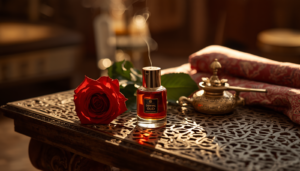
Somewhere deep in a rainforest in Assam, India, a tree is bleeding.
A fungus has entered through a wound in its bark, and in response, the tree begins doing something extraordinary. It floods the infected tissue with a dark, dense, intensely aromatic resin. Over decades, that resin saturates the heartwood – turning it from pale and odourless to nearly black, and worth more than gold by weight.
That resin-soaked wood is agarwood. The oil distilled from it is oud. Together, they form one of the most fascinating, expensive, and culturally layered natural materials in the history of human civilisation.
In Dubai and across the Arab world, agarwood is not a luxury novelty. It is a living part of daily life – burned in homes, gifted at weddings, and worn as a mark of cultural identity. Understanding what agarwood truly is, how it forms, why it costs what it does, and how to choose the right form for your needs is knowledge worth having before you ever make a purchase.
What Is Agarwood? (Direct Answer)
Agarwood is a rare, dark, resin-saturated heartwood produced inside trees of the Aquilaria genus, primarily found across Southeast Asia and South Asia. It forms when the tree responds to a specific fungal infection by generating a dense, fragrant defensive resin. This resin-soaked wood – and the precious oil distilled from it called oud – is considered one of the most expensive natural materials on Earth, used globally in luxury perfumery, religious incense, and traditional medicine.
Agarwood is not a tree. It is not a species. It is a biological condition – a transformation that occurs inside a very specific group of trees when stress, infection, and time converge in precisely the right way.
The same material is known by different names across the world’s cultures:
- Oud (عود) – Arabic, used widely across the UAE, Saudi Arabia, and the Gulf
- Chen Xiang (沉香) – Mandarin Chinese, meaning “sinking incense”
- Jinkoh (沈香) – Japanese
- Gaharu – Malay and Indonesian
- Aguru – Sanskrit, one of the oldest recorded names for the material
- Aloeswood – historical English, referencing the same material mentioned in the Bible
These names span thousands of years and dozens of civilisations. That kind of universal reach tells you something profound about how deeply, and for how long, humanity has valued this material.
This article covers everything worth knowing about agarwood – from the biology of its formation and the chemistry behind its scent, to the cultures that built entire rituals around it, the economics that make it one of the world’s most intensely traded luxury commodities, and the practical guidance you need if you are considering buying it in Dubai or anywhere else.
What Is the Aquilaria Tree? The Source of All Agarwood
The Aquilaria tree is a genus of flowering evergreen trees native to South and Southeast Asia, belonging to the plant family Thymelaeaceae. There are at least 21 recognised species within the genus, and approximately 19 of them are capable of producing agarwood under the right conditions of stress or fungal infection.
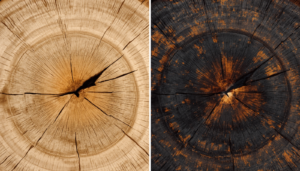
Before any infection occurs, an Aquilaria tree looks entirely unremarkable. It grows tall and straight, with glossy elliptical leaves and small, fragrant flowers. Cut into a healthy specimen and the heartwood is pale – almost white – with no meaningful scent whatsoever. Nothing about its outward appearance hints at the extraordinary transformation sleeping inside it.
That is what makes agarwood so paradoxical, and so genuinely fascinating. The tree’s value is entirely latent. It exists only as a possibility – waiting for something to go wrong.
The Botanical Basics of the Agarwood Tree
Aquilaria belongs to the plant family Thymelaeaceae, found mostly in tropical and subtropical regions. The key physical characteristics of the tree include:
- Height: Typically 20 to 40 metres at full maturity.
- Habitat: Humid lowland tropical rainforests, from sea level to approximately 1,000 metres elevation.
- Range: A broad arc from the eastern Himalayas through mainland Southeast Asia, into the Malay Archipelago, and extending into the Pacific island chains.
- Appearance: Straight trunk, smooth grey bark, glossy dark-green leaves, and clusters of small, pale, fragrant flowers.
- Heartwood before infection: White to pale cream in colour, lightweight, and completely odourless.
- Related genera: Gyrinops and Gonystylus can also produce agarwood-like resin, though their output is generally considered of lower aromatic complexity.
Key Agarwood-Producing Species and Their Origins
Not all Aquilaria species produce the same quality of agarwood. The following species are the most commercially and culturally significant in the global oud trade:
| Species | Primary Region | Trade Significance |
| Aquilaria malaccensis | Malaysia, Indonesia | Most widely traded species globally; Critically Endangered (IUCN) |
| Aquilaria agallocha | India (Assam), Bangladesh | Source of prized Hindi oud; intensely aromatic and complex |
| Aquilaria crassna | Cambodia, Vietnam, Laos | Origin of famous Cambodian and Vietnamese oud; Critically Endangered (IUCN) |
| Aquilaria sinensis | Southern China | Widely cultivated; primary source of Chinese commercial agarwood |
| Aquilaria subintegra | Thailand | Primary Thai agarwood source |
| Aquilaria filaria | Papua New Guinea, Indonesia | Vulnerable (IUCN); ~97% of traded material from wild populations |
| Aquilaria microcarpa | Indonesia, Borneo | Secondary commercial source |
The Core Paradox of Agarwood
Here is the detail that most people miss entirely: a perfectly healthy Aquilaria tree has essentially no commercial value whatsoever. Consider these facts:
- It produces no fragrance at all.
- Its wood is not visually striking or structurally exceptional.
- It does not serve as useful timber or furniture material.
- It is not edible, medicinal, or otherwise remarkable in its healthy state.
- Farmers who plant it are waiting – sometimes for decades – for something damaging to happen to it.
The tree’s extraordinary worth exists entirely in the space between wounding and healing. This paradox – value born from damage, beauty born from suffering – is one of nature’s most remarkable stories, and it sits at the heart of everything that makes agarwood what it is.
How Does Agarwood Form? The Science of What Is Agarwood
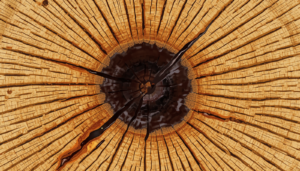
Agarwood forms when an Aquilaria tree becomes infected by a specific mould – most commonly Phaeoacremonium parasitica and related fungal species – typically entering through a wound in the bark. The tree responds by producing a dark, dense, aromatic resin as a chemical defence. This resin gradually saturates the heartwood over decades, creating what we know as agarwood.
Research published in Microbiology Spectrum (National Institutes of Health, 2022) confirmed that Phaeoacremonium rubrigenum is the predominant biomarker fungus found in the critical resin-accumulation layer of Aquilaria sinensis, promoting sesquiterpene production through a specific phosphorylation mechanism in the tree’s cellular chemistry.
Research cited in the NIH’s PMC database confirmed that only approximately 10% of wild Aquilaria trees naturally develop agarwood through infection – a single statistic that explains more about the material’s price than almost anything else.
The Five Stages of Agarwood Formation
Understanding how agarwood forms makes clear why it cannot be faked, rushed, or fully replicated. It is a sustained biological negotiation between a tree fighting for its life and a fungus establishing itself within a living host.
The Wound (The Trigger)
Something must first break through the tree’s outer defences. In nature, this occurs through:
- Insect boring, particularly by wood-boring beetles.
- Lightning strikes that scar or split the bark.
- Natural branch breakage from storms or animal activity.
- Physical damage caused by floods, falling trees, or landslides.
- In plantation settings: deliberate mechanical wounding or drilling by farmers.
Key condition: Not every wound results in agarwood. The right fungal species must be present, the tree must be healthy enough to mount a defence, and environmental conditions must support the infection process.
The Fungal Invasion
Once inside the tree, fungi begin colonising the wounded tissue. The primary organisms involved include:
- Phaeoacremonium parasitica – the most studied primary pathogen.
- Phaeoacremonium rubrigenum – identified as the dominant marker fungus in resin-accumulation zones (NIH, 2022).
- Fusarium solani – confirmed to promote agarwood formation in multiple peer-reviewed studies.
- Aspergillus niger – another associated species found in infected tissue samples.
Research from the Royal Society Open Science confirmed that wound location on the tree significantly influences fungal diversity, which in turn shapes the volatile aromatic compound profile of the resulting agarwood. Where the tree is wounded also determines what the final scent will be.
The Biochemical Defence Response
This is the critical stage. When the tree detects the fungal invasion, it activates a targeted immune response through three simultaneous actions:
- Specialised cells called tyloses move to fill the wood vessels near the infection site, physically attempting to wall off the fungal spread.
- The tree simultaneously begins synthesising sesquiterpene compounds – a class of aromatic molecules with antimicrobial properties that form the core of its chemical defence.
- These sesquiterpene compounds accumulate in the infected tissue, saturating the wood fibres around and beyond the wound site.
The critical insight: The sesquiterpenes the tree manufactures in this moment of biological crisis are the very compounds responsible for oud’s signature scent. The fragrance is, in the most literal sense, a weapon the tree deploys to fight for its own survival.
Resin Accumulation Over Time
The resin produced by the tree’s defence response gradually saturates the surrounding wood fibres. As it accumulates over years and decades, it transforms the wood’s physical properties dramatically:
| Property | Uninfected Wood | Infected Wood (Mature Agarwood) |
| Colour | White to pale cream | Deep brown to near-black |
| Scent | None | Rich, complex, intensely aromatic |
| Weight | Light | Noticeably heavy; premium grades sink in water |
| Value | Negligible | Among the highest of any natural material on Earth |
Formation timelines by quality grade:
- Detectable resin: 5 to 10 years minimum.
- Commercial-grade agarwood: 20 to 50 years.
- Premium wild-grade agarwood: 80 to 150+ years.
Research cited by the NIH indicates the best resin yields come from trees aged 50 years and older. The truly exceptional wild grades – particularly Vietnamese Ky Nam – represent trees that may have been accumulating resin for well over a century.
The Chemistry Behind the Scent
The aromatic compounds responsible for oud’s character are sesquiterpenes and their oxidation products. These compounds do not exist in the tree before infection. The fungal attack literally manufactures the chemistry of one of the world’s greatest perfume ingredients.
Key aroma compounds identified in agarwood include:
- Agarospirol – contributes earthy, woody depth and grounding warmth.
- Jinkohol – associated with the distinctive “oud” core character connoisseurs identify as the soul of the material.
- Beta-Agarofuran – spicy and balsamic, adding resinous warmth to the overall profile.
- Dihydroagarofuran – sweet and resinous with a comforting, settling undertone.
- Jinkoh-eremol – floral and lightly fruity, providing aromatic balance within the complex.
- Guaiol and Guaiaquenes – intensely woody and resinous, present in premium-grade material.
Research published in Frontiers in Microbiology (2024) confirmed that different fungal induction methods alter the specific aromatic compound profile of the resulting agarwood – helping explain why plantation-grown inoculated material often smells different from wild agarwood even when produced from the same tree species.
Where in the World Does Agarwood Come From?
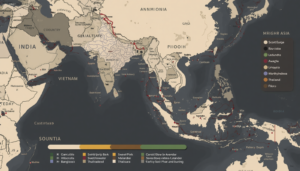
Agarwood is produced primarily across South and Southeast Asia, with the highest-quality grades originating from India’s Assam region, Cambodia, and Vietnam. Other significant producing countries include Indonesia, Malaysia, Bangladesh, Laos, Thailand, and Papua New Guinea – each yielding oud with distinct aromatic profiles shaped by geography, tree species, and local fungal populations.
Think of agarwood the way wine connoisseurs think of terroir. Just as a Burgundy tastes fundamentally different from a Bordeaux due to differences in soil, climate, and local tradition, an Indian Hindi oud smells nothing like a Cambodian oud – even though both come from Aquilaria trees subjected to similar infection processes. In agarwood, geography is chemistry.
The “Oud Terroir” – Origin-by-Origin Breakdown
India – Assam Region (Hindi Oud)
The Assam region of northeastern India is widely regarded by oud connoisseurs as producing some of the world’s most complex and deeply prized material. Indian oud – known in the global trade as “Hindi oud” – comes primarily from Aquilaria agallocha.
Key characteristics of Hindi oud:
- Dark, intensely animalic, and leathery on the opening.
- Deeply complex middle notes with an aged, almost sacred warmth.
- Exceptionally long dry-down that serious collectors describe as unmatched.
- Most polarising for first-time buyers; most prized by experienced connoisseurs.
- The benchmark reference for all other oud origins in the traditional trade.
Various grades of Hindi oud chips – from accessible commercial grades through to premium double-super varieties – reflect the full spectrum of this remarkable origin’s aromatic range.
Important buyer’s note: The term “Hindi” in the oud trade is also used as a scent descriptor, not exclusively a geographic label. Some sellers use “Hindi-style” to describe a dark, animalic profile regardless of actual origin. Always request specific region, species, and origin documentation when purchasing.
Cambodia (Cambodian Oud)
Cambodian oud, derived primarily from Aquilaria crassna, is arguably the most accessible entry point for first-time buyers of real agarwood.
Key characteristics of Cambodian oud:
- Sweeter, fruitier aromatic profile with gentle floral undertones.
- Warm resinous depth without the confrontational opening of Hindi grades.
- Widely appreciated across both Eastern and Western fragrance communities.
- A genuinely beautiful oud that rewards both new and experienced noses.
Vietnam (Vietnamese Oud and Ky Nam)
Vietnam produces what many specialists consider the apex of the entire material.
Key characteristics of Vietnamese oud:
- Exceptional refinement and cool elegance in the aromatic profile.
- A complexity described as almost ethereal – layered without being confrontational.
- Ky Nam (Kỳ Nam) is the rarest and most expensive single grade of agarwood on Earth.
- Even standard Vietnamese grades are considered premium internationally.
Ky Nam was historically reserved for Vietnamese royalty and forbidden from private trade under imperial law. Today, genuine wild Ky Nam appears only through specialist dealers with established collector relationships. Accessible Moori Vietnam agarwood represents the Vietnamese origin’s character at a more approachable price point.
Indonesia and Malaysia
These two countries together represent the largest volume of commercial agarwood production globally.
Key characteristics of Indonesian and Malaysian oud:
- Earthier, woodier aromatic profiles.
- Less animalic than Hindi oud and less sweet than Cambodian.
- More accessible price points with reliable commercial quality.
- Primary source of cultivated plantation agarwood worldwide.
- The most practical entry point for everyday use in Dubai and the Gulf.
Indonesian oud grades offer genuine quality and distinctive character for buyers who want authentic agarwood without the ultra-premium price of Indian or Vietnamese origins.
Sri Lanka
Sri Lanka produces a distinct expression of agarwood from Gyrinops walla, a related species.
Key characteristics of Sri Lankan oud:
- Lighter and softer character compared to the major Southeast Asian origins.
- Gentler opening notes – more accessible for new buyers.
- Well-suited as an introductory oud experience.
- Available in various grades including Oud Sri Lanka varieties sourced specifically for the Gulf market.
Bangladesh, Laos, Thailand, and Papua New Guinea
Each of these countries contributes meaningful supply to the global market:
- Bangladesh – produces material closely related to Indian Assam oud; less prominently marketed but can be of excellent quality.
- Laos and Thailand – produce material falling between the Cambodian and Vietnamese scent profiles; resinous and refined.
- Papua New Guinea – produces Aquilaria filaria, yielding a lighter, greener aromatic character; approximately 97% of traded material comes from wild sources, raising serious conservation concerns.
Regional Scent Profiles at a Glance
| Region | Species | Scent Character | Market Position |
| India (Assam) | A. agallocha | Dark, animalic, leathery, complex | Ultra-premium; connoisseur grade |
| Cambodia | A. crassna | Sweet, fruity, floral, approachable | Premium; popular globally |
| Vietnam | A. crassna | Refined, cool, ethereal; Ky Nam is rarest | Ultra-premium to collector grade |
| Indonesia | A. malaccensis, A. filaria | Earthy, woody, grounded | Commercial to mid-premium |
| Malaysia | A. malaccensis | Softer, slightly green, woody | Commercial to mid-range |
| Sri Lanka | Gyrinops walla | Lighter, softer, gentler | Entry-level to mid-range |
| Bangladesh | A. agallocha | Similar to Hindi; less marketed | Premium but under-recognised |
| Laos / Thailand | A. crassna | Between Cambodian and Vietnamese | Mid-range to premium |
What Is the Difference Between Agarwood and Oud?
Agarwood refers to the resin-saturated wood itself, harvested from infected Aquilaria trees and most commonly burned as incense. Oud is the concentrated essential oil – also known as dehnal oud – extracted from that wood through steam or hydro-distillation. While the two terms are frequently used interchangeably in casual conversation, they describe two physically different forms of the same raw material.
This is one of the most common points of confusion for anyone first entering the world of agarwood and Arabian fragrance. Understanding the distinction matters practically – the two forms have different uses, different price structures, and deliver entirely different sensory experiences.
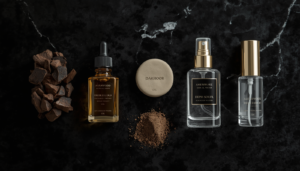
The Five Main Forms of Agarwood
Raw Agarwood Chips (Oud Chips)
The most direct and traditional form of the material:
- Resin-rich pieces of infected heartwood, hand-sorted by grade and origin.
- Heated over charcoal or an electric burner to release aromatic compounds as fragrant smoke.
- Produces a smoky, complex, atmospheric fragrance that fills a room.
- The form referenced in ancient Vedic texts, burned in mosques, Buddhist temples, and royal courts for millennia.
- The standard form used in everyday Gulf Arab incense culture.
- Available in graded varieties from commercial to ultra-premium across all major origins.
Dehnal Oud – Pure Oud Oil
The distilled liquid form, considered the most precious expression of agarwood:
- Highly concentrated essential oil applied directly to skin in one to two drops.
- The scent is intimate, skin-worn, and evolves significantly over hours of wear.
- Known in Arabic as dehnal oud – the cornerstone of traditional Arabian perfumery.
- A fundamentally different experience from burning chips: personal rather than atmospheric.
- One to two drops on pulse points is sufficient for a full, long-lasting application.
Explore the full range of pure dehnal oud oils to experience the intimate side of agarwood in its most concentrated form.
Oud Muattar (Perfumed Agarwood Chips)
Almost no general article mentions this form, despite its widespread daily use across the Gulf:
- Agarwood chips blended with oud oil, rose water, musk, or other fragrant materials, then dried.
- Produces a richer, more layered incense experience than raw chips alone.
- The standard form used at Gulf Arab weddings, formal gatherings, and royal majlises.
- Sits between raw chips and pure oil in both price and experience.
- Culturally authentic, practically accessible, and a superb introduction to the world of agarwood incense.
A wide selection of bakhoor and oud muattar products captures the full range of this traditional Arabian incense category.
Oud Hydrosol (Oud Water)
The aromatic water byproduct of dehnal oud distillation:
- Contains lower concentrations of the same aromatic compounds found in the oil.
- Used as a room mist, light personal fragrance, fabric spray, and skincare ingredient.
- An excellent first encounter for those who find pure dehnal oud oil too intense.
- Also used to lightly scent prayer spaces, linen, and clothing.
Agarwood Powder
Finely ground resin-rich wood used in:
- Incense stick and compressed incense tablet production.
- Traditional Ayurvedic and TCM medicine preparations.
- Blended incense products where cost efficiency is a production requirement.
- Ceremonial applications in Buddhist and Hindu temple settings.
Agarwood vs. Oud: Side-by-Side Comparison
| Form | How Used | Scent Experience | Price Range (AED) |
| Raw agarwood chips | Burned over heat | Smoky, atmospheric, room-filling | AED 50–100,000+/kg |
| Dehnal oud oil | Applied to skin | Concentrated, evolving, intimate | AED 3,000–290,000+/kg |
| Oud muattar / bakhoor | Burned over heat | Richer than chips; perfumed smoke | AED 20–5,000/kg |
| Oud hydrosol | Sprayed lightly | Light, delicate, accessible | AED 30–500/litre |
| Agarwood powder | Blended into incense | Moderate, diffused | AED 10–2,000/kg |
Real Oud vs. Synthetic Oud: The Distinction That Matters Most
The majority of mainstream perfumes sold with “oud” in their name – including many from major fragrance brands at luxury price points – contain no actual oud oil. They use synthetic aromachemicals designed to approximate the oud character, such as Iso E Super, woody amber accords, and proprietary agarwood-accord blends.
How to tell the difference at a glance:
- Real oud oil: Scent evolves and shifts dramatically over hours; origin and sourcing clearly disclosed; price reflects the genuine cost of authentic material.
- Synthetic oud accord: Uniform, linear scent with very little evolution; price is dramatically below the market rate for real material; no sourcing or species information provided.
If a perfume containing claimed real oud is priced at AED 80, it does not contain real oud. For authentic Arabian oud fragrance experiences that stay true to the original material’s character, sourcing and origin transparency are non-negotiable.
How Is Dehnal Oud (Oud Oil) Made?
Oud oil – known across the Arab world as dehnal oud – is produced by steam distillation or hydro-distillation of agarwood chips. The wood is first soaked in water for days or weeks to break down the cell structure, then steam is passed through the material to volatilise the aromatic compounds. The resulting vapour is condensed into liquid form and separated into oud oil and oud water.
Experienced distillers describe reading the oil – adjusting heat, monitoring colour and viscosity, making judgement calls that shape the final character in ways no technical specification can fully capture. Distilling dehnal oud is as much a craft as it is a science.
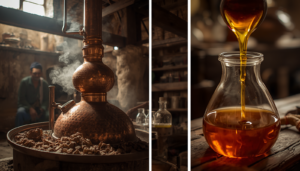
The Dehnal Oud Distillation Process – Step by Step
Selection and Sorting
Before distillation begins, the wood must be carefully hand-sorted:
- Darker, heavier pieces with clearly visible resin saturation are selected for distillation.
- Light-coloured, resin-free wood is discarded or processed into powder.
- Only experienced hands and eyes can reliably distinguish resin-rich from resin-poor material at this stage.
- Errors at this stage compromise the entire batch – there is no recovery once the still is running.
Soaking
The selected chips are submerged in clean water for 7 to 30 days, sometimes longer. This serves two purposes:
- Structural breakdown: Soaking softens the wood cell structure, making aromatic compounds more accessible during distillation.
- Controlled fermentation: The soaking period allows measured fermentation that can enhance certain aspects of the oil’s aromatic depth and complexity.
The soaking duration and water quality are variables skilled distillers manage carefully based on the wood’s grade and geographic origin.
Loading the Still
Soaked wood is packed tightly into the distillation vessel. Two types of still are commonly used:
- Traditional copper stills: Produce softer, rounder oil with greater aromatic complexity – preferred by artisan distillers and connoisseurs.
- Modern stainless steel stills: Deliver a cleaner, more linear result – standard in commercial-scale operations.
Steam Application
Two primary distillation methods are used in the industry:
- Hydro-distillation: Wood is submerged directly in water and heated from below. This is the traditional method that generally produces more complex, rounded oil.
- Steam distillation: Steam is generated separately and passed through the packed wood. More controlled and common in modern commercial operations.
Heat must be carefully regulated throughout the entire run. Too high and the oil becomes harsh and unbalanced. Too low and key aromatic fractions are never captured.
Condensation and Separation
Steam carrying volatile aromatic compounds passes through a condensing coil, converting back into liquid form. This liquid drops into a Florentine flask where:
- Dehnal oud oil floats on the surface and is carefully drawn off.
- Oud hydrosol water settles below and is collected separately for use in its own right.
Ageing the Dehnal Oud
Raw oud oil straight from the still often smells rough, slightly solvent-forward, or aromatically unbalanced. Skilled distillers age their dehnal oud before it reaches the market:
- Aged in glass or stainless steel vessels for months to years.
- Harsh, sharp top notes gradually dissipate during the ageing period.
- The oil’s aromatic profile integrates and deepens into the rounded complexity connoisseurs prize.
- Some exceptional batches are aged for 3 to 5 years before release.
The Yield Problem – Why It Matters for Price
The extraction efficiency of oud oil is remarkably, almost brutally low. The numbers speak for themselves:
- Standard commercial distillation: 70 to 100 kilograms of agarwood chips → approximately 1 litre of dehnal oud oil.
- High-grade wild material: As little as 20 millilitres per kilogram of oil – meaning 50 kilograms of rare, expensive wood produces just 1 litre.
- Cost implication: When wild agarwood chips cost AED 18,000 to AED 110,000 per kilogram, the raw material cost alone for one litre of premium wild dehnal oud can exceed AED 180,000 – before a single dirham has been spent on labour, equipment, energy, or ageing.
What Does Agarwood Smell Like?
Agarwood has a complex, multi-layered scent combining deep woody warmth, smoky incense, dark sweetness, leather, and subtle animalic notes. Its aroma evolves significantly over hours of wear – opening with intensity and drying down to a long-lasting amber-and-musk base. The exact scent profile varies considerably by geographic origin, tree species, distillation method, and the individual skin chemistry of the person wearing it.
Oud is genuinely difficult to describe in simple language – not because the smell is vague, but because it is so specific and layered that it resists easy analogies. It does not smell like a pine forest, a candle, or a leather jacket. It smells like oud, which is a category entirely its own.
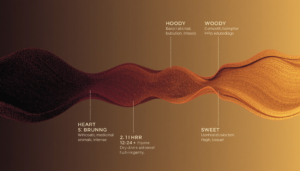
The Three-Phase Aromatic Journey of Agarwood
The Opening (First 5 to 15 Minutes)
The opening is the most polarising phase, particularly for first-time buyers. What you may notice:
- A strong initial impression that experienced noses describe as animalic, leathery, or deeply organic.
- In Hindi oud grades, the opening can be intensely confrontational for an unaccustomed nose.
- In Cambodian oud grades, the opening is considerably gentler and more immediately approachable.
- In Vietnamese oud, the opening is refined and cool from the very first moment.
In Arab Gulf, South Asian, and East Asian fragrance culture, these opening notes are a signal of authenticity and quality – not a flaw to be corrected.
The Heart (15 Minutes to 2 Hours)
The heart is where most people fall deeply in love with agarwood:
- Deep, resinous woody warmth that feels ancient and grounding.
- Notes of dried fruit, dark amber, and smouldering incense.
- A dark, complex sweetness quite different from light floral sweetness.
- Regional character becomes most legible to an experienced nose at this stage.
- The heart phase is considered the definitive “signature” of a particular oud origin.
The Dry-Down (2 to 24+ Hours)
Real agarwood oil does not fade like a conventional fragrance. The dry-down is where it truly distinguishes itself:
- An amber-musk-wood foundation persists on skin for 8 to 24 hours.
- On fabric, premium wild oud can remain detectable for several days.
- The scent at hour twelve is often more beautiful and refined than the scent at hour one.
- This longevity is a direct result of heavy sesquiterpene molecules that evaporate very slowly and bond strongly to both skin and textile fibres.
- It is one of the most reliable ways to distinguish real oud from synthetic accord.
Regional Agarwood Scent Profiles Compared
| Origin | Scent Character | Best For |
| Hindi (Indian, Assam) | Dark, animalic, leathery, intensely complex | Connoisseurs; long-wear enthusiasts |
| Cambodian | Sweet, fruity, floral, warm, approachable | First-time buyers; Western palates |
| Vietnamese (Ky Nam) | Refined, cool, layered, almost ethereal | Collectors; experienced noses |
| Indonesian | Earthy, woody, grounded, reliable | Daily wear; accessible quality |
| Malaysian | Softer, slightly green, gentle | Blending; beginners |
| Sri Lankan | Lighter, softer, entry character | New buyers; introductory use |
Why Agarwood Smells Different on Every Person
The same oud oil can smell dramatically different on two different people’s skin. The biological factors responsible are:
- Skin pH: More acidic skin makes the animalic top notes sharper and more forward.
- Body temperature: Warmer skin volatilises lighter top notes faster, accelerating the journey to the heart.
- Skin oil composition: Drier skin tends to make oud feel warmer and sweeter; oilier skin may amplify the woody resinous character.
- Skin microbiome: The bacteria naturally present on your skin surface interact with aromatic compounds in ways that are entirely unique to each individual.
This variability is not a flaw. It is one of oud’s most remarkable characteristics – and one of the key reasons people describe real agarwood as feeling alive in a way that synthetic materials simply cannot replicate.
First-Time Buyer’s Guide to Experiencing Agarwood
If you are new to real oud, follow this sequence before forming any opinion:
- Apply the smallest amount you think could possibly be sufficient – a single touch of the applicator to a pulse point.
- Wait a full 20 to 30 minutes before forming any judgement whatsoever.
- Revisit the scent at 1 hour, 2 hours, and 4 hours after application.
- Note how the character shifts across those phases.
- The opening is not the story. The heart and dry-down are where agarwood reveals its true character.
What Are the Grades of Agarwood?
Agarwood is graded based on resin content, wood density, colour, geographic origin, and whether it was wild-harvested or cultivated on plantations. There is no single universal grading standard – systems vary by country and seller – but higher grades are consistently characterised by darker colour, greater density, higher resin percentage, wild origin, and greater tree age.
The absence of a universal standard creates genuine confusion for buyers and leaves wide room for misrepresentation. Understanding how grading works – and where its limitations lie – is genuinely valuable knowledge for any buyer in Dubai or elsewhere.
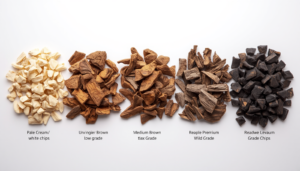
The Six Core Agarwood Grading Criteria
Resin Content – The Most Important Factor
Resin content is the single most critical quality indicator in agarwood. What it means in practice:
- Higher resin content means more aromatic compounds per unit volume.
- Results in darker colour, greater density, stronger fragrance, and higher market value.
- Can be estimated visually by experienced traders or measured scientifically via GC-MS chemical analysis.
- Serves as the foundation for every other grading assessment.
Density – The Traditional Sink Test
Premium agarwood sinks in water. This test has a sound scientific basis:
- The resin saturating high-grade wood is denser than water.
- When enough resin accumulates, the wood loses its natural buoyancy.
How to conduct the sink test:
- Fill a glass with clean, still water at room temperature.
- Drop the chip gently onto the surface.
- Immediate sinking = high resin content; premium grade.
- Slow or partial sinking = moderate resin; mid-grade.
- Floating = low resin content; lower commercial grade.
Critical caveat: The sink test can be gamed. Fraudulent sellers coat inferior wood with dense compounds or embed foreign materials to simulate sinking. Always use this test alongside other evaluation criteria – never as a standalone verification.
Colour – The Visual Quality Map
| Colour | Resin Level | Grade Indication |
| White to cream | Minimal | Very low grade or uninfected wood |
| Pale yellow | Low to moderate | Lower commercial grade |
| Amber to light brown | Moderate | Mid-grade commercial |
| Dark brown | High | Premium commercial |
| Very dark brown to black | Very high | Super-premium and collector grade |
Geographic Origin
Origin is a major value determinant independently of resin content:
- Wild Hindi oud from Assam commands a premium for its animalic complexity.
- Wild Vietnamese oud commands a premium for its ethereal refinement.
- Wild Cambodian oud commands a premium for its sweet, approachable richness.
- Origin claims should always be supported by documentation – not just verbal assurance.
Wild vs. Cultivated
The key differences between wild-harvested and plantation-grown agarwood:
- Wild-harvested: Natural multi-fungal infection over decades; extraordinary complexity; scarce and expensive; carries conservation concerns.
- Cultivated/plantation-grown: Single or controlled inoculation; formation in 8–15 years; improving quality; more ethical and accessible; the responsible choice for most buyers.
Wood Section
Where the resin-rich wood comes from on the tree affects quality significantly:
- Core heartwood: Highest grade; maximum resin accumulation over the longest time.
- Sapwood transitions: Mid-grade; some resin present but less concentrated.
- Outer sapwood scrapings: Lowest grade; minimal resin; often processed into powder.
The Vietnamese Grading System: A Useful Reference
Vietnam uses one of the most structured agarwood grading systems in the world:
| Grade | Name | Key Characteristics |
| Grade 1 | Ky Nam (Kỳ Nam) | Rarest on Earth; sinks immediately; oily texture; ethereal scent; historically reserved for the Vietnamese emperor |
| Grade 2 | Tram Huong (Trầm Hương) | High-quality wild; sinks fully or semi-submerged; strong fragrance; sought by serious collectors |
| Grade 3 | Do Bau | Lower resin; floats in water; commercially valuable for incense and lower-grade distillation |
Cultivated vs. Wild Agarwood: The Narrowing Quality Gap
| Factor | Cultivated (Plantation) | Wild-Harvested |
| Infection type | Single or controlled inoculation | Natural, complex, multi-fungal |
| Formation time | 8 to 15 years | 20 to 150+ years |
| Aromatic complexity | Good to excellent | Exceptional to extraordinary |
| Supply | Consistent and scalable | Erratic and shrinking |
| Conservation impact | Low – plantation trees | High – pressure on endangered wild populations |
| Price | More accessible | Premium to ultra-premium |
Burn Test: The Most Reliable Authentication Method
For raw wood chips, a controlled burn test remains the most reliable real-world authentication:
- Place a small chip on a heated surface or piece of smouldering charcoal.
- Observe the smoke and scent that emerge.
- Authentic high-grade agarwood: Produces smooth, complex, multi-layered smoke with no sharp, chemical, or synthetic notes.
- Inferior or adulterated wood: Reveals itself quickly through harsh, flat, chemically off-putting, or heavily synthetic smoke.
What Are the Uses of Agarwood and Oud in Daily Life?
Agarwood and oud are used primarily in luxury perfumery, religious and ceremonial incense, and traditional medicine systems across Asia and the Middle East. Secondary uses include meditation, aromatherapy, high-end skincare, and decorative objects. It is a central cultural material in Arab, South Asian, East Asian, and Southeast Asian traditions with an unbroken record of use spanning more than 3,000 years.
The global agarwood chips market was valued at $41.05 billion in 2024 and is projected to reach $67.45 billion by 2031 (Persistence Market Research, CAGR of 7.4%). These figures reflect a material that is not merely a niche curiosity – it is a global industry with deep cultural roots and rapidly expanding reach.
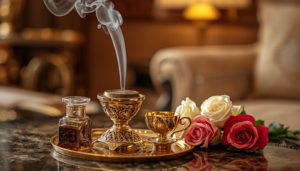
Arabian Perfumery and Luxury Fragrance
Oud is now one of the most sought-after raw ingredients in both Eastern and Western luxury perfumery.
What makes oud so valuable in perfumery:
- Exceptional longevity – lasts 8 to 24 hours on skin, far exceeding most other fragrance materials.
- Acts as a natural fixative, anchoring and extending other fragrance notes in a composition.
- Unparalleled complexity – no synthetic material fully replicates its aromatic depth.
- Deeply embedded in the cultural identity of Arabian fragrance tradition.
Houses internationally recognised for using genuine oud oil in their formulations:
- Amouage (Oman) – arguably the most significant luxury Arabian oud perfume house globally.
- Ensar Oud – among the most respected specialist oud oil houses in the world.
- Roja Parfums – British luxury house with high-quality oud-centred compositions.
- Tom Ford, Dior, and YSL – mainstream luxury brands that have introduced oud to Western consumers, typically using blended or synthetic oud accords rather than pure oil.
Natural oud oil accounts for over 77% of the total global agarwood oil market value by revenue (Persistence Market Research), despite synthetic accords dominating volume in mass-market products. Explore the full Arabian oud fragrance range to discover what genuine oud-based perfumery truly smells like.
Bakhoor and Arabian Incense Culture
Burning agarwood chips and bakhoor is not a luxury behaviour in the Arab Gulf – it is a cultural language spoken daily.
In the Gulf states – UAE, Saudi Arabia, Kuwait, Qatar, Oman, and Bahrain:
- The mabkhara (incense burner) is as standard in a Gulf home as a coffee maker in a Western kitchen.
- Offering fragrant bakhoor smoke to guests upon arrival is one of the most fundamental acts of Arabic hospitality.
- Scenting guests’ clothing by passing the mabkhara is a gesture of honour and sincere welcome.
- Mosques are routinely scented with oud before Friday prayers.
- At Gulf weddings and formal gatherings, bakhoor smoke is considered both beautiful and auspicious.
- Standing over a mabkhara to let smoke permeate clothing before leaving the house is a daily practice in many households.
The oud scent that fills the streets of Dubai, Sharjah, and Abu Dhabi during Eid is not incidental. It is the scent of a civilisation expressing its values in sensory form. A carefully selected bakhoor or oud muattar blend is one of the most culturally authentic gifts you can give or receive in the Gulf.
Traditional Medicine and Wellness
Agarwood has a documented medicinal history spanning over 2,000 years across multiple independent healing traditions.
In Ayurvedic medicine – referenced in the classical Charaka Samhita:
- Applied for nervous system disorders and anxiety.
- Used as a digestive aid and general restorative tonic.
- Prescribed for stress-related conditions.
- Considered an aphrodisiac and a substance that strengthens vital energy.
In Traditional Chinese Medicine (TCM) – known as Chen Xiang:
- Used as a warming herb for chest and abdominal pain.
- Applied for respiratory conditions including asthma.
- Prescribed for nausea and circulatory complaints.
- Listed in classical Chinese pharmacopoeia for over 1,000 years.
In Japanese Kampo medicine:
- Used for digestive disorders and anxiety-related conditions.
What modern science currently shows:
- Preliminary studies demonstrate anxiolytic (anti-anxiety) effects in animal models.
- Laboratory studies show anti-inflammatory properties from agarwood extracts.
- Antimicrobial activity against certain bacterial strains demonstrated in vitro.
- Early research suggests potential antioxidant and anti-tumour properties.
Honest scientific caveat: Most of this research remains at the laboratory or animal model stage. Medicinal claims rest on centuries of accumulated practical knowledge, and the early scientific data is genuinely promising – but overstating what clinical science has definitively proven would not serve readers honestly.
Meditation, Aromatherapy, and Spiritual Practice
Agarwood has been burned during prayer and meditation in Buddhist, Hindu, Islamic, and Shinto traditions for over two thousand years. The consistency of this cross-cultural use points to something beyond tradition alone.
Traditional spiritual uses of agarwood:
- Burned in mosques before Friday prayers and during Ramadan.
- Used as an offering in Buddhist temple ceremonies across Southeast and East Asia.
- Burned during Hindu havan fire rituals as one of the sacred substances.
- Central to Japanese Kōdō (the Way of Incense) – one of Japan’s three classical refinement arts.
- Used in Sufi meditation and dhikr practices throughout the Islamic world.
Modern wellness applications:
- Premium oud diffuser blends marketed for meditation and stress relief.
- Oud roll-on wellness products designed for grounding and mental clarity.
- Luxury spa treatments incorporating oud-infused massage oils and mists.
- Aromatherapy formulations targeting anxiety reduction and improved sleep quality.
Emerging Applications in Dubai and Globally
Agarwood is finding new expression beyond its traditional roles:
- High-end skincare: Oud extract appearing in luxury serums, facial oils, and anti-ageing formulations – leveraging reputed anti-inflammatory and antioxidant properties.
- Interior design: Decorative agarwood sculptures, carved objects, and display bowls of premium chips are recognised status markers in luxury Gulf and East Asian interiors.
- Ceremonial gifting: Premium agarwood remains one of the most prestigious gift materials in Gulf royal, diplomatic, and corporate traditions. It carries cultural, economic, and symbolic weight that few other natural materials can approach.
- Personal care: Oud-infused shampoos, body oils, and hand creams are entering the premium personal care market across the UAE and Saudi Arabia.
Why Is Agarwood So Expensive? The Full Economic Picture
Agarwood is expensive because of a convergence of extreme biological rarity, decades-long formation time, labour-intensive harvesting, very low oil yield, international trade regulations, widespread fraud, and rapidly growing global demand. Premium first-grade wild oud oil exceeded $290,000 per kilogram in 2026 – making it the most expensive natural raw material on Earth by weight.
Every element of the agarwood supply chain pushes the price upward. There is no single cause – there are seven distinct compounding cost drivers, and they reinforce each other.
The 7 Reasons Why Agarwood Costs More Than Gold
Extreme Biological Rarity
- Only approximately 10% of wild Aquilaria trees naturally develop agarwood, according to NIH-cited research.
- The CITES Secretariat notes the natural infection rate in some wild populations may be as low as 2%.
- The global wild Aquilaria population has declined by approximately 80% in little more than a century (CITES official reporting).
- Aquilaria malaccensis – the primary commercial source – is now Critically Endangered on the IUCN Red List.
Formation Time That Cannot Be Accelerated
Three non-negotiable timelines define agarwood’s formation:
- Detectable resin: 5 to 10 years minimum.
- Commercial-grade agarwood: 20 to 50 years.
- Premium wild-grade: 80 to 150+ years.
No technology meaningfully accelerates this process in wild trees. The clock simply cannot be moved forward.
Labour-Intensive Harvesting
Every stage of wild agarwood harvesting is manual and difficult:
- Wild agarwood grows in deep tropical rainforest – no mechanised harvest is possible.
- Every tree must be individually located, assessed for resin presence, cut, and hand-processed.
- Harvesters must separate resin-rich from resin-poor wood by hand in field conditions.
- Operations occur in remote, physically demanding environments, often in regions with complex regulatory conditions.
- A single good harvest day in the field may yield only a small fraction of a kilogram of premium wood.
Extreme Distillation Inefficiency
The yield numbers make the price arithmetic inescapable:
- 70 to 100 kilograms of agarwood chips → approximately 1 litre of dehnal oud oil.
- High-grade wild material: as little as 20 millilitres per kilogram of oil.
- 50 kilograms of rare wood is required to produce just 1 litre of premium oil.
- The raw material cost alone for one litre of premium wild oud can exceed $50,000 USD before distillation begins.
CITES Regulatory Compliance
International trade in agarwood carries significant compliance costs:
- CITES Appendix II export permits required from every country of origin.
- Matching import documentation required in every receiving country.
- Compliance adds administrative cost, legal complexity, and processing time to every international shipment.
- Creates measurable price disadvantage relative to illegal supply chains that bypass these requirements entirely.
Rampant Fraud and Adulteration
Common fraud practices the legitimate market must absorb the costs of:
- Diluting dehnal oud oil with synthetic compounds or cheap carrier oils.
- Treating low-resin wood chips with artificial resins to simulate weight and colour.
- Deliberately mislabelling geographic origin or quality grade.
- Embedding foreign materials in chips to make them pass the sink test fraudulently.
- Selling synthetic oud accord as “pure oud oil.”
Demand Growing Far Faster Than Supply
Global demand data tells a stark story:
- The global agarwood chips market projected to grow from $41.05 billion in 2024 to $67.45 billion by 2031 (CAGR of 7.4%, Persistence Market Research).
- Rising affluence in China and the Gulf region adding millions of new premium buyers.
- Western luxury perfumery’s embrace of oud creating an entirely new global consumer base.
- The wellness and aromatherapy sector adding further demand from multiple directions.
- Wild trees cannot be grown faster. Supply simply cannot scale at this pace.
Agarwood Price Benchmarks in 2026
| Product | Grade | Approximate Price Range |
| Wild oud oil, Hindi first-grade | Ultra-premium | $50,000–$290,000+/kg |
| Wild oud oil, Cambodian premium | Premium | $15,000–$40,000/litre |
| Cultivated dehnal oud oil | Commercial premium | $3,000–$15,000/litre |
| Ky Nam raw wood, Vietnamese wild | Ultra-rare | $50,000–$150,000+/kg |
| Raw agarwood chips, Grade A wild | Premium | $5,000–$30,000+/kg |
| Bakhoor and oud muattar blend | Varied | $50–$5,000/kg |
How Agarwood Compares to Other Ultra-Luxury Natural Materials
| Material | Approximate Price (2024–2026) |
| Gold | $85,000–$95,000/kg |
| Ambergris | $10,000–$50,000/kg |
| White Truffle | $5,000–$8,000/kg |
| Saffron | $5,000–$10,000/kg |
| First-grade wild Hindi Oud Oil | Up to $290,000/kg |
| Ky Nam Wood | Up to $150,000+/kg |
In its finest wild expressions, agarwood exceeds gold’s price by a factor of three. This is verified current market reality for authenticated, documented, first-grade wild material – not marketing language.
The Cultural and Historical Significance of Agarwood
Agarwood has been central to human spiritual, medical, and sensory culture for over 3,000 years. It is referenced in ancient Hindu Vedic texts, the Hebrew Bible, the Christian scriptures, the Quran, and classical Chinese imperial records. Today it remains a living cultural necessity in Arab Gulf society, a refined ceremonial art in Japan, and a sacred material in Buddhist and Hindu temple practice across Asia.
No other natural fragrant material carries this depth and breadth of civilisational significance. Agarwood’s history is not a marketing narrative – it is a genuine thread running through human experience across cultures that had no contact with each other, yet arrived at the same profound appreciation of the same material.
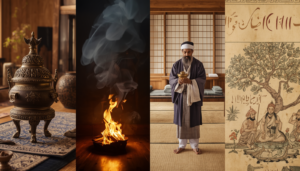
Ancient Roots of Agarwood
The Vedic Tradition – India, circa 1500–500 BCE
- Referenced in Sanskrit Vedic literature as Aguru – one of the oldest known written references to any fragrant material.
- The Charaka Samhita, foundational text of Ayurvedic medicine, describes its medicinal properties in detail.
- Used in havan (sacred fire) ceremonies, royal anointment, and ritual purification.
- Considered in the Vedic tradition as a direct vehicle for carrying prayers toward the divine.
- Described in the Vishnu Purana and other Hindu sacred texts as among the most precious of all natural materials.
Biblical References
The “aloes” referenced multiple times in the Hebrew Bible and Christian scriptures are now widely interpreted by scholars as agarwood:
- Psalms 45:8 – “All your robes are fragrant with myrrh and aloes and cassia.”
- Song of Solomon 4:14 – listed among the most precious aromatics in the world.
- John 19:39 – Nicodemus brings “a mixture of myrrh and aloes” for the burial of Jesus – one of the most significant ritual uses of fragrant material in the entire scriptural text.
Islamic Tradition
Oud occupies a unique and unshakeable position in Islamic culture:
- Multiple authentic hadiths specifically mention oud and encourage its use in personal and ceremonial contexts.
- Several traditions describe oud as one of the fragrances of Paradise – directly referenced in Islamic eschatology.
- This religious endorsement established oud as inseparable from Islamic devotional and daily life – a position it has maintained consistently across fourteen centuries.
- Burning oud is considered a Sunnah (prophetic tradition) and carries spiritual merit in Islamic practice.
Chinese Imperial Courts
Chen Xiang has been present in Chinese imperial life at least since the Han Dynasty (206 BCE – 220 CE):
- Presented as tribute from Southeast Asian kingdoms to the Chinese imperial court.
- Burned in imperial religious and state ceremonies.
- Placed in the burial chambers of emperors as one of the most valued grave goods.
- The Chinese character 沉 (chen), meaning “to sink,” is a direct reference to the traditional sink test.
- Referenced in Chinese medical pharmacopoeia for over 1,000 years.
Living Cultural Traditions Today
Arab Gulf Culture – The Scent of Hospitality
In the UAE, Saudi Arabia, Kuwait, Qatar, Oman, and Bahrain, oud is not a luxury. It is a cultural language spoken daily:
- Burning bakhoor for guests upon arrival communicates genuine respect and welcome.
- The fragrance at a Gulf wedding is inseparable from the occasion itself.
- Standing over a mabkhara to let smoke permeate one’s clothing before leaving the house is a daily practice in many Gulf households.
- The oud scent in Deira Dubai’s traditional souks and in homes across the Emirates during Eid is the scent of a civilisation expressing its values in sensory form.
- Gifting premium agarwood chips or bakhoor is one of the most considered and culturally resonant gestures in Gulf hospitality.
Japanese Kōdō – The Way of Incense
Kōdō (聞香道) – “the Way of Incense” – is one of Japan’s three classical refinement arts, alongside Kadō (flower arranging) and Chadō (tea ceremony):
- Dates to the Heian period (794–1185 CE) and was formalised during the Muromachi period.
- Practitioners say they “listen to” the incense – not simply smell it. The vocabulary itself signals the depth of attention the practice demands.
- Premium Jinkoh (agarwood) is the highest-ranked wood in the entire Kōdō tradition.
- Monkō – the discipline of identifying agarwood’s origin by smell alone – may take practitioners decades to develop.
- A famous piece of Jinkoh wood housed at the Nara National Museum has been in Japan since the 6th century CE.
Buddhist and Hindu Temple Practice
Agarwood is burned as an offering and space purification across multiple Asian religious traditions:
- Buddhist temples across Vietnam, Cambodia, Thailand, Japan, Korea, China, Sri Lanka, and Myanmar.
- Hindu temples across India and Nepal in havan fire ceremonies and daily puja offerings.
- Shinto shrines in Japan where Jinkoh holds ceremonial significance.
Smoke as Sacred Communication
In Islamic, Buddhist, Hindu, Shinto, and Taoist traditions, fragrant smoke is understood as something that rises from the human realm toward the divine. Across all these traditions, the logic is consistent:
- The smoke carries intention upward – prayer, gratitude, or supplication.
- Fragrant smoke is understood as more pure, more pleasing, and more effective as an intermediary than unfragrant smoke.
- Agarwood – the most fragrant and most ancient of all smoked materials – is therefore the highest-quality spiritual medium available to a human being in these traditions.
In this framework, agarwood is not merely a pleasant sensory experience. It is a spiritual technology – the oldest and most universal medium of communication between earth and whatever exists above it. That is a category of value no price tag can fully capture.
How to Buy Agarwood or Oud Oil in Dubai: A Practical Guide
To buy genuine agarwood or oud oil in Dubai, prioritise sellers who provide full origin transparency, species identification, distillation method disclosure, and CITES documentation for wild-harvested material. Avoid products priced significantly below market rates – authentic agarwood is inherently expensive, and suspiciously cheap oud is almost certainly adulterated, mislabelled, or synthetic.
Dubai is one of the world’s premier markets for authentic agarwood and pure dehnal oud. The city’s deep-rooted Arabian fragrance culture, its role as a major global oud trading hub, and its access to genuine material from all major origins make it one of the best places in the world to find real agarwood – provided you know what to look for.
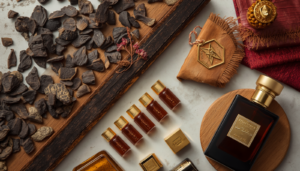
What to Look For in a Trustworthy Agarwood Seller in Dubai
When sourcing agarwood or dehnal oud – whether in Deira’s traditional souks, at speciality Arabian perfume shops, or through dedicated fragrance retailers – the following four factors consistently indicate a credible seller:
- Full origin transparency: Country, region, and species clearly and specifically stated – not just vague regional claims.
- Distillation year and method: For dehnal oud oil specifically, this information significantly affects what you are buying and how it will smell.
- Honest grading: A seller who acknowledges that their cultivated product is cultivated – rather than falsely claiming wild origin – is a seller worth trusting.
- Willingness to answer specific questions: Knowledgeable, transparent sellers welcome direct questions. Those who deflect, speak only in superlatives, or cannot provide documentation are a warning sign.
Forms Available to Buy in Dubai
Raw Agarwood Chips
- Used for burning as incense over charcoal or an electric mabkhara burner.
- The atmospheric experience – fragrance fills a room and scents clothing beautifully.
- Graded by resin content and origin; quality varies enormously across price points.
- Best evaluated by a small burn test before committing to a larger purchase.
- Available in origins including Hindi varieties, Vietnamese Moori, Indonesian super grades, and Sri Lanka oud.
Pure Dehnal Oud Oil (Attar)
- The most concentrated and valuable form of agarwood.
- Applied to pulse points – one to two drops is a complete and long-lasting application.
- Should always come with origin, species, distillation year, and method information from the seller.
- The form most vulnerable to fraud and adulteration in any market, including Dubai.
- Browse the full dehnal oud collection for pure, sourced oud oils across multiple origins.
Blended Oud Attar
- Dehnal oud oil combined with other natural materials – sandalwood, rose, musk, amber.
- A legitimate and often beautiful product category with a more accessible price point.
- Seller should clearly disclose the oud percentage and identify the other ingredients used.
Bakhoor and Oud Muattar
- Ready-to-burn Arabian incense products – the most culturally embedded form of agarwood in Gulf daily life.
- Culturally authentic and accessible as an entry point for those new to the world of agarwood.
- Quality varies significantly; buying from a reputable, specialist seller matters greatly.
- Explore the full range of bakhoor and oud muattar options for authentic Arabian incense in traditional and contemporary blends.
Red Flags: How to Spot Fake or Adulterated Agarwood in Dubai
| Warning Sign | What It Likely Indicates |
| Price far below market rate for the claimed grade | Diluted, adulterated, or entirely synthetic material |
| Uniform, flat scent that does not evolve on skin | Synthetic accord – not genuine oud oil |
| No origin, species, or distillation information provided | Untraceable, unverifiable sourcing |
| Wood chips that float despite premium grade claims | Low resin content; fails the basic sink test |
| Sharp, chemical, or solvent-like top note | Synthetic diluent or cheap carrier oil present |
| No CITES documentation for claimed wild-harvested origin | Potentially illegal or fraudulently labelled material |
| Seller unable or unwilling to answer direct sourcing questions | Not a transparent or trustworthy source |
Entry Points by Budget for Dubai Buyers
Under AED 200 – First Exploration
Best options for this budget:
- Indonesian or Malaysian cultivated oud attar blends.
- Commercially produced bakhoor from established Arabian perfume brands.
- A genuine starting point for exploring the agarwood experience without major financial commitment.
- Do not expect wild-grade aromatic complexity at this price point.
AED 200 to AED 750 – First Genuine Encounter
Best options for this budget:
- Small quantities of quality cultivated Cambodian or Vietnamese oud oil.
- Entry-level Hindi oud chip varieties for burning at home.
- This range offers a genuine, authentic encounter with real agarwood at a manageable commitment level.
AED 750 to AED 3,500 – Serious Exploration
Best options for this budget:
- Entry-level to mid-range pure dehnal oud oils from specialist sources.
- Premium commercial-grade agarwood chips from principal origins.
- Meaningful differences between origins and grades begin to reveal themselves clearly at this level.
AED 3,500 and Above – Connoisseur Territory
At this level:
- Wild-grade, single-origin dehnal oud oils and exceptional chip grades.
- Provenance, distiller reputation, and specific batch information matter greatly.
- This is where serious collectors and experienced buyers operate.
- The full range of premium agarwood products covers this territory across multiple origins.
Is Agarwood Legal? Sustainability and Conservation
Agarwood is legal to trade internationally, but it is regulated under CITES Appendix II. International trade in wild-harvested agarwood requires official export permits from the country of origin and import documentation in receiving countries. Wild Aquilaria populations have declined approximately 80% over the past century due to over-harvesting, making sustainable sourcing one of the most urgent challenges the entire industry faces.
What CITES Appendix II Means in Practice
The timeline of agarwood’s international trade regulation:
- 1995: Aquilaria malaccensis (the primary commercial source) first listed in CITES Appendix II – the first agarwood species to receive international trade protection.
- 2004: All Aquilaria species listed in Appendix II; related Gyrinops and Gonystylus genera also included.
What an Appendix II listing requires in practice:
- Exporters in origin countries must obtain CITES export permits before shipping.
- Documentation must confirm the material was legally harvested.
- Documentation must confirm the trade will not harm wild species survival.
- Importers in receiving countries must hold matching documentation.
- Buyers of wild-origin material should always request this documentation directly from the seller.
A reputable seller of genuine wild agarwood will have this documentation. A seller who cannot produce it is a seller to avoid.
The Scale of the Conservation Challenge
The facts deserve direct and honest acknowledgement:
- Wild Aquilaria populations have dropped by approximately 80% in roughly a century (CITES Secretariat official reporting).
- Aquilaria malaccensis and Aquilaria crassna are both Critically Endangered on the IUCN Red List.
- A 2025 study published in ScienceDirect found that between 2010 and 2020:
- 97% of traded Aquilaria filaria came from wild-harvested sources.
- 57% of traded Aquilaria malaccensis came from wild-harvested sources.
- Researchers describe these figures as “quite clearly not sustainable.”
- A significant proportion of global agarwood trade moves through channels that circumvent CITES requirements – harming both conservation and legitimate market pricing.
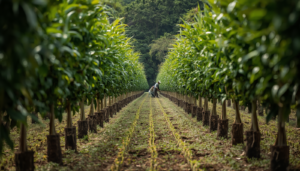
Plantation Cultivation: The Path Forward
Commercial agarwood plantations now operate at meaningful scale across Vietnam, Malaysia, Indonesia, India, Thailand, and China. Key facts about plantation cultivation:
- According to the CITES Secretariat, modern inoculation technology can raise the infection rate from the natural 2% in wild populations to nearly 100% in controlled plantation conditions.
- This represents a transformative potential increase in supply without additional pressure on wild populations.
- The quality gap between the best plantation material and mid-grade wild material is narrowing meaningfully year by year.
- Some artisan distillers now blend plantation and aged wild stocks to achieve specific aromatic targets at accessible price points.
- Choosing plantation-grown agarwood from transparent sources is both the most accessible and the most ethically sound approach for most buyers.
The Ethical Buyer’s Checklist
If you want to engage with agarwood responsibly, apply this checklist before every purchase:
- Choose plantation-grown material where possible – from suppliers who explain their inoculation protocols.
- Ask for CITES documentation when purchasing wild-origin material at any significant price point.
- Support suppliers with supply chain transparency – those who can name their farms, distillers, and specific origin regions have nothing to conceal.
- Be sceptical of extreme rarity claims at accessible prices – genuinely rare wild material is genuinely expensive. The two facts cannot be separated.
- Avoid sellers who cannot answer direct sourcing questions with specific, verifiable information.
- Look for certifications – ISO-certified plantation operations and CITES-compliant exporters are increasingly common and identifiable.
Frequently Asked Questions About Agarwood
The following questions are drawn directly from Google’s People Also Ask results for agarwood and oud wood searches.
What is agarwood?
Agarwood is a rare, dark, fragrant resinous heartwood formed inside Aquilaria trees when they become infected with a specific mould (Phaeoacremonium parasitica). The tree produces a dense aromatic resin as a defence, saturating the heartwood over decades. This resin-soaked wood – and the oud oil distilled from it – is one of the most expensive natural materials on Earth.
Is agarwood the same as oud wood?
Agarwood and oud wood refer to the same material – the resin-saturated heartwood of Aquilaria trees. “Oud” is the Arabic name for the same wood. In practice, however, “oud oil” or “dehnal oud” refers to the essential oil distilled from agarwood chips, which is a physically distinct product from the raw wood.
What does agarwood smell like?
Agarwood has a complex, evolving scent combining deep woody warmth, smoky incense, dark sweetness, leather, and subtle animalic notes. The scent shifts significantly over hours of wear. Indian (Hindi) oud is darker and more animalic; Cambodian oud is sweeter and more floral; Vietnamese oud is refined and cool.
Why is agarwood so expensive?
Agarwood is expensive due to seven compounding factors:
- Only ~10% of wild trees naturally produce it.
- Formation takes 50 to 150+ years for the finest grades.
- Harvesting is entirely manual in remote tropical rainforest.
- 70 to 100 kg of wood produces just 1 litre of oud oil.
- CITES regulations add compliance costs to all international trade.
- Fraud and adulteration are rampant throughout the supply chain.
- Global demand is growing far faster than supply can scale.
What are the benefits of agarwood?
Agarwood has been used medicinally for over 2,000 years in Ayurvedic, Traditional Chinese, and Tibetan medicine. Traditional uses include:
- Calming the nervous system and reducing anxiety.
- Relieving digestive disorders.
- Reducing inflammation.
- Supporting respiratory health.
Modern laboratory studies show early evidence of anti-anxiety, anti-inflammatory, and antimicrobial properties – though large-scale clinical human trials remain limited.
What is the difference between agarwood and oud oil?
Agarwood is the solid resin-saturated wood, typically burned as incense in chip form. Oud oil (dehnal oud) is the concentrated essential oil extracted from agarwood chips through steam or hydro-distillation. Agarwood chips are used atmospherically for room fragrance; dehnal oud oil is applied directly to skin as an intimate personal fragrance.
Where does agarwood come from?
Agarwood comes primarily from South and Southeast Asia. The main producing countries are:
- India (Assam region) – the source of prized Hindi oud.
- Cambodia and Vietnam – sweet and refined oud profiles.
- Indonesia and Malaysia – the largest commercial volumes.
- Bangladesh, Laos, Thailand, Sri Lanka, and Papua New Guinea – secondary sources.
Each region produces agarwood with a distinct aromatic profile based on the local Aquilaria species, climate, and fungal populations.
How is agarwood used in Arab culture?
In Arab Gulf culture, agarwood is burned as bakhoor (pressed incense) in a mabkhara (incense burner) to scent homes, clothing, and guests – a central act of Arabic hospitality. Pure dehnal oud oil is worn as a personal fragrance. Both practices are daily cultural necessities across the UAE, Saudi Arabia, Kuwait, Qatar, Oman, and Bahrain, with roots going back over a thousand years.
How do you use agarwood chips?
To use agarwood chips:
- Place a piece of lit charcoal in the mabkhara and allow it to become fully hot (grey-white on the surface).
- Place one to three chips on the hot charcoal.
- Allow them to smoulder slowly – do not burn them with open flame.
- Move the mabkhara around the room, over clothing, or pass it between guests.
- Electric oud burners, increasingly popular across Dubai and the Gulf, provide a cleaner and more controlled alternative.
Is agarwood legal to buy?
Yes. Agarwood is legal to buy and sell internationally. Wild-harvested agarwood is regulated under CITES Appendix II, requiring export permits from the country of origin and import documentation in receiving countries. Plantation-grown agarwood faces fewer restrictions. Always request CITES documentation when purchasing wild-origin material at significant price points.
Conclusion
Somewhere in the Assam rainforest, a tree that was wounded decades ago is still quietly doing what it has done since the moment the wound first appeared – producing the dark, resinous defence that will one day become one of the world’s most treasured materials.
The tree does not know it is creating something extraordinary. It is simply trying to survive.
And in that act of biological survival – stretching across years, decades, a century – it manufactures a substance that has shaped the spiritual practices of civilisations, the economics of ancient empires, and the sensory experiences of billions of people across more than three thousand years of recorded human history.
Agarwood is not merely expensive wood. It is not simply a perfume ingredient. It is one of the clearest examples the natural world offers of how time and stress, given the right biological conditions, produce something of incomparable beauty and complexity.
Consider what this single material connects across human history:
- An ancient Sanskrit prayer offered in a Vedic fire ceremony over 3,000 years ago.
- A Chinese emperor’s burial chamber sealed with fragrant heartwood.
- A Japanese practitioner spending decades learning to “listen” to incense.
- A Gulf family in Dubai welcoming guests with fragrant smoke from a mabkhara.
- A connoisseur carefully applying a single drop of wild Hindi dehnal oud to their wrist.
- A conservationist in Assam fighting to protect the last old-growth Aquilaria forest.
All of these are chapters in the same story. The tree’s wound is the first sentence. Everything else follows from it.
Ready to Begin Your Agarwood Journey?
If you are new to agarwood, start simply and let your experience grow naturally:
- Start with bakhoor or oud muattar – the most culturally authentic and accessible entry point. A quality bakhoor blend lets you experience agarwood’s atmospheric beauty without significant financial commitment.
- Burn a small amount and wait patiently – the opening smoke is not the full story. Give the fragrance time to develop.
- Explore different chip origins – try Hindi oud grades for depth, Moori Vietnam agarwood for refinement, or Indonesian varieties for reliable daily quality – to discover which origin speaks to you most.
- When you are ready for the oil experience – pure dehnal oud applied directly to skin is one of the most personal, long-lasting, and culturally resonant fragrance experiences available anywhere in the world.
- Browse the full collection – the complete agarwood and oud range spans every grade, origin, and form – from entry-level chips to premium collector-grade pieces.
Ask questions. Demand transparency. Support ethical, traceable supply chains. The tree that created this extraordinary material has already been through enough.