Brunei Agarwood has moved through trade routes connecting Borneo to the Middle East, India, and China for well over a thousand years, long before modern grading systems or collector markets existed at all.
A few historical facts explain how this trade developed:
- Fragrant resinous wood from the Indo-Malay region reached Chinese courts and Middle Eastern markets as early as the first millennium, carried along maritime routes that also moved spices, textiles, and precious stones.
- Borneo, sitting at a natural crossroads of these routes, became one of several regional sources feeding that demand, alongside agarwood from Assam, Cambodia, and the wider Indochina region.
- Brunei’s own role grew out of its position as a maritime Sultanate with strong trading links across Southeast Asia.
Four historical threads are worth understanding in more depth:
- Brunei operated as a coastal trading power for centuries. Long before oil and gas became the country’s defining export, the Sultanate built wealth through maritime trade, and forest products including agarwood moved through its ports alongside other regional goods.
- High-grade Brunei Agarwood carried diplomatic and ceremonial weight. Rare resinous wood was historically the kind of gift exchanged between royal courts, used in religious ceremonies, and burned during significant state occasions.
- The forest itself was never intensively cleared for agriculture the way much of lowland Southeast Asia eventually was, thanks in part to Brunei’s later economic shift toward oil and gas rather than logging.
- Modern Gulf demand is a relatively recent layer on top of an old trade. The boom in Middle Eastern and East Asian demand for large, sinking-grade pieces as display and gifting items has emerged mostly over the last few decades.
This history explains why Brunei Agarwood carries genuine trade prestige across markets like the UAE, rather than a marketing story invented recently to justify high prices.
What “Double Super” Actually Means in Brunei Agarwood Grading
Double Super sits near the top of the traditional Malaysian grading ladder used for Brunei Agarwood, one tier below the rarest classifications such as Triple Super or King grade. It refers to wood where resin has saturated the large majority of the material, rather than sitting in thin veins near the surface.
A few facts about grading that most sellers will not volunteer:
- There is no single global grading authority for Brunei Agarwood or any other origin.
- Malaysia, Indonesia, India, and Vietnam each run their own grading systems.
- Even within one country, two traders at the same market can grade the same piece differently.
- Researchers studying the trade, including work published through Springer’s agarwood research literature, have confirmed that grading remains subjective and varies by region and by seller.
That said, a rough consensus does exist across most major trading regions. The Malaysian system, which is the one Brunei Agarwood is typically graded under, runs roughly like this:
| Grade | General Resin Behavior | Water Test Result | Market Availability |
| D / C / B / A | Light resin presence, mostly surface-level | Floats | Common, widely available |
| AA / AAA | Moderate resin penetration | Floats or partial sink | Uncommon |
| Super | Heavy resin saturation | Partial to full sink | Rare |
| Double Super | Near-total resin saturation | Sinks fully and quickly | Very rare |
| Triple Super / King | Complete, uniform saturation throughout | Sinks instantly, dense to the core | Extremely rare, near-mythical |

A few things are worth pointing out about this table that most sellers will not mention upfront:
- Sinking and smell are two separate qualities. A piece can sink like a stone and still smell flat if the resin formed under poor conditions, or if the wood was stored badly afterward.
- Collectors have specifically warned newcomers about this. Long-time traders on forums such as the Artisanal Oud Community have pointed out that a “Double Super” label is not automatically a guarantee of a pleasant aroma.
- Larger pieces are disproportionately harder to grade honestly. A big chunk of Brunei Agarwood can look uniformly resinous on the outside while being hollow or only lightly infused at the core.
- “Big” and “Double Super” together are rarer than either quality alone. Buyers who want to see what this looks like in practice can compare a verified Big Brunei Double Super piece against smaller Super-grade chips side by side.
The Full Grading Ladder, Explained in Plain Language
If you want a simple mental model for where Double Super sits within the Brunei Agarwood hierarchy, think of it in four broad tiers:
- Entry tiers (D through A): Some resin is visible as dark streaks, but the wood is still mostly light and will float. Prices here are the most accessible.
- Mid tiers (AA and AAA): Resin coverage increases noticeably. Some pieces begin to partially sink.
- Upper tiers (Super and Double Super): Resin has spread through most of the wood’s structure. Pieces sink fully, and larger chunks in this range are the ones collectors specifically hunt for.
- Peak tiers (Triple Super, King, and regional equivalents like Kyara): Resin saturation is close to total, throughout the entire piece. Supply at this level is measured in grams, not kilograms.
Why Genuine Brunei Agarwood Sinks in Water
Brunei Agarwood sinks because the resin that forms inside the tree is denser than water. In a heavily infected piece, that resin can make up the majority of the wood’s total mass, rather than simply coating the surface.
A few facts explain what agarwood actually is:
- Aquilaria trees do not produce fragrant resin naturally, the way a pine tree produces sap.
- The resin only forms as a defensive response after the tree is wounded, by insects, lightning strikes, fungal infection, or old physical injury.
- A specific type of fungal and microbial activity then colonizes the wound site.
- Scientific studies on agarwood formation, including research conducted specifically on Brunei’s own Aquilaria trees by botanists working with the Brunei National Herbarium, describe this as a wound-response mechanism where the tree seals off the damaged area with resin that hardens over years or decades.
- Only around seven percent of wild Aquilaria trees carry any meaningful infection at all, according to industry researchers, which is part of why hunters historically felled entire trees just to check.
The Water Test: How to Check Genuine Brunei Agarwood Yourself
- Fill a clean container with room-temperature water, deep enough to fully submerge the piece.
- Place the Brunei Agarwood piece into the water and let it settle without pushing it down.
- Watch how quickly it moves. A genuine Double Super or higher piece will sink within seconds and stay at the bottom.
- Note any partial floating. A piece that sinks slowly or bobs back toward the surface has lower resin saturation than claimed.
- Repeat with a second piece from the same batch if possible, since resin distribution can vary even within a single lot.

A word of caution: some sellers weight or treat lower-grade wood to fake a sinking result. Pair the water test with a scent check, and ideally buy from a seller willing to demonstrate the test in front of you before you commit to a purchase.
What Makes Brunei Agarwood’s Scent Different From Cambodian, Vietnamese, or Indian Oud
Brunei Agarwood gets its honey-sweet, cool, camphor-tinged character primarily from Aquilaria microcarpa, one of the specific tree species growing in Brunei’s forests. Key facts on the botanical side:
- Brunei is home to more than one agarwood-producing species.
- Botanical surveys, including studies published in the Biodiversitas Journal of Biological Diversity, identify Aquilaria microcarpa and Aquilaria beccariana as the two primary high-quality resin producers native to Brunei’s rainforest.
- Some Aquilaria malaccensis is also found across the wider Bornean region.
- Microcarpa in particular has built the reputation behind Brunei Agarwood, producing a scent frequently described as sweeter and cooler than the deeper, more medicinal notes coming out of Assam, or the smokier profile associated with Cambodian wood.
A rough side-by-side, based on how these regional profiles are typically described by long-time traders and perfumers:
| Origin / Species | Typical Scent Character |
| Brunei (Aquilaria microcarpa) | Honey-sweet, woody, cool camphor and mint undertone |
| Cambodia (Aquilaria crassna) | Smoky, sweet, deep and resinous |
| India / Assam (Aquilaria malaccensis) | Earthy, animalic, medicinal, fermented notes |
| Vietnam (Aquilaria crassna) | Bold, resin-forward, complex sweetness |
If you are new to agarwood entirely, this complete beginner’s guide to agarwood and oud walks through how these different origins compare in far more detail. Buyers deciding specifically between two of the most popular categories may also find this Hindi Oud vs Cambodian Oud comparison useful for context, even though Brunei Agarwood sits in its own distinct category above both.

The Cold Sillage Test: A Detail Most Buyers Overlook
One detail genuinely separates the best Brunei Agarwood pieces from lower grades: high-resin chunks release a noticeable aroma just sitting at room temperature, with no heat or burning involved. Here is how to run this check at home:
- Place the piece in a closed room, away from windows and airflow, for about fifteen minutes.
- Return to the room and note whether a scent is noticeably present without any heat applied.
- Compare the intensity to a known lower-grade piece if you have one, to calibrate your own sense of what “strong” actually means.
- Repeat at a different time of day, since ambient temperature and humidity can affect how much scent evaporates naturally.
Brunei Agarwood vs. Kyara: Understanding the Ceiling Above It
Double Super is extremely high on the Brunei Agarwood grading ladder, but it is not the absolute top. A few points of comparison are worth knowing:
- Kyara sits above Triple Super and King grade on most regional ladders, representing complete, uniform resin saturation with a scent profile traders describe as uniquely complex and long-lasting.
- Kyara-grade material has reportedly traded at prices exceeding one hundred thousand dollars per kilogram in raw form, according to figures cited by multiple established industry sources.
- Genuine Brunei Agarwood at Double Super grade is not marketed or traded as Kyara, and reputable sellers will not blur the line between the two.
- The practical takeaway for most collectors is that Double Super represents an achievable, genuinely exceptional ceiling, while Kyara remains a separate, even rarer category most collectors will only encounter a handful of times, if ever.
Keeping this distinction clear protects buyers from a common pricing trick, where sellers stretch grading language upward to justify prices that belong to a different, much rarer tier entirely.
Why Wild Brunei Agarwood Is Running Out
Wild, old-growth Brunei Agarwood is becoming genuinely difficult to source for a combination of reasons:
- The country protects an unusually large share of its rainforest, which is good news for the ecosystem but bad news for new supply.
- Sinking-grade resin generally only builds up in trees left undisturbed for many decades.
- International trade law adds another layer of restriction on top of natural scarcity.
1. Brunei’s Forest Cover Is Unusually Intact Compared to Its Neighbors
- Government and international forestry data put Brunei’s total forest cover at roughly seventy-two percent of its land area as of 2020.
- Separate biodiversity assessments describe the majority of that as primary, old-growth forest, rather than replanted or secondary forest.
- Comparative research on Borneo’s deforestation, published through peer-reviewed environmental science journals, has specifically noted that Brunei has done far better at keeping industrial logging out than Sarawak or Sabah, the Malaysian states sharing the same island.

2. A Large Share of the Country Is Formally Protected
- Roughly forty percent of the country is formally designated forest reserve, according to Brunei’s own reporting to the Convention on Biological Diversity.
- A portion of that is specifically set aside as unexploitable, meaning no commercial harvesting is permitted there at all.
- Every Aquilaria species, including the ones producing genuine Brunei Agarwood, is listed under CITES Appendix II, the international treaty governing endangered species trade.
Practical implications for buyers:
- Legal, wild-harvested Brunei Agarwood cannot simply be cut and shipped without paperwork.
- Cross-border buyers should expect to see, or ask for, CITES export documentation on any legitimate large purchase.
- Sellers who cannot produce this documentation for wild-origin claims should be treated with extra caution.
- Personal allowances exist for small quantities under CITES rules, but large commercial-scale purchases are a different matter entirely.
Conservation Status: What the Data Actually Shows
- Multiple Aquilaria species across the genus are currently listed as vulnerable or endangered on international conservation assessments.
- Aquilaria malaccensis was the first agarwood-producing species added to CITES Appendix II protection in 2005, and it carries a vulnerable status on international conservation lists.
- Every species in the Aquilaria and Gyrinops genera has been under CITES Appendix II protection since the early 2000s.
Taken together, this data supports a simple conclusion: Brunei Agarwood scarcity is not a story invented by sellers. It reflects a genus-wide conservation pattern that international trade law has been responding to for roughly two decades.
3. Old-Growth Density Takes Decades, Not Years, to Form
- Resin infection has to happen naturally, spread through enough of the tree’s structure to reach Double Super density, and then sit undisturbed long enough to harden and mature.
- Plantation-grown agarwood, now common across Vietnam, Indonesia, and parts of Malaysia, uses artificial inoculation to speed this process up.
- Industry researchers and traders generally agree that cultivated wood does not replicate the depth or complexity of resin formed slowly in a mature wild tree.
- You cannot manufacture eighty years of undisturbed growth in a plantation cycle measured in a handful of years.
The Hidden Economics of “Big”: Why Size Multiplies Brunei Agarwood Value Non-Linearly
Here is the logic collectors use to understand why size and grade interact non-linearly, explained step by step:
- Resin distribution inside a tree is uneven. Even a heavily infected tree does not produce resin at a perfectly uniform density across its entire trunk.
- Small pieces let a cutter select only the densest section. A trader cutting a small chip can simply choose the richest few grams, discarding weaker material.
- Large pieces cannot hide inconsistency the same way. A large chunk has to maintain that same density across a far bigger volume of wood.
- This means large, uniformly dense pieces are pulled from a much smaller pool of qualifying trees. Most trees producing any Double Super material at all only produce it in small, localized pockets.
- The result is a rarity curve, not a straight line. A five-hundred-gram piece with uniform density is not simply fifty times rarer than a ten-gram piece. It is rarer by an order of magnitude beyond that.
This is precisely why price lists for Brunei Agarwood rarely scale in a straight line by weight.
Why Collectors Treat Big Brunei Double Super as a Trophy, Not Just a Fragrance Material
There are really two separate markets happening at once:
- The use market consists of buyers purchasing agarwood chips, oil, or bakhoor specifically to burn, distill, or wear. In this market, value is almost entirely about scent performance.
- The trophy market consists of collectors buying large, visually striking, high-grade pieces of Brunei Agarwood specifically to own and display. In this market, size, uniformity, visual density, and provenance matter as much as, or more than, how it smells when burned.
The Cultural Weight Behind Trophy Status
- Gulf hospitality traditions. Offering high-grade oud incense to guests during a majlis gathering has long been a marker of generosity and status across the UAE and the wider Gulf.
- East Asian connoisseurship. Collector culture in China and Taiwan, centered on what is locally referred to as chenxiang, has its own centuries-old tradition around agarwood.
- Brunei’s own royal association. High-grade Brunei Agarwood has historically circulated through royal and diplomatic channels across Southeast Asia and the Middle East.
Common Myths About Brunei Agarwood You Should Stop Believing
- Myth: A sinking piece is always high quality. Sinking indicates density, not necessarily a pleasant or complex aroma.
- Myth: Bigger always means better. A large piece with inconsistent internal density is not automatically superior to a smaller, more uniform one.
- Myth: There is one universal grading standard everyone follows. A “Double Super” label from one trader is not automatically equivalent to a “Double Super” label from another.
- Myth: Wild agarwood is completely extinct. Wild, large, high-grade pieces are increasingly rare, but calling the entire wild resource extinct is more of a sales tactic than a factual claim.
- Myth: All agarwood sold as “Brunei” actually comes from Brunei. Some material sourced from neighboring parts of Borneo is sold under a Brunei Agarwood label without clear origin verification.
- Myth: A strong smell when burned proves authenticity. Some synthetic or heavily treated woods are engineered specifically to mimic genuine Brunei Agarwood when heated.
Is Big Brunei Double Super a Good Investment?
A few honest points to weigh before treating a purchase as an investment:
Value Drivers That Genuinely Matter
- Confirmed wild origin, as opposed to plantation-inoculated material.
- Species verification, ideally from a seller who can speak specifically to which Aquilaria species produced the resin.
- Size combined with uniform density throughout, rather than just heavy surface resin.
- Age of the piece, both in tree maturity and how long the resin has had to mature and harden.
- A documented chain of custody, including CITES export paperwork where the sale crosses international borders.
Realistic Price Expectations
- General wild agarwood at lower grades can range from a few hundred dollars per kilogram.
- Premium, dense, aged wild material typically moves into the low thousands per kilogram.
- Confirmed high-grade sinking wood, including genuine Double Super material, can run considerably higher depending on size, uniformity, and documentation.
- The rarest classifications above Double Super, such as Kyara-grade material, have reportedly traded at prices exceeding one hundred thousand dollars per kilogram in raw form.
The Fraud Risk Is Real
- Listings that use grading terminology loosely, without any explanation of how the grade was determined.
- No verifiable origin information provided, even when directly requested.
- Pricing that sits suspiciously below the typical range for genuine wild Double Super material of the size advertised.
- Sellers unwilling to demonstrate a water test or provide close-up photos or video of the actual piece.
For a wider view of how this fraud risk plays out across Dubai’s fragrance market generally, this guide on where to buy authentic perfumes in Dubai is a useful companion read before making any high-value purchase.
How to Verify Genuine Brunei Agarwood Before Buying
- Run the water test. Fully submerge the piece for about five minutes. Genuine Double Super sinks quickly and stays down.
- Run the cold scent test. Hold the piece at room temperature, without any heat source, in a closed room.
- Check the weight-to-size ratio. Genuinely resin-saturated Brunei Agarwood feels distinctly heavier than its size suggests.
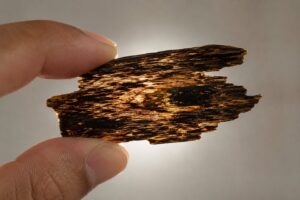
- Inspect the wood visually. Look for dark, oil-marbled veining running through the piece, rather than just a dark surface coating.
- Ask for provenance documentation. A reputable dealer should be able to speak specifically to where and how the wood was sourced.
- Request CITES paperwork for cross-border sales. Any legitimate large purchase crossing international borders should have proper export documentation available.
- Be skeptical of suspiciously low prices attached to high-grade claims.
- Ask about storage history. Poor storage can degrade even genuine Double Super material over time.
- Compare multiple sellers before committing to a large purchase.

Buyers based in the UAE who want to see this verification process in person, rather than relying on an online listing alone, are welcome to examine a piece from the Brunei Agarwood collection at Rose Valley Perfumes directly, where the water test and cold scent test can be demonstrated on the spot before any purchase decision.
How to Store and Preserve a Collector-Grade Brunei Agarwood Piece
- Keep pieces out of direct sunlight. Sunlight can dry out and dull surface resin over time.
- Store in a stable environment. Avoid extreme humidity swings, damp basements, or very dry heated rooms.
- Handle with clean, dry hands where possible. Skin oils and moisture can alter the surface over repeated handling.
- Consider a sealed display case for large showpieces. Glass or finished wood cases protect the surface while helping preserve the piece’s aroma.
- Avoid tightly wrapping pieces in plastic for long periods. Trapped moisture can encourage mold or an uneven change in scent.
- Rotate display pieces occasionally, if you keep multiple pieces on display, to even out long-term wear across a collection.
- Keep a simple written record for each piece, noting the purchase date, seller, claimed grade, and any documentation received.
Where to Find Genuine Brunei Agarwood in Dubai
For buyers in the UAE, sourcing verified Brunei Agarwood locally rather than through an unfamiliar overseas listing solves most of the authentication problems described above in one step. A few reasons this matters:
- A physical shop with a long-standing sourcing history gives you the chance to run the water test and cold scent test yourself, in person, before spending anything.
- Comparing several origins side by side, rather than judging Brunei Agarwood in isolation, is one of the fastest ways to understand what separates it from the rest of the market.
- A knowledgeable seller can answer provenance and CITES documentation questions directly, on the spot.
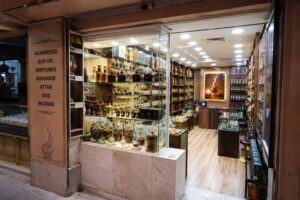
Rose Valley Perfumes, operating in Dubai’s Murshid Bazar district since 1990, carries a Big Brunei Double Super piece within its wider agarwood and oud collection, alongside Malaysian, Indian, Sri Lankan, and Indonesian grades for comparison. Buyers interested in the oil form rather than raw chips can also browse the Dehnal Oud collection for distilled options across multiple origins.
If you are unsure where to start, or want a specific grade sourced and verified before you commit to a large purchase:
- Reach the team directly through the contact page.
- Read the shop’s full sourcing history on the about us page.
- Browse the trusted oud shop guide to Murshid Bazar for practical tips on visiting in person.
Frequently Asked Questions
What is Brunei Agarwood?
Brunei Agarwood is resin-infused wood from Aquilaria trees native to Brunei, prized for its honey-sweet, cool camphor scent and its unusually high resin density.
Why is Brunei Agarwood so expensive?
It comes from wild, old-growth trees in one of the few remaining protected rainforests in Borneo, and legal wild harvesting is tightly restricted under conservation law.
Is it illegal to harvest agarwood in Brunei?
Wild harvesting is heavily restricted. Most legal Brunei-origin material today comes from regulated sourcing or cultivated plantations rather than unrestricted wild logging.
What does Brunei Agarwood smell like?
It carries a distinctive honey-sweet, woody scent with a cool, camphor-like undertone, generally sweeter and cooler than Cambodian or Indian agarwood.
How can you tell if Brunei Agarwood is genuine?
Run a water-sink test, a room-temperature scent test, and check the weight-to-size ratio. Genuine high-grade pieces sink quickly and smell strong even unheated.
Is Double Super the highest agarwood grade?
No. Double Super is near the top, but Triple Super, King grade, and Kyara sit above it in most regional grading systems.
Final Thoughts
Brunei Agarwood earns its reputation honestly:
- It reflects a slow, natural resin-forming process that cannot be rushed.
- It comes from a country that has protected an unusually large share of its old-growth forest.
- It operates under an international trade framework that restricts how much of this material can legally reach the market each year.
For a buyer, this means two things:
- The scarcity behind the price tag is real, not invented.
- The responsibility to verify what you are buying is entirely on you, because grading standards are inconsistent and the market includes both careful, transparent sellers and others who are far less so.
Approach a purchase the way an experienced collector would:
- Test the piece yourself where possible.
- Ask direct questions about origin and documentation.
- Compare more than one seller before committing to a significant purchase.
- Store a piece properly once you own it, so that whatever scent and density it carries today is still there years from now.
Handled this way, a genuine piece of Brunei Agarwood is not just an expensive curiosity. It is a small, physical record of decades of undisturbed growth in one of the last places on earth still producing it.