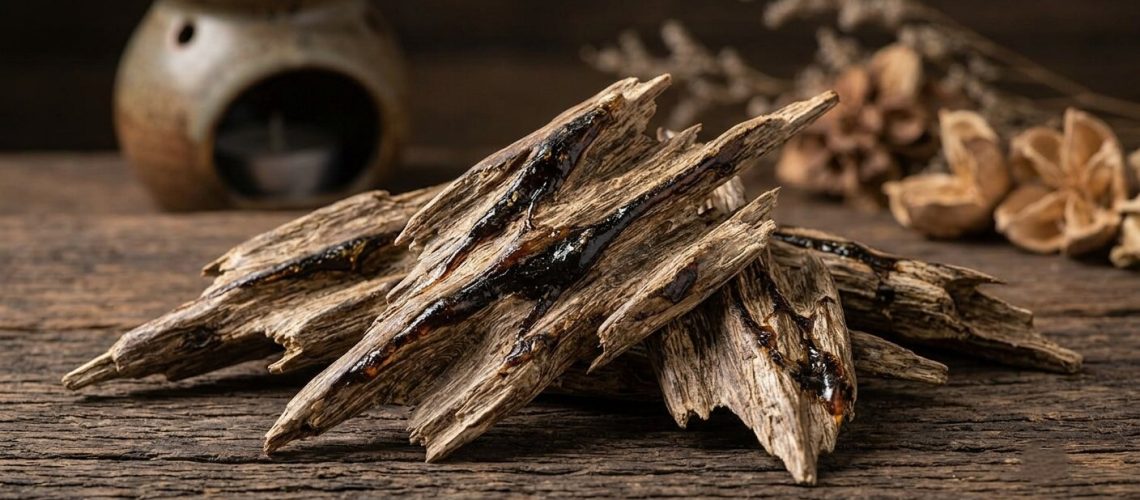
Malaysian agarwood is the oud that sits quietly between two louder reputations. It is sweeter and more approachable than the deep, medicinal intensity Indian oud is known for, yet it carries more woody structure and smoke than the fruit-forward softness of Cambodian oud. What you get instead is a honeyed, plummy, faintly floral resin that burns cleanly and wears comfortably on skin, without the sharp barnyard edge that keeps some newcomers away from oud altogether.
It comes primarily from two native tree species, Aquilaria malaccensis and Aquilaria hirta, grown across Peninsular Malaysia and parts of Borneo. If you have ever found Indian oud too heavy, or Cambodian oud too one-dimensionally sweet, Malaysian agarwood is very likely the middle ground you have been searching for.
That single fact, that Malaysian agarwood occupies the exact middle ground most wearers actually want, is also why it remains so underrated. It never had the centuries-old trade reputation of Hindi oud, nor the marketing polish that Cambodi oud enjoyed in Gulf perfume houses. It simply got quietly better while nobody was watching, and the people who did notice tend to become lifelong collectors, including many right here in Dubai’s own fragrance trade.
Malaysian Agarwood Scent Profile & Characteristics

Before comparing Malaysian agarwood to anything else, it helps to understand what is actually happening inside the wood. Agarwood forms when an Aquilaria tree is wounded or infected by a specific mould, and the tree responds by producing a dense, aromatic resin around the injury as a defence mechanism.
That resin, not the wood itself, is what gives oud its scent. If you want the full background on how this process works from seed to sale, our guide on what agarwood actually is covers it in more depth. Malaysian trees produce this resin in a way that leans toward higher concentrations of certain sweet, fruity aromatic compounds compared to some other regions, which is part of why the final scent reads as softer and more rounded.
The two species most associated with Malaysian agarwood:
- Aquilaria malaccensis – The most widely distributed agarwood species in the country. Found across most of Peninsular Malaysia, and named after Malacca, one of the historic ports where it was first traded.
- Aquilaria hirta – A smaller, less common species found mainly along the east coast states. Often prized by collectors for a brighter, more layered top note.
How the fragrance typically unfolds:
- Top Notes. The first few minutes bring a crisp, almost tropical freshness. Expect green florals and a touch of citrus brightness, sometimes with a whisper of ocean air if the wood came from a coastal region.
- Heart Notes. This is where Malaysian agarwood earns its reputation. Expect honey, black honey, caramelised sugar, ripe plum, and sometimes date-like richness. It is sweet without becoming syrupy.
- Base Notes. A warm, smooth wood settles in as the scent dries down. It stays soft, creamy, and occasionally spiced, with a lingering depth that hugs the skin rather than projecting aggressively.
- Dry-Down on Skin versus Burner. Worn as an oil, the honeyed heart tends to dominate for hours before softening into a warm wood base. Burned as chips or bukhoor, the same wood produces more smoke-forward complexity upfront, with the sweetness only emerging once the initial plumes settle.
A rough scent timeline for a mid-to-high grade Malaysian oud oil:
| Time | What You Will Notice |
| 0–15 minutes | Bright, green, slightly fruity top notes. |
| 15–60 minutes | Honey, plum, and light floral sweetness take over. |
| 1 hour onward | Soft, woody base with a gentle, lingering warmth. |
This evolving structure is precisely why perfumers describe good Malaysian agarwood as “wearable.” It changes in a way that feels alive on skin rather than static.
Why the Sweetness Happens: A Quick Look at the Science
The honeyed character that defines Malaysian agarwood is not accidental, and it is not marketing language either. It comes down to the specific aromatic compounds the resin develops as the tree heals.
- When an Aquilaria tree is wounded or infected, it produces a defensive resin rich in sesquiterpenes and chromone compounds, the same broad chemical families responsible for agarwood’s fragrance across every producing region.
- What differs between regions is the ratio of these compounds, along with how long the resin has had to mature inside the tree before harvest.
- Malaysian wood, particularly from the east coast, has been found in laboratory analysis to share certain aromatic markers with Cambodian Aquilaria crassna. This overlap explains why some Malaysian agarwood can smell strikingly close to Cambodi wood, and why traders have historically taken advantage of that similarity.
- West coast Malaysian wood tends to lean toward a more mineral, “purely oudy” simplicity, while east coast wood carries a broader, more perfumed spectrum of floral, fruity, and honeyed facets.
- Tree age plays an equally important role. Older trees generally develop denser, more complex resin over the years, which is part of why age-verified wood commands a premium regardless of region.
None of this requires a chemistry background to appreciate. It simply explains, in practical terms, why two pieces of Malaysian agarwood from different parts of the country can smell genuinely different from one another, sometimes as different as two entirely separate origins.
Why Malaysian Agarwood Is the Underrated Gem
Indian oud built its reputation over centuries as the deep, animalic, almost meditative standard that Gulf royalty and perfume houses turned to first. Cambodian oud carved out its own space as the sweeter, more universally likeable alternative once wild Cambodi supply started reaching international markets more visibly. Malaysian agarwood, despite producing wood of comparable or often superior consistency, simply never had the same head start in global branding.
That gap is not about quality. It is about visibility.
The real reasons Malaysian agarwood stayed under the radar:
- Malaysia’s agarwood trade matured later on the international stage compared to India’s centuries-old trade routes through the Middle East.
- Much of the best Malaysian wood was historically sold in bulk to traders from other countries, including Cambodia and Thailand, who then rebranded and resold it under more famous regional names.
- Malaysian producers focused heavily on domestic and Southeast Asian demand for years before turning their attention to Gulf and Western export markets, including the UAE.
- The country’s grading terminology, such as Double Super, Super, and the A/B/C/D scale, never received the same marketing polish as Hindi or Cambodi grading language.
What makes it genuinely special once you do try it:
- It bypasses the sharp, medicinal, and sometimes off-putting intensity that turns first-time oud wearers away from Indian varieties.
- It carries real complexity, not just a single sweet note, without demanding the same “acquired taste” learning curve.
- It performs equally well in a majlis burner and in fine perfumery, which very few single-origin ouds manage convincingly.
- Because global demand has not yet caught up to its quality, well-sourced Malaysian agarwood often delivers better value per gram than comparably graded Cambodi or Hindi wood.
Think of it the way seasoned wine drinkers talk about underrated wine regions. The quality was always there; the price simply had not caught up to the reputation yet. Malaysian agarwood is very much in that window right now, and it is one of the reasons more Dubai buyers are actively seeking it out at Rose Valley Perfumes’ agarwood collection rather than settling for the more familiar names by default.
A Brief Trade History Worth Knowing
Malaysia’s relationship with agarwood is not new. Here is the short version of how the country’s oud trade developed:
- The region’s ports, including historic Malacca, sat directly along the maritime trade routes that carried aromatic resins between South Asia, the Arabian Peninsula, and China centuries ago.
- The species name malaccensis itself comes from Malacca, one of the earliest locations where the tree was formally documented by Western botanists.
- For much of that history, the wood moved as a raw material destined to be relabelled somewhere else, rather than as a finished product carrying Malaysia’s own name.
- As wild agarwood stock in more heavily harvested regions has declined, and as CITES regulations have tightened international trade, more attention has turned toward countries like Malaysia that invested early in plantation cultivation and sustainable sourcing.
- Malaysian agarwood is increasingly being sold and marketed under its own name and regional identity today, rather than folded quietly into someone else’s inventory.
Buyers who get ahead of that shift now are, in a very literal sense, buying into a region before its reputation fully catches up to its quality.
Regional Terroir: How Malaysian Agarwood Differs by Region

Most articles about Malaysian agarwood stop short here. They talk about it as though it is one single scent profile, when in reality the aroma changes meaningfully depending on which part of the country the wood comes from. Climate, elevation, soil composition, and even proximity to the coastline all influence how the resin develops inside the tree, following the same terroir logic wine and coffee buyers already understand instinctively.
The four regional profiles worth knowing:
- Terengganu. Widely regarded by collectors as the benchmark region for Malaysian agarwood, particularly wood sourced from higher elevations. Terengganu agarwood tends to be dense, resin-rich, and notably more “perfumey” than other Malaysian regions. It often shows a layered structure, with smoke on top and fruit or honeyed leather underneath. Rose Valley’s own Big D-Super Malaysia selection is a good example of this denser, east-coast character.
- Pahang. Known for a more balanced, rounded sweetness that sits comfortably between Terengganu’s complexity and the simpler profiles found further south. Pahang wood is frequently the easiest entry point for someone trying Malaysian agarwood for the first time.
- Kelantan. Produces smaller harvest volumes, which keeps well-sourced Kelantan wood firmly in collector territory. Expect a slightly earthier, less floral character compared to the east coast’s brighter profiles.
- Sarawak and Sabah (East Malaysia, Borneo). Growing in a different rainforest ecology across the South China Sea, Borneo wood often reads as greener and more mineral, with less of the honeyed sweetness found in Peninsular Malaysia and more raw, jungle-forward earthiness.
Most retail listings never specify which Malaysian region a piece of oud actually came from. They simply say “Malaysian oud” and leave it there. That lack of specificity is exactly why so many buyers end up disappointed after their first purchase: they were expecting the honeyed Terengganu profile they had read about, and received a lighter, more generic east-coast blend instead. Asking a retailer which region their wood is sourced from, whether shopping online or in person at a Dubai souq, is one of the simplest ways to buy with more confidence.
Why Terroir Matters More Than Most Buyers Realise
The comparison to wine is not just a convenient metaphor; the underlying mechanism is genuinely similar.
- Just as grapes grown on a coastal slope develop differently from the same variety grown inland, Aquilaria trees respond to elevation, humidity, soil drainage, and even the density of surrounding rainforest canopy.
- Trees growing at higher elevations, as is common in parts of Terengganu, tend to develop under slower, more consistent conditions. Several collectors and traders associate this with a more layered, “higher pitch” aroma once the resin matures.
- Coastal proximity introduces its own variable. Wood harvested near Malaysia’s eastern coastline sometimes carries a faint oceanic or mineral note beneath the sweetness, a subtlety that inland or western wood typically lacks.
- None of this is measured with the same scientific rigour as wine appellation systems, since agarwood terroir research is still a relatively young field. Even so, experienced noses in the trade consistently report the same regional patterns.
For a buyer, the practical takeaway is simple. If a retailer can tell you not just “this is Malaysian agarwood” but “this is Terengganu wood harvested from higher elevation” or “this is a Pahang blend,” that level of specificity is a strong signal they understand the product they are selling, rather than simply repackaging generic stock under a country-level label. Our own Malaysian Muri Super No. 1 listing, for instance, is graded and described with exactly this kind of regional context in mind.
Malaysian Agarwood vs. Other Oud Regions
Malaysian agarwood’s real identity only becomes clear once you compare it side by side with the other major oud-producing regions. In short, it is sweeter and gentler than Indian oud, more structured and less one-note than Cambodian oud, and generally more consistent than Indonesian oud, which varies dramatically by island. For a deeper look at how Indian and Cambodian oud specifically compare for Dubai’s climate and daily wear, our dedicated Hindi Oud vs Cambodian Oud guide breaks it down further.
| Region | Sweetness | Animalic Intensity | Smokiness | Best Suited For |
| Malaysian | High (honey, plum, date) | Low | Moderate | Daily wear, fine perfumery, majlis burning. |
| Cambodian | Very high (fruity, syrupy) | Low | Low to moderate | Relaxing, meditative burning, beginners. |
| Indian (Hindi) | Low | Very high (barnyard, medicinal) | High | Serious collectors, traditional ceremonial use. |
| Indonesian | Variable by island | Moderate to high | Moderate to high | Deep, earthy, incense-style burning. |
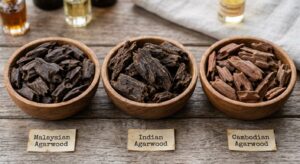
A few things are worth noting beyond the table:
- Indian oud remains the connoisseur’s benchmark for depth and intensity, but that same intensity is exactly what makes it inaccessible to a lot of newcomers.
- Cambodian oud solved that accessibility problem with pure sweetness, sometimes at the cost of complexity. A well-known Cambodi oil can smell wonderful but fairly linear from start to finish.
- Malaysian agarwood threads the needle between the two. It has more structural development than Cambodian wood, without asking the wearer to sit through the sharper opening notes that define Hindi oud.
Where Malaysian Agarwood Fits for Different Kinds of Buyers
- New to oud entirely. Malaysian wood is arguably the safest place to start, precisely because it avoids the two extremes that tend to divide opinion the most: Hindi oud’s sharp, medicinal opening, and the sometimes cloying sweetness of a lower-grade Cambodi. A first-time buyer can wear a mid-grade Malaysian oil for an entire day without it feeling either too aggressive or too simple.
- Already own Hindi oud and want to diversify. Malaysian wood offers a genuine contrast rather than a redundant addition. The honeyed sweetness and lighter smoke create an entirely different wearing experience, useful for daytime or professional settings where a heavier Indian oud might feel too intense.
- Chasing rarity and complexity as a collector. Terengganu wood, particularly aged, high-elevation pieces, deserves serious attention. It is the closest Malaysia gets to matching the perfumery-grade complexity that Vietnamese Kyara or top-tier Hindi grades are known for, without the same price ceiling, at least for now.
Malaysian Agarwood Grading & Quality Classifications
Grading is where most buyers get confused, and honestly, where a lot of retailers get vague on purpose. Malaysia uses its own grading language, separate from the Indian or Indonesian systems, and understanding it will save you from overpaying for a label that does not mean what you think it means.
Malaysia’s standard grading scale runs, from highest to lowest: Double Super, Super, A, B, C, D, with several of those tiers further broken into sub-grades depending on the seller.
What the top tiers actually indicate:
- Double Super – The highest commercial grade, referring to wood with the heaviest resin saturation and darkest colouring, typically harvested from older trees. This is the grade most associated with dense, long-burning chips that release fragrance slowly and evenly. Our own Malaysia Triple Super sits at this top tier of the grading scale.
- Super – Still high in resin content, but slightly less saturated than Double Super. A strong choice for buyers who want quality without paying the premium that Double Super commands.
- Grade A/B – Solid mid-range wood, often with visible resin streaking but less density than the Super tiers. Perfectly serviceable for regular burning, though shorter-lasting and lighter in aroma intensity.
- Grade C/D – Lower resin content, lighter weight, and a milder scent. Useful as an entry point, but not where collectors spend their budget.
One important honesty point: there is no single internationally regulated grading standard for agarwood. Grading terms like “Double Super” are widely used across the Malaysian trade, but individual sellers still apply their own judgement when assigning them, which means a “Double Super” from one retailer and another can genuinely differ in quality. The practical takeaway is simple: buy from a seller who can explain exactly why a piece earned its grade, not just one who prints the grade on the label.
You may also come across trade terms like “Duggha-style” Terengganu chips, referring to a specific cut and resin-density style historically associated with premium Terengganu wood. These terms are not formally standardised either, but they do signal that a seller understands the regional distinctions covered earlier in this guide.
A Practical Way to Judge Grade Beyond the Label
Since grading terminology varies so much by seller, it helps to have a few independent checks that do not rely on trusting a label at face value.
- Ask to see a cross-section. If the seller allows it, look at a cut piece rather than just the surface. Genuine high-grade wood shows resin penetrating well into the interior, not just coating the outside.
- Compare weight across similar pieces. Noticeable weight inconsistency between similarly sized pieces from the same batch often signals uneven resin distribution, regardless of what grade is printed on the packaging.
- Request a small burn sample. Reputable sellers, including most established Deira-based retailers, are generally happy to accommodate this before a larger purchase, since it builds trust rather than undermining a sale.
Shop Malaysian agarwood by grade at Rose Valley:
- Malaysia Triple Super – top-tier, dense resin, long burn time.
- Big D-Super Malaysia – Terengganu-style, layered smoke and honeyed depth.
- Malaysian Muri Super No. 1 – strong resin content with clear regional character.
- Full Malaysian and regional agarwood collection – compare grades and origins side by side.
Exploring Malaysian Agarwood: Chips, Oil & Bukhoor

Once you understand the scent profile, the regional differences, and the grading language, the next question is simple: which format actually fits how you want to use it?
- Agarwood Chips & Wood. The traditional format for burning, prized for slow, even release of fragrance over a burning session. Higher grades like Double Super and Super hold their scent through multiple heating cycles, making them the better long-term value despite the higher upfront cost. Browse the full range of Malaysian and other regional agarwood chips to compare grades side by side.
- Pure Oud Oils (Dehn al Oud). Distilled or extracted directly from the resin, oud oil captures the same honeyed, plummy sweetness in a concentrated, wearable form. A small amount applied to pulse points delivers hours of evolving scent, following the same top-to-base progression described earlier in this guide. Rose Valley’s Dehnal Oud collection includes several Southeast Asian profiles worth comparing against Malaysian character.
- Bukhoor. A blended incense format that combines agarwood with other aromatic materials, offering a more affordable way to experience Malaysian agarwood’s character during regular use, without the cost of pure chips. Our Bukhoor & Oud Muatter range is a practical daily option for households that want the ritual of burning oud without reserving their premium chips for special occasions.
Each format suits a different part of daily life: chips for gatherings and special occasions, oil for personal wear, and bukhoor for everyday home fragrance. Most serious enthusiasts eventually keep all three on hand, simply because the same wood expresses itself differently depending on how it is used.
Getting the Most Out of Each Format
A little technique goes a long way with agarwood, regardless of which format you choose. Getting it wrong is the single most common reason people feel underwhelmed after their first purchase. For a complete walkthrough of the traditional method, see our step-by-step guide on how to burn oud wood at home in Dubai.
- For chips, heat is everything. Direct flame burns the resin too aggressively, releasing sharp, acrid smoke instead of the layered aroma the wood is capable of producing. The better approach uses indirect heat, such as a charcoal disc topped with a layer of ash to buffer the temperature, or an electric incense burner set to a low, controlled heat.
- For oil, less is genuinely more. A drop or two applied to pulse points, such as the inner wrists, behind the ears, or the base of the throat, is enough for the body’s warmth to carry the scent for hours. Applying more than that does not intensify the fragrance meaningfully; it mostly wastes an expensive product.
- For bukhoor, consistency matters more than intensity. Because bukhoor blends agarwood with other aromatic materials, quality varies more by brand than by grade terminology.
Malaysian Agarwood Sustainability & CITES Regulations
Agarwood’s popularity has a real environmental cost, and it is worth understanding before buying, both for legal reasons and for peace of mind about where your Malaysian agarwood actually comes from.
Aquilaria malaccensis was the first agarwood-producing species added to CITES Appendix II, back in the mid-1990s, after international demand pushed wild populations into serious decline. By 2004–2005, that protection was extended to essentially all Aquilaria and Gyrinops species globally, meaning any international trade in wild-harvested agarwood, whether wood, chips, or oil, now requires proper export permits.
What this looks like in practice today:
- Wild-harvested Malaysian agarwood is now tightly regulated, and genuinely wild trees are increasingly rare after decades of demand-driven harvesting.
- The vast majority of agarwood entering the legal commercial market today comes from managed plantations, where trees are deliberately inoculated to trigger resin production rather than left to develop naturally over decades.
- Inoculation involves introducing a controlled fungal or chemical stressor into the tree, prompting the same defensive resin response that would otherwise take a wild tree many years, and often a lucky infection, to produce.
- Malaysia has invested specifically in plantation programmes since the mid-2000s, including dedicated agarwood research and cultivation reserves in states like Terengganu, aimed at building a sustainable long-term supply.
None of this means plantation oud is a lesser product. Quality still comes down to the age of the tree, the resin development time, and how the wood is processed after harvest. When you are buying, ask whether the seller can speak to sourcing and CITES compliance directly. A retailer who cannot answer that question at all is one worth being cautious with.
How to Identify Authentic Malaysian Agarwood

Adulterated and synthetic oud is a real problem in this market, and Malaysian agarwood is no exception, since its rising popularity has made it a frequent target for imitation. Here are five practical checks to run before you buy.
- The Visual Test. Genuine agarwood shows uneven, streaked resin distribution running through the wood grain, usually darker near the resin veins and lighter in the surrounding wood.
- The Scent Test. Authentic oud develops in layers over time, with bright top notes fading into honeyed sweetness before settling into a woody base. Synthetic or heavily adulterated oud tends to smell flat and one-dimensional from the first moment.
- The Weight Test. Resin-dense agarwood feels noticeably heavier than its size suggests, because resin is significantly denser than the surrounding wood tissue.
- The Burn Test (for chips). Real agarwood releases a complex, evolving aroma when heated gently, not burned directly with an open flame. If a chip produces mostly plain smoke with little discernible fragrance, that is a red flag.
- Documentation and Sourcing Transparency. A seller who can tell you the wood’s region of origin, approximate age, and grading rationale is almost always a more reliable source than one who simply lists a grade with no further explanation.
None of these tests are foolproof on their own, which is exactly why experienced buyers use them together rather than relying on just one. The single most reliable safeguard, though, is buying from a retailer with a track record and a willingness to answer detailed questions before you purchase, whether that is a long-established Deira souq shop or a verified online store.
Storing and Caring for Malaysian Agarwood
Good oud is not a “buy it and forget it” purchase. How you store it directly affects how long the fragrance lasts and how well it ages.
- Keep chips away from direct sunlight and heat. Resin is sensitive to temperature and UV exposure, both of which can cause the aromatic oils within the wood to degrade or evaporate prematurely, a genuine risk given Dubai’s climate.
- Store in an airtight container. Wooden boxes, glass jars with tight seals, or the original packaging, if it is sealed well, all work.
- Avoid humidity extremes. A stable, moderate environment, similar to how you would store fine cigars or specialty tea, is ideal.
- Let oud oil rest and age properly. Many collectors actually prefer oil that has rested for months or years after distillation, as the sharper alcohol-like top notes typical of freshly distilled oil mellow out, allowing the honeyed heart notes to come forward sooner.
- Handle chips minimally. Repeated handling transfers skin oils onto the wood’s surface, which can subtly affect how the resin smells when eventually burned.
Treated properly, both agarwood chips and oud oil can remain aromatic for years, and in the case of well-stored oil, often improve with age rather than decline.
Buying Malaysian Agarwood in Dubai: What to Know
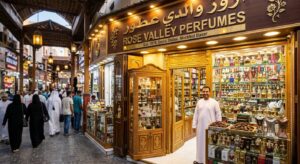
Dubai has become one of the world’s most important hubs for oud, and Southeast Asian agarwood, Malaysian wood included, makes up a significant share of what moves through the city’s fragrance trade. The Gulf region’s long-standing cultural relationship with oud, combined with Dubai’s role as a major re-export and retail centre, means the city offers access to a genuinely wide range of Malaysian grades and formats. If you are searching more broadly for where to source pure oud in the city, our guide on where to buy pure oud perfume near you in Dubai is a useful starting point.
A few things worth knowing if you are buying locally rather than online:
- Physical retailers allow you to actually smell the wood before committing, which matters enormously given how much scent perception varies from person to person.
- Established Dubai fragrance districts, including areas like Deira’s traditional souks, have decades of trading history with Southeast Asian oud suppliers.
- Ask to see the wood itself, not just a product photo. Resin density and colouring are far easier to judge in person.
- Reputable local retailers should be able to speak knowledgeably about regional origin and grading, following the same transparency standards covered earlier in this guide.
Rose Valley Perfumes has been sourcing and selling Arabian and Southeast Asian fragrance materials from Murshid Bazar in Deira, Dubai, since 1990, across two branches. Here is where to go depending on what you need:
- Shop the full Malaysian and regional agarwood range online: Rose Valley Perfumes online store, built for buyers ordering from outside the UAE as well as locally.
- Learn about our sourcing and history: About Us covers how the shop has operated in Deira since 1990.
- See the Murshid Bazar branches in detail: Rose Valley Perfumes at Murshid Bazar, Deira walks through both physical locations.
- Ask a question before ordering: Contact Us has direct details for both branches, whether you want to confirm a grade, request a sample, or ask about a specific region.
Whether you are shopping in person or browsing online, the same buying principles apply: ask about origin, ask about grade rationale, and do not be afraid to request a smaller sample size before committing to a larger purchase.
Common Myths About Malaysian Agarwood
A handful of misconceptions follow Malaysian agarwood around, mostly because it has been overshadowed by louder regional reputations for so long.
- Myth: Malaysian agarwood is always cheaper because it is lower quality. In reality, price differences usually come down to grade and region, not inherent inferiority.
- Myth: All Malaysian agarwood smells the same. As covered in the regional terroir section above, wood from Terengganu, Pahang, Kelantan, and Borneo can differ noticeably in sweetness, smoke, and earthiness.
- Myth: Plantation-grown oud is inferior to wild oud. Quality depends on tree age, resin development time, and processing, not simply whether the tree grew wild or was cultivated.
- Myth: Higher grade always means better smell. Grade reflects resin density and visual characteristics, not personal scent preference.
- Myth: Malaysian agarwood is a recent trend. Malaysia has a documented agarwood trade history stretching back centuries. It is the marketing that is recent, not the wood itself.
- Myth: You need to be an expert to appreciate it. Malaysian agarwood’s approachable, honeyed profile is precisely what makes it one of the easiest origins for a newcomer to enjoy immediately.
Frequently Asked Questions
What is Malaysian agarwood?
It is the resinous heartwood produced by Aquilaria trees native to Malaysia, prized for a sweet, honeyed scent that sits between Cambodian and Indian oud.
Is Malaysian oud good quality?
Yes. Well-graded Malaysian agarwood is considered among the more balanced and wearable ouds, valued for its smooth, layered scent rather than harsh or overpowering notes.
What does Malaysian agarwood smell like?
Bright and slightly fruity at first, softening into honey and plum, then settling into a warm, woody base.
Is Malaysian agarwood expensive?
Pricing depends on grade and region. Double Super and aged Terengganu wood command premium prices, while entry-grade chips remain affordable.
What is the difference between Malaysian and Indian oud?
Malaysian oud is sweeter and less animalic, while Indian oud is deeper, smokier, and more medicinal in character.
What is the difference between Malaysian and Cambodian oud?
Cambodian oud is sweeter and more linear, while Malaysian oud carries more structure and a longer, more layered dry-down.
Is Malaysian agarwood legal to buy?
Yes, provided it is sourced through legal, CITES-compliant channels. All Aquilaria species have been protected under CITES Appendix II since the mid-2000s.
How can you tell if agarwood is real?
Check for uneven resin streaking, a heavier-than-expected weight, and a scent that evolves in layers rather than staying flat.
What is Double Super agarwood?
The highest commercial grade in Malaysia’s system, indicating dense resin saturation and darker colouring, usually from older trees.
Where can I buy Malaysian agarwood in Dubai?
Established fragrance retailers in Deira’s Murshid Bazar, including Rose Valley Perfumes, alongside their online stores for buyers ordering remotely.
Keep Exploring
- What Is Agarwood? The Complete Guide
- Hindi Oud vs Cambodian Oud: How They Compare
- How to Burn Oud Wood at Home in Dubai
- Where to Buy Pure Oud Perfume Near Me in Dubai
- Rose Valley Perfumes at Murshid Bazar, Deira
Final Thoughts on Malaysian Agarwood
Malaysian agarwood earns its “underrated” label honestly, not because the quality was ever in question, but because the global spotlight simply landed elsewhere first. Once you understand what actually separates Terengganu wood from Kelantan wood, what a Double Super grade genuinely represents, and how to burn or wear it properly, it becomes clear why so many long-time oud collectors quietly consider Malaysian wood one of the best value propositions in the entire category.
If you are ready to experience it firsthand, explore Rose Valley Perfumes‘ agarwood and oud collection, including Malaysian Double Super grades sourced with the same regional transparency covered throughout this guide, or visit the Murshid Bazar branches in Deira, Dubai, to smell the wood in person before you buy.
Sources referenced: CITES Appendix II documentation and trade reports (cites.org, ITTO); IUCN Red List assessment for Aquilaria malaccensis; peer-reviewed research on Aquilaria species distribution in Malaysia; agarwood grading references including Mohamed & Lee (2016), “Keeping Up Appearances: Agarwood Grades and Quality,” in Agarwood (Springer); regional scent-profile documentation from established oud trade sources.