Have you ever borrowed a friend’s perfume, sprayed it on, and wondered why it smelled nothing like it did on her? Or bought a bottle of oud that smelled deep and resinous on your wrist at the store, only to have it turn sharp and medicinal by the time you got home?
You are not imagining it, and the bottle is not faulty.
Skin chemistry and perfume have a relationship that is far more complicated than most people realise. The same fragrance can smell woody and warm on one person, sweet and powdery on another, and almost unrecognisable on a third – all from the exact same bottle. This is not a flaw in the perfume. It is biology.
At Rose Valley Perfumes, we have spent over three decades in Murshid Bazar, Deira, helping people in Dubai find fragrances that genuinely suit them – not just fragrances that smell good in the abstract. In that time, we have watched hundreds of customers test the same Dehnal Oud, the same attar, the same bukhoor blend, and walk away with completely different scent experiences. Understanding why is the key to buying perfume that actually works for you, instead of guessing and hoping.
Skin Chemistry & Perfume in Everyday Terms
It helps to think of perfume less like a fixed product and more like a raw material waiting to be finished. The bottle provides the notes; your skin provides the final formula.
- The bottle supplies the raw fragrance oils, exactly as the perfumer designed them
- Your skin supplies the pH, warmth, and natural oils that finish the formula
- The result is a scent that is technically the same product, but never quite the same experience, from one person to the next
This is why two people can love the same oud in the store and end up with two genuinely different signature scents once it settles on their skin for a few hours. It’s also why a fragrance that felt “wrong” on a first try sometimes becomes a favourite once tested properly, on skin, over time, rather than judged in the first few rushed minutes.
Understanding Skin Chemistry & Perfume: What’s Really Happening
Skin chemistry refers to the unique combination of biological and environmental factors on your skin’s surface that interact with fragrance molecules the moment they touch you. No two people have identical skin chemistry – which is precisely why the connection between skin chemistry and perfume never behaves the same way twice.
Several elements combine to create this individual chemistry:
- Skin pH levels – typically ranging between 4.5 and 6.5, though this varies from person to person and even from one area of the body to another
- Natural oil (sebum) production – how much oil your skin produces on its own
- Skin temperature – warmer skin releases fragrance molecules faster and more intensely
- Skin microbiome – the community of natural bacteria living on your skin’s surface
- Hydration levels – dry versus well-moisturised skin holds fragrance differently
None of these factors are things you can control by choice alone, which is why two people can spray the same perfume and experience two entirely different scents.
Skin pH and Why It Changes Everything
Your skin’s pH acts almost like a chemical filter. Fragrance oils are made up of dozens, sometimes hundreds, of aromatic compounds – and each of these compounds reacts slightly differently depending on whether your skin leans more acidic or more neutral.
- More acidic skin tends to intensify sharper, brighter top notes
- More neutral or slightly alkaline skin often allows deeper, richer base notes like oud, amber, and musk to come forward sooner
This is one of the biggest reasons why a Dehnal Oud that smells intensely smoky on one wrist can smell smooth and rounded on another.
Skin Temperature: The Hidden Diffuser
Warmer skin acts like a natural diffuser. If your body temperature runs slightly higher, or if you happen to test perfume after a workout, in Dubai’s heat, or after a hot shower, fragrance molecules evaporate faster and project further.
- Warmer skin = faster release, stronger projection, shorter overall wear time
- Cooler skin = slower release, more subtle projection, longer-lasting base notes
This single factor explains why the same attar can feel overwhelming in July and remarkably gentle in December.

The Science of Skin Chemistry & Perfume Interaction
To understand why perfume smells different on everyone, it helps to understand what actually happens the moment fragrance meets skin.
Most perfumes – whether alcohol-based Western perfumes or oil-based Arabian attars – are built on a fragrance pyramid made of three layers:
- Top notes – the initial burst you smell in the first 5–15 minutes, usually light and volatile (citrus, spices, light florals)
- Heart notes – the “true” character of the perfume, emerging after the top notes fade, typically florals, woods, or spices
- Base notes – the deep, long-lasting foundation, often oud, amber, musk, sandalwood, or vanilla
Each of these layers evaporates at a different rate, and your skin chemistry directly influences how quickly that evaporation happens. This is why a fragrance can genuinely smell like three different scents over the course of a single day, and why that evolution is never identical on two different people.
Oil-Based vs Alcohol-Based Perfumes: A Critical Difference
This distinction matters enormously in the Gulf, where oil-based fragrances such as Dehnal Oud, attar, and concentrated fragrance oils dominate the market far more than they do in Western perfumery.
- Alcohol-based perfumes evaporate quickly, carrying top notes into the air fast and fading over 4–6 hours on average
- Oil-based perfumes sit on the skin longer, blend more deeply with your natural sebum, and can last well beyond 8–12 hours
Because oil-based fragrances stay on the skin for so much longer, they have significantly more time to interact with your individual skin chemistry – which means the effect of your skin type is even more pronounced with oud oil, Dehnal Oud, and attar than it is with a quick-evaporating alcohol spray.
This is one of the most overlooked facts in fragrance shopping, and it is exactly why testing an oud or attar properly matters so much more than testing a Western-style spray perfume.
Why Skin Chemistry & Perfume Matter Even More With Arabian Fragrances
Dubai’s fragrance culture is built around oud, Dehnal Oud, attar, and bukhoor – all of which are dense, oil-rich, and deeply resinous by nature. These fragrances are not designed to sit lightly on the skin; they are designed to bond with it.
That bonding process is exactly where skin chemistry becomes decisive.
- Agarwood-based ouds contain complex resinous and woody compounds that respond strongly to skin pH – slightly acidic skin can bring out smokier, more animalic facets, while neutral skin often reveals sweeter, creamier facets of the same oud
- Dehnal Oud, being a pure distilled oil, has an especially close relationship with your skin’s own natural oils, sometimes blending so thoroughly that the scent becomes almost inseparable from your own body scent
- Attar, often built on a sandalwood or mukhallat base, tends to soften and sweeten on drier skin, while it can intensify and turn spicier on naturally oilier skin
This is why testing oud and attar directly on the skin – never just from the bottle or a paper strip – makes such a difference before making a decision. A paper strip tells you what the oud smells like. Your skin tells you what it will smell like on you.
Skin Microbiome: The Overlooked Variable
Beyond pH and oil levels, the trillions of bacteria living naturally on your skin’s surface – collectively known as your skin microbiome – also play a quiet but real role in how fragrance develops.
- Your microbiome interacts with sweat and sebum to produce your own baseline body scent, which fragrance then layers on top of
- No two people share an identical microbiome, which means even identical twins can experience a fragrance slightly differently
- Factors like frequent antibacterial soap use, climate, and even the water quality in your area can subtly shift your skin’s bacterial balance over time, which in turn can shift how familiar fragrances behave
This is one of the least discussed but most fascinating reasons why fragrance is so deeply personal – your skin is, in a very real sense, alive, and it never stops shaping the scent it carries.
The Dubai Climate Factor
Dubai’s climate adds another layer entirely. High heat and humidity increase skin temperature and sweat production, both of which accelerate fragrance diffusion.
- In summer, oud and attar tend to project more strongly and burn off faster
- In cooler, air-conditioned indoor environments, the same fragrance can feel softer and last considerably longer
- Outdoor testing versus indoor testing can genuinely produce two different impressions of the same bottle
This is why many long-time attar wearers in the Gulf keep a “summer oud” and a “winter oud” – not out of preference alone, but because skin chemistry combined with climate genuinely changes how a fragrance performs across seasons.
Skin Chemistry Myths, Debunked
Before going further, it’s worth clearing up a few misconceptions that lead people to make the wrong fragrance decisions.
- Myth: “A high-quality oud will smell the same on everyone.” In reality, even the finest, most expensive agarwood oils shift in character from person to person. Quality determines the depth and complexity of the raw material – not how uniformly it behaves across different skin types.
- Myth: “If a perfume smells bad on me, it’s a bad perfume.” More often than not, this comes down to a mismatch between the fragrance’s concentration and your skin’s natural oil levels, not the quality of the fragrance itself.
- Myth: “Spraying more perfume makes it last longer.” Over-application typically overwhelms the nose and causes scent fatigue rather than genuinely extending wear time. A smaller, well-placed application on warm pulse points almost always outperforms a heavy, all-over application.
- Myth: “Everyone’s skin reacts to fragrance the same way, just at different intensities.” This isn’t accurate. Skin chemistry doesn’t just change intensity – it can shift which specific notes come forward, sometimes bringing out sweetness on one person and smokiness on another from the very same oud.
- Myth: “Once you find your signature scent, it will always smell the same.” Skin chemistry changes over time due to age, hormones, health, and even the seasons, which means a “signature scent” may need to evolve alongside your body.
Letting go of these assumptions is often the first step toward a much more satisfying, personalised approach to fragrance shopping.

How Perfumers and Fragrance Houses Account for Skin Chemistry
This isn’t just anecdotal knowledge passed around fragrance counters – it’s a well-documented consideration in professional perfumery.
- Perfumers test on skin, not just paper, precisely because they know the final product needs to be evaluated the way it will actually be worn
- Fragrance houses often design certain notes to be “chemistry-dependent” on purpose, using raw materials like oud, musk, and certain woods that are known to interact strongly with individual body chemistry, creating a more personal, less generic result
- Mukhallats (oil-based fragrance blends) are traditionally built with this variability in mind, often layering multiple oud and floral oils specifically because the way they merge with skin oils creates a result that’s impossible to fully predict – part of what makes traditional Arabian perfumery an art form rather than a fixed formula
- Sample sizes and testers exist for this exact reason. Reputable fragrance houses and attar specialists encourage skin testing before a full purchase, understanding that the bottle alone cannot guarantee the in-store experience will match the at-home one
Recognising that even professional perfumers build their formulas around this unpredictability helps explain why your own experience with a fragrance is never “wrong” – it’s simply your skin doing exactly what skin is designed to do.
Skin Chemistry & Perfume by Skin Type: A Breakdown
Your general skin type – oily, dry, combination, or sensitive – is one of the most reliable predictors of how a fragrance will behave on you. Below is a practical breakdown of how skin chemistry and perfume interact across different skin types.
Copy the table below directly into WordPress:
| Skin Type | How Fragrance Behaves | Best Fragrance Approach |
| Oily Skin | Holds scent longer, intensifies deep and warm notes, projects strongly | Lighter concentrations, cleaner woods, avoid overly heavy amber or musk |
| Dry Skin | Fragrance fades faster, top notes disappear quickly, less projection | Richer oud oils, Dehnal Oud, heavier attars that compensate for fast evaporation |
| Combination Skin | Uneven wear across different areas of the body | Apply to pulse points with naturally warmer, oilier skin (neck, inner wrists) |
| Sensitive Skin | Can react to concentrated oils, sometimes altering scent perception | Diluted attars, patch-test first, avoid direct application to irritated areas |
Oily Skin: Nature’s Fragrance Amplifier
If you have naturally oily skin, you likely already know that your fragrance seems to last longer than everyone else’s. This is because sebum acts as a natural fixative, binding fragrance molecules to the skin’s surface and slowing their evaporation.
- Base notes (oud, musk, amber) tend to dominate faster on oily skin
- Fragrances can smell richer and more intense than intended by the perfumer
- Lighter attars or diluted oud oils often work better than the most concentrated options
Dry Skin: The Fast Fader
Dry skin lacks the natural oils needed to “hold” fragrance molecules in place, which means scent evaporates noticeably faster.
- Top and heart notes fade quickly, sometimes within an hour
- Base notes may never fully develop before the fragrance disappears entirely
- Moisturising unscented skin before application significantly improves fragrance longevity
- Richer, more concentrated oils like Dehnal Oud perform especially well here, since their density compensates for the skin’s lack of natural fixative
Combination Skin: The Unpredictable Middle Ground
Combination skin – oilier in some areas (commonly the neck and chest) and drier in others – can cause a single application to wear unevenly across the body.
- Applying fragrance to naturally warmer, oilier pulse points (behind the ears, the neck, inner wrists) tends to produce the most consistent results
- Testing on two different areas of the body can reveal surprisingly different scent experiences from the very same oil
Sensitive Skin: Proceed With Care
Fragrance oils, particularly concentrated ones like pure oud oil or attar, are highly potent. On sensitive skin, this concentration can sometimes cause the fragrance to smell “off” or unusually sharp, separate from any allergic reaction.
- Always patch-test on the inner forearm before applying to pulse points
- Consider diluting oud oil or attar with a neutral carrier oil if your skin tends to react
- Avoid layering multiple concentrated oils directly on sensitive areas
Combination Skin, Continued: Where to Apply for Best Results
For those with combination skin specifically, a little strategic testing goes a long way:
- Try applying to both the inner wrist and the neck, then compare how the fragrance develops on each after 30 minutes
- Note which area holds the scent longer – that’s likely your naturally warmer, oilier zone, and the best long-term application point
- Avoid applying to areas that tend to be excessively dry, such as elbows or knees, as these will cause the fragrance to fade unevenly compared to the rest of your body
Beyond Skin Type: Diet, Hormones, Medication, and Age
Skin type is only part of the picture. Several internal, often overlooked factors also shape how fragrance smells on your body.
Diet
What you eat genuinely affects your natural body scent, which in turn interacts with perfume.
- Spicy foods, garlic, and alcohol can subtly alter skin secretions and body odour, changing how a fragrance’s top notes present themselves
- Diets high in fruits and vegetables are often associated with a milder, more neutral base body scent, allowing perfume notes to come through more clearly
- Excessive caffeine intake has been linked to slightly drier skin, which can shorten fragrance longevity
Hormones
Hormonal fluctuations are one of the most significant, and most underestimated, influences on how perfume smells on the body.
- Pregnancy can dramatically shift scent perception and skin oil production, sometimes making a previously loved fragrance smell unpleasant
- Menstrual cycles can subtly change body temperature and skin oil levels throughout the month
- Age-related hormonal shifts, particularly during and after menopause, often reduce natural skin oils, which tends to shorten fragrance wear time
Medication and Health
Certain medications can alter skin pH, hydration, and natural scent in ways that directly affect fragrance performance.
- Some medications cause dry skin as a side effect, shortening fragrance longevity
- Others can alter body chemistry enough to change how certain fragrance notes are perceived
- If a fragrance you have always loved suddenly smells different, a change in medication or health status is worth considering
Age
Skin changes considerably over a lifetime, and so does its relationship with fragrance.
- Younger skin tends to be oilier, which can intensify fragrance and shorten longevity of lighter top notes
- Mature skin often produces less natural oil, meaning fragrances may need reapplication more frequently, but rich oils like Dehnal Oud can perform beautifully by adding the moisture and depth mature skin naturally lacks
Stress, Sleep, and Body Temperature
Two additional, often-overlooked factors round out the internal side of skin chemistry:
- Stress triggers subtle hormonal shifts that can slightly increase sweat production and body temperature, both of which affect how a fragrance projects
- Sleep quality influences skin hydration and oil regulation overnight, which is part of why a fragrance applied in the morning after a poor night’s sleep can behave differently than the same fragrance applied after a well-rested night
- Exercise and physical activity raise body temperature significantly, which is why fragrance applied before a workout tends to fade far faster than fragrance applied during a calm, sedentary day
None of these factors are something you need to actively manage – but being aware of them explains why even your own skin doesn’t behave with perfect, predictable consistency from one day to the next.
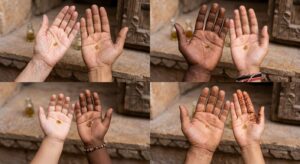
How to Properly Test a Perfume on Your Skin
Given everything above, testing perfume correctly is not optional – it is essential.
- Never rely on a paper strip alone. Paper does not have skin oils, pH, or temperature, so it can only tell you the fragrance’s raw composition, not how it will behave on your body
- Apply to a pulse point, such as the inner wrist or behind the ear, where skin is naturally warmer and blood flow is closer to the surface
- Wait at least 15–30 minutes before judging the scent, allowing the initial top notes to settle and the true character to emerge
- Avoid testing more than 2–3 fragrances at once, as your nose fatigues quickly and later scents become harder to judge accurately
- Test in the environment you’ll actually wear it in. A fragrance tested indoors under air conditioning may perform very differently outdoors in Dubai’s heat
- Give it a full day before deciding. Many oud oils and attars reveal their true character 4–6 hours after application, once the top notes have fully faded
- Avoid applying fragrance directly after using strongly scented soap, lotion, or deodorant, as competing scents will distort your impression
Why Paper Strips Mislead You With Oud and Attar
This point deserves special emphasis for anyone shopping for Dehnal Oud or attar specifically.
- Paper strips are useful for comparing raw fragrance notes side by side in a store, but nothing more
- They cannot replicate skin oil, warmth, or pH – the very factors that define how oud and attar actually wear
- A paper strip test is a starting point, never a final verdict, for oil-based Arabian fragrances
Choosing the Right Oud, Attar, or Dehnal Oud Based on Your Skin Chemistry
Once you understand your own skin type and its tendencies, choosing the right fragrance becomes far more strategic than simply picking whatever smells appealing in the bottle.
- If you have oily or warmer skin, lean toward lighter, cleaner ouds and avoid the heaviest, most resinous Dehnal Oud concentrations, since your skin will naturally amplify depth and intensity on its own
- If you have dry skin, a richer, more concentrated Dehnal Oud or a deeply resinous attar will compensate for faster evaporation and give you the longevity you’re looking for
- If your skin runs sensitive, start with a smaller quantity of a milder attar rather than a highly concentrated pure oud oil, and always patch-test first
- If you live an active, outdoor lifestyle in Dubai’s heat, choose fragrances with strong base notes like sandalwood or amber, which tend to survive heat and humidity better than delicate floral top notes
With this in mind, browsing through a range like agarwood and oud or a dedicated Dehnal Oud selection starts to feel different – instead of asking “which oud smells best,” the more useful question becomes “which oud will work best with my skin.”
Matching Fragrance Families to Skin Tendencies
Beyond concentration, certain fragrance families tend to pair more naturally with specific skin tendencies, based on what we consistently observe with customers:
- Woody and smoky ouds tend to intensify on warmer, oilier skin, making them a strong match for those who want a bold, long-lasting presence without needing to reapply often
- Sweet, creamy attars built around vanilla, amber, or sandalwood often perform beautifully on drier skin, where the fragrance’s own richness compensates for the skin’s lower natural oil content
- Fresh, green, or citrus-forward blends tend to fade fastest on dry skin and are often best suited to those with naturally oilier or combination skin who want a lighter overall effect
- Musk-forward compositions interact very closely with individual body chemistry, often described by customers as smelling “like my own skin, just better” – a sign of a particularly harmonious skin-chemistry match
Understanding your own skin tendency first, then shopping fragrance families accordingly, consistently produces better long-term satisfaction than choosing based on scent alone.
The Role of Concentration
Fragrance concentration – how much aromatic oil is present relative to any carrier – plays directly into how skin chemistry expresses itself.
- Pure, undiluted oud oil will express your skin chemistry most intensely, since there is nothing to soften or buffer the interaction
- Diluted attars and mukhallats offer a gentler introduction, useful for those still learning how their skin reacts to concentrated Arabian fragrance oils
- Ranges like this fragrance oil selection span different concentrations, which is worth keeping in mind if you’re still working out how your own skin responds
Layering Oud With Bukhoor
Many people in Dubai enjoy pairing a personal oud or attar with bukhoor for the home or clothing, and skin chemistry plays a role here too.
- Clothing fibres hold fragrance very differently than skin does, which is why bukhoor-scented garments can smell noticeably different from the same oud applied directly to the body
- Skin fragrance evolves through pH, warmth, and oils, while fabric fragrance simply sits on the surface and releases evenly over time
- Pairing a personal attar with something from a bukhoor and home fragrance range is one way to build a scent presence that works both on the skin and around it
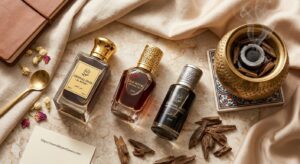
Layering & Application: Making Skin Chemistry Work For You
Understanding skin chemistry is not only about choosing the right bottle – it is also about applying fragrance strategically to work with your body rather than against it.
- Apply fragrance oil to pulse points: wrists, neck, behind the ears, and inside the elbows, where skin warmth naturally accelerates diffusion
- Moisturise dry skin with an unscented lotion before application to help the fragrance bind and last longer
- Avoid rubbing wrists together after application, a common habit that actually breaks down top notes and alters the fragrance’s natural development
- Layer strategically, applying a lighter fragrance oil beneath a richer attar to create smoother transitions between top, heart, and base notes
- Reapply thoughtfully rather than heavily. If your skin burns through fragrance quickly, a light reapplication after several hours works better than an overly heavy initial application
If you’re specifically focused on maximising how long your fragrance lasts throughout the day, a closer look at fragrance oil application for maximum longevity covers additional techniques that pair directly with the skin chemistry principles outlined here.
Seasonal Application Adjustments
Since Dubai’s climate shifts so dramatically between summer and winter, adjusting how you apply fragrance seasonally is just as important as choosing the right bottle.
- In peak summer heat, apply fragrance sparingly to fewer pulse points, since elevated skin temperature already accelerates projection on its own
- In cooler, air-conditioned months, you can afford slightly more generous application, or a richer, more concentrated oud, since lower skin temperature naturally slows diffusion
- Before spending time outdoors, consider applying fragrance to clothing in addition to skin, since fabric holds scent differently and can help maintain a consistent presence even as skin-level fragrance fades faster in the heat
- After swimming or heavy sweating, most oil-based fragrances will need reapplication, as water and perspiration both interfere with how fragrance oils bind to the skin
A Note on Storage and Skin Chemistry
How you store your fragrance oils also indirectly affects how they interact with your skin.
- Heat, light, and prolonged air exposure can cause oud and attar to oxidise slightly, changing their molecular composition before they even touch your skin
- Proper storage – cool, dark, and tightly sealed – preserves the fragrance’s original character
- A well-stored oil ensures accuracy, so what you’re testing on your skin is a true representation of the product, not a degraded version of it
Building a Personal Fragrance Wardrobe Around Skin Chemistry
Rather than searching for one single “perfect” fragrance, many experienced attar and oud wearers in Dubai build what’s often called a fragrance wardrobe – a small, curated set of scents chosen specifically to work with different conditions.
- A lighter, cleaner oud for daytime wear and warmer months, when skin temperature naturally amplifies projection
- A richer, more concentrated Dehnal Oud for evenings, cooler weather, or special occasions, when you want the fragrance to carry more depth and longevity
- A milder attar or diluted mukhallat for close, intimate settings where a subtler presence is preferred
- A distinct bukhoor for the home and clothing, kept separate from personal skin fragrance to avoid competing scents
This approach acknowledges skin chemistry rather than fighting it – instead of forcing one fragrance to perform consistently across every condition, you choose the right fragrance for the right moment.
Common Mistakes People Make When Blaming a “Bad” Perfume
So often, a fragrance gets unfairly dismissed as “not a good scent” when the real issue was never the perfume itself. Some of the most common mistakes we see:
- Judging a fragrance immediately after spraying, before top notes have settled and the true composition has emerged
- Testing from a paper strip only, especially for oud and attar, which are designed to interact with skin oils
- Buying a fragrance because it smelled incredible on a friend, without accounting for the fact that their skin chemistry is entirely different from yours
- Applying too much fragrance at once, which can overwhelm the nose and distort perception rather than reflecting how the scent actually develops
- Not accounting for seasonal changes, expecting a fragrance to perform identically in December and in August
- Ignoring how skincare products underneath interact with fragrance, since scented lotions, sunscreens, and deodorants can clash with or alter perfume notes
Recognising these patterns can save you from writing off a genuinely excellent oud or attar simply because the testing conditions weren’t right.
When to Trust Your First Impression (and When Not To)
Not every initial reaction should be dismissed – but it helps to know which impressions are reliable and which ones deserve a second chance.
- Trust an immediate, strong dislike of the top notes if it’s rooted in a specific note you already know doesn’t suit you, such as a particular spice or floral
- Don’t trust a first impression formed within the first five minutes, since this window is dominated almost entirely by volatile top notes that haven’t yet given way to the fragrance’s true character
- Trust your impression after wearing a fragrance for a full day, including how it felt hours later, since this reflects the complete relationship between the fragrance and your skin
- Don’t trust a comparison made against a memory of how it smelled on someone else, since that comparison was never a fair one to begin with

What Years of Fragrance Consultation Reveal About Skin Chemistry & Perfume
Watching people test the same oud, attar, or Dehnal Oud side by side, again and again, over the years makes a few patterns unmistakably clear.
- No two people should expect identical results from the same bottle – once that becomes clear, most people stop searching for a “perfect” universal fragrance and start searching for what’s right for their skin
- The most common mistake is rushing the test. Fragrance, especially oud and Dehnal Oud, needs time on the skin to reveal its true character
- Seasonal skin changes are real – many long-term wearers rotate between a lighter oud for Dubai’s summer months and a richer, more concentrated Dehnal Oud for cooler months
- Skin chemistry knowledge builds confidence, not confusion. People who understand why a fragrance behaves the way it does on their skin tend to make far more satisfying purchases than those chasing a scent purely because someone else loved it
Fragrance is deeply personal, and understanding the science behind that personal connection only deepens the experience of wearing it.
A Real Example From the Counter
One pattern comes up often enough to be worth mentioning: two family members, often sisters or a mother and daughter, will test the exact same oud within minutes of each other.
- One describes it as “sweet and creamy,” the other as “deep and smoky” – from the identical bottle, applied the same way, minutes apart
- The difference comes down entirely to skin pH, oil levels, and warmth between them, not the fragrance itself
- This is often the moment someone stops asking “which oud is the best one” and starts asking “which oud is best for me“
- That shift in thinking, more than any single product recommendation, is what leads to a fragrance someone actually wears for years rather than one that sits unused after a single disappointing try
If you’re ever unsure where to start, a quick conversation through WhatsApp or in person can help match a fragrance to your specific skin type and lifestyle.
Skin Chemistry and Gifting Fragrance: A Special Consideration
Fragrance is one of the most popular gifts exchanged in the Gulf, whether for weddings, Eid, or simply as a gesture of hospitality. Skin chemistry adds an important dimension to gifting that’s worth keeping in mind.
- A fragrance that smells incredible on you may not translate the same way on the recipient, since their skin chemistry will inevitably differ from yours
- When gifting oud or Dehnal Oud, consider choosing a well-balanced, versatile option rather than the most intensely concentrated or niche choice, since versatile ouds tend to adapt more gracefully across different skin types
- Bukhoor and home fragrances make excellent gifts precisely because they sidestep skin chemistry entirely – since they’re experienced through the air and fabric rather than applied to skin, they offer a more universally consistent experience for the recipient
- Offering a small taster or sample alongside a full-sized gift allows the recipient to test the fragrance on their own skin before committing to regular wear, turning a potential mismatch into a thoughtful, informed gift
This is part of why an incense oil and bukhoor selection tends to work so well as a gift in the Gulf – it carries the warmth of Arabian fragrance culture without the uncertainty that comes from not knowing someone else’s skin.
Conclusion: Your Skin Is Part of the Fragrance
Perfume is never a finished product on its own. It only becomes complete once it meets skin – and your skin brings its own chemistry, temperature, pH, and history into that equation every single time.
Key takeaways:
- Skin pH, natural oil levels, temperature, and microbiome all shape how a fragrance develops on you
- Oil-based Arabian fragrances like oud, attar, and Dehnal Oud are affected even more than alcohol-based sprays, since they stay on the skin longer
- Diet, hormones, medication, and age can all quietly change how a familiar fragrance smells over time
- Proper testing – on skin, on a pulse point, over several hours – always beats judging from a paper strip or a rushed first impression
- Choosing fragrance concentration and application method based on your own skin type leads to far better long-term satisfaction
Understanding skin chemistry and perfume isn’t just an interesting piece of science – it’s the difference between buying a fragrance that smells good in theory and finding one that genuinely becomes yours. The next time a scent doesn’t perform the way you expected, remember: it likely isn’t the fragrance’s fault. It’s simply your skin, telling its own story.
A perfumes collection, an attars and fragrance oils range, or a Dehnal Oud selection all become far easier to shop once your skin chemistry is part of the decision, rather than an afterthought.
Fragrance shopping doesn’t need to feel like guesswork. Once you understand the role your own skin plays in the equation, every bottle you test becomes an opportunity to learn something specific about what genuinely works for you – not what worked for someone else, and not what a bottle promises in isolation. That shift, more than any single product, is what turns fragrance from an occasional purchase into a lasting, personal ritual.
Frequently Asked Questions
Q: Why does perfume smell different on different people?
A: Perfume reacts with each person’s unique skin pH, oil levels, temperature, and hormones, so the same fragrance develops differently from one person to the next.
Q: Does perfume smell different on oily skin than on dry skin?
A: Yes. Oily skin holds fragrance longer and intensifies base notes, while dry skin causes fragrance to fade faster with fewer natural oils to bind it.
Q: Why does a fragrance smell different on skin than on a tester strip?
A: A tester strip has no skin oils, pH, or warmth, so it only shows the raw scent. Oud and Dehnal Oud especially need skin contact to reveal their true character.
Q: Does perfume smell different in summer than in winter?
A: Yes. Heat raises skin temperature and speeds up evaporation, so fragrance projects more but fades faster in summer, and lasts longer in cooler weather.
Q: Can diet affect how perfume smells on your skin?
A: Yes. Spicy food, garlic, caffeine, and alcohol can subtly change body chemistry and skin secretions, which alters how fragrance notes develop.
Q: How long should you wait before judging a new perfume?
A: Wait at least 15–30 minutes for top notes to settle, and ideally a few hours, since oud and attar often reveal their true scent later in the day.
Q: Does age change how perfume smells on skin?
A: Yes. Younger, oilier skin tends to hold fragrance longer, while mature skin produces less natural oil and may need richer oils or more frequent reapplication.
Q: How do you properly test perfume on your skin?
A: Apply a small amount to a pulse point like the wrist or neck, avoid rubbing it in, and evaluate the scent again after it has developed for a few hours.