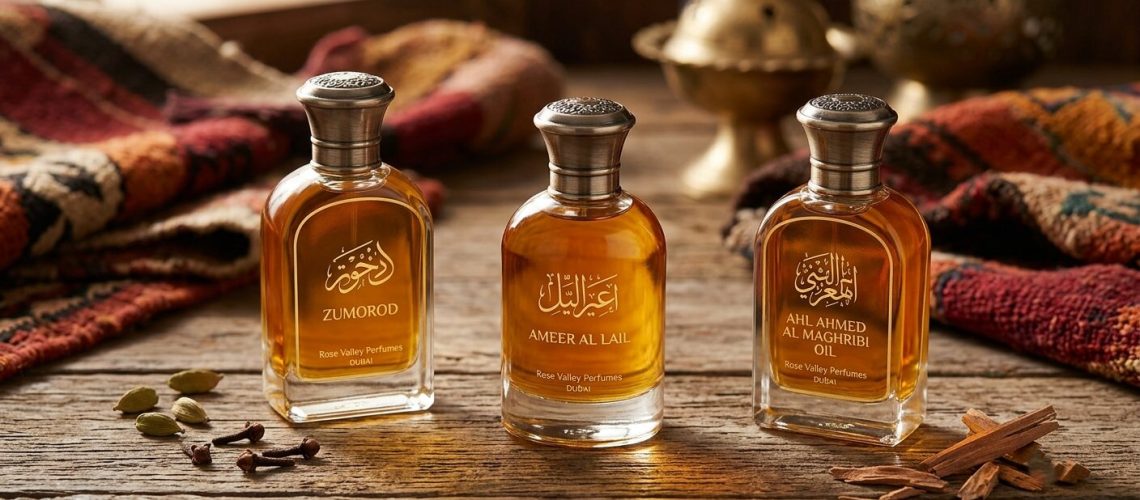
Walk into any souk in Deira on a warm Dubai evening and you’ll understand something no bottle label can teach you: Arabic perfume is not worn quietly. It announces itself. It lingers on a majlis cushion hours after the guest has left, clings to the sleeve of a kandura, and turns a simple greeting into a memory. For men living in or visiting Dubai, choosing the right Arabic perfume isn’t just a shopping decision – it’s a small act of identity.
A Brief History: Why Dubai Became the World’s Perfume Crossroads
To understand why Arabic perfume for men carries so much weight in Dubai specifically, it helps to zoom out for a moment.
Long before Dubai became a skyline of glass towers, it was a trading port. Ships moving between East Africa, the Indian subcontinent, and the wider Arabian Peninsula stopped here to exchange spices, textiles, pearls, and aromatic raw materials. Deira, where Rose Valley’s stores sit today, was one of the beating hearts of that trade:
- Oud (agarwood) became one of the most prized commodities to pass through these routes – not because it was easy to source, but precisely because it wasn’t. Genuine agarwood forms only when a specific tree species becomes infected with a particular mold, triggering a defensive resin response that can’t be rushed or replicated on demand.
- Rose and floral attars arrived via trade with the Levant and North Africa, where distillation techniques for extracting essential oils from petals had been refined over centuries.
- Bukhoor and incense traditions developed alongside these imported raw materials, turning fragrance from a personal accessory into a communal, hospitality-driven ritual.
By the time Dubai modernized into a global trade and tourism hub, this fragrance heritage didn’t disappear – it commercialized:
- Deira’s souks, including the streets around Murshid Bazar and the Gold Souq, remain some of the most concentrated perfume-trading districts on earth.
- International visitors specifically plan a stop here – buying an Arabic perfume in Dubai connects you to the same trade routes and craftsmanship that built the category in the first place.
- This history also explains why Arabic perfumery still resists the “spray and go” simplicity of Western fragrance – these are formulations built around scarcity, ritual, and slow development, not mass production.
- Modern Dubai perfume houses like Rose Valley sit at the intersection of that centuries-old trade heritage and today’s expectations for consistency, hygiene, and transparent pricing – blending traditional attar-making knowledge with a retail experience built for both residents and international visitors.
- Understanding this backdrop also reframes the shopping experience itself: when you’re browsing bottles in a Deira shop, you’re standing in a market lineage that predates the city’s skyscrapers by centuries, not a modern retail invention dressed up in Arabic branding.
Why Arabic Perfumes for Men in Dubai Are a Category of Their Own
Before comparing individual fragrances, it helps to understand why Arabic perfumery in Dubai operates by a completely different set of rules than the perfume counter at a Western department store. Most men shopping for the first time assume a perfume is a perfume. It isn’t – and that assumption is usually where disappointment starts.
Fragrance Oils vs. Alcohol-Based Perfumes
The biggest structural difference is the base:
- Western colognes and Eau de Parfums are alcohol-based. Alcohol acts as a carrier that helps the scent evaporate quickly, throwing a strong initial “sillage” that fades within a few hours.
- Arabic perfume oils (attars/dehn) use an oil base – often derived from jojoba, sandalwood, or synthetic oil carriers – with no alcohol content at all.
- Oil binds to skin differently than alcohol does. It sits closer to the skin’s surface, releases more slowly, and reacts with individual body chemistry in a way alcohol-based sprays rarely do.
- Two men wearing the same attar can smell noticeably different by the end of the day, because the oil interacts with their own natural skin oils rather than evaporating uniformly.
Why Alcohol-Free Matters in Dubai Specifically
Two very practical reasons alcohol-free formulations matter more here than almost anywhere else:
- Religious and cultural considerations. Many men in the UAE and across the wider Gulf specifically seek out alcohol-free fragrance oils for religious reasons, particularly before prayer. An attar-style oil solves this without compromising on scent strength.
- Heat performance. Dubai’s climate is punishing on fragrance. Alcohol-based sprays tend to “cook off” faster in extreme heat and humidity – a scent that lasts eight hours in London might only last three in a Dubai summer. Oil-based perfumes are formulated to sit and develop on skin rather than flash-evaporate.
Concentration Changes Everything
- Concentration is the single most important number most buyers ignore. A typical Eau de Toilette contains roughly 5–15% aromatic compounds.
- A quality Arabic perfume oil can be formulated at 20% or higher, with far less dilution overall.
- This is why a small 6ml or 12ml attar bottle can rival – or outlast – an entire 100ml bottle of cologne. You’re not paying for volume; you’re paying for concentration and longevity.
- It’s also why pricing looks confusing to first-timers. A 35 AED bottle and a 1,500 AED bottle might sit on the same shelf, and the difference usually comes down to raw material sourcing – particularly when real oud (agarwood) or natural attars are involved rather than synthetic reproductions.
The Cultural Weight of Scent in the Gulf
- In Emirati and wider Gulf culture, fragrance is part of hospitality, not an afterthought.
- Offering bukhoor (incense) to guests, dabbing attar onto a visitor’s wrist before they leave a majlis, or gifting a bottle of oud oil for Eid are long-standing customs.
- This context explains why Arabic perfumery leans so heavily into deep, warm, resinous notes – oud, amber, musk, saffron – rather than the light citrus-aquatic profiles common in Western men’s fragrance.
Understanding Oud: The King of Arabic Perfumery

You cannot talk about Arabic perfume for men without talking about oud – the single most misunderstood word in the entire category.
What Oud Actually Is
Oud, also called agarwood, comes from the resin produced by certain Aquilaria trees when they’re wounded or infected by a specific mold. The tree produces a dense, dark, fragrant resin as a defense mechanism – and that resin, not the wood itself, is what gets harvested, distilled, or burned to produce the oud used in perfumery.
- It cannot be farmed on demand. Infection rates are unpredictable, and naturally infected trees can take years – sometimes decades – to develop resin of real quality.
- Grading varies enormously. Oud is graded by region of origin (commonly referencing countries like India, Cambodia, and Malaysia in trade terminology), resin density, and aroma complexity – which is why oud-related products sit at wildly different price points even within the same shop.
- Synthetic and “oud-inspired” alternatives exist. Many affordable Arabic perfume oils use synthetic oud accords rather than genuine agarwood distillate – this is a different price tier, not a deceptive one.
Why This Matters When You’re Buying
- A fragrance oil described as having an “oud heart” or “smoky oud base” typically means the formulation is built around an oud accord designed to recreate that smoky, woody character – not necessarily a pure agarwood distillate.
- That’s not a downgrade. Pure agarwood oil (dehn al oud) sits at a dramatically higher price point and is usually sold as its own dedicated product, not blended into an affordable daily fragrance.
- If you want the raw, unblended experience, look for dedicated Dehn al Oud or Agarwood product lines rather than the blended fragrance oils covered in this guide. Rose Valley carries both categories.
Oud’s Role in a Man’s Fragrance Wardrobe
Think of oud the way a chef thinks of a strong stock base – it rarely stands alone, but it anchors almost everything built around it:
- Paired with rose → romantic and layered.
- Paired with saffron and amber (as in Zumorod) → bold and celebratory.
- Paired with musk alone → deep and grounding.
- Paired with floral top notes (as in Ameer Al Lail) → sensual but softened, less overtly masculine-heavy.
- Paired with fresh, citrus-forward openings (as in Ahl Ahmed Al Maghribi Oil) → wearable and office-appropriate, since the oud only fully emerges in the base.
Understanding which pairing you’re drawn to is more useful than simply asking “does it have oud in it” – by this point, you already know the answer for most Arabic perfumes is yes.
Terminology Worth Knowing Before You Shop
A short glossary makes the in-store conversation much easier:
- Dehn al Oud: Pure, unblended agarwood oil – the most concentrated and expensive form.
- Attar: A general term for oil-based, alcohol-free perfume, whether oud-based or floral.
- Bukhoor: Wood chips soaked in fragrance oils and burned as incense, often used alongside perfume rather than instead of it.
- Sillage: The trail a fragrance leaves behind as you move – Arabic oils typically have lower initial sillage than sprays but far greater longevity.
- Accord: A blended combination of notes designed to evoke a specific effect (like “oud accord”), rather than a single raw ingredient.
- Muattar: A fragranced or scented product, often used in the context of oud muattar – wood chips pre-treated with fragrance oils, distinct from raw, untreated bukhoor wood.
Top Arabic Perfumes for Men in Dubai: Rose Valley’s Curated Picks
With that foundation in place, here are Rose Valley’s standout picks for men – chosen to cover a genuine range of occasions, intensities, and budgets rather than repeating a single “safe” recommendation six times.
1. Zumorod Arabian Oud Oil – The Bold Signature Scent
Best for: Men who want to be remembered in a room.
Zumorod is Rose Valley’s interpretation of one of the most talked-about oriental profiles in the region:
- Opening: A rich blend of saffron, citrus, and warming spice.
- Heart: Oud, rose, and amber.
- Character: Spicy, resinous, and unapologetically oriental.
- Longevity: Formulated for extended wear – up to 18 hours on skin, dramatically longer than almost any alcohol-based cologne.
- Best occasion: Evening gatherings, weddings, and any setting where you want a fragrance with real presence.
- Who should avoid it: Men who prefer light, clean, “no-scent” fragrances for the office.
First-hand insight:
- The saffron-citrus opening is deceptive – it reads bright and almost fresh for the first ten minutes.
- The deeper oud and amber base takes over roughly an hour later, so don’t judge it in the first five minutes.
- Applied in the morning, expect a noticeably different fragrance by early afternoon: the citrus recedes first, the spice settles into the background, and by evening you’re left with the rose-oud-amber base.
- This makes Zumorod better suited to events that start in daylight and run into the evening – weddings or long family gatherings – rather than a quick two-hour outing.
- Pairing tip: Try layering with Rose Valley’s bukhoor line for special occasions – burning bukhoor before a gathering, then wearing Zumorod, creates a consistent scent experience across the whole evening.
- Who tends to love it: Men who already wear bold Western fragrances and want an Arabic equivalent that doesn’t feel toned-down by comparison.
- A note on confidence: Because Zumorod projects strongly, it rewards wearers who are comfortable being noticed – if you’re used to fragrances that stay close to the skin, expect an adjustment period before this one feels natural to wear.
2. Ahl Ahmed Al Maghribi Oil – The Everyday Refined Pick
Best for: Office wear, daily use, and men new to Arabic perfume oils.
- Opening: Fresh, lighter notes.
- Heart: Floral-woody.
- Base: Warm amber-musk.
- Character: Traditional but wearable – a genuine “bridge” fragrance for men transitioning from Western colognes to Arabic oils.
- Longevity: Strong for an oil in this style, though softer and closer-to-skin than Zumorod – intentional, since it’s built for daily wear.
- Best occasion: Office, daytime meetings, casual outings.
- Why it works: The fresh opening avoids an overpowering first impression on colleagues or clients, while the amber-musk base still delivers warmth.
First-hand insight:
- This is the pick we recommend when men say “I want an oud fragrance but I’m nervous it’ll be too strong for work.”
- The alcohol-free, oil-based formulation survives a Dubai commute – sitting in traffic with the AC blasting – far better than a spray-on cologne, which tends to fade by lunchtime.
- The “Maghribi” (Moroccan) name references a perfumery tradition known for balancing floral and woody accords rather than leaning purely on oud intensity – a deliberate style choice, not a weaker formulation.
- Ideal wearer: Client-facing professionals, long hours in air-conditioned offices, or anyone who prefers a fragrance noticed only at handshake distance.
- A useful comparison point: If Zumorod is the fragrance you wear to be remembered, Ahl Ahmed Al Maghribi Oil is the one you wear so that people simply enjoy being near you – the goal shifts from statement-making to quiet consistency.
3. Ameer Al Lail / Jawad Al Lail – The Evening Statement Piece
Best for: Date nights, late gatherings, and special occasions.
The name translates roughly to “Prince of the Night,” and the fragrance lives up to it:
- Profile: An oriental blend of exotic florals and warm spice, resting on a velvety base of smoky oud, amber, and musk.
- Character: Sensual, smoky, and deep – designed specifically for evening wear.
- Available sizes: 100ML, 250ML, 500ML, and a full 1L bottle.
- Price range: Roughly AED 35 to AED 260 depending on size.
- Best occasion: Weddings, late-night gatherings, anniversary dinners.
First-hand insight:
- Rose Valley markets this as unisex, and on men, the floral top notes settle quickly – leaving the smoky oud-amber-musk base to do most of the work.
- The floral notes are a supporting act, not the lead – they soften the oud’s smokiness rather than sweetening it into something feminine.
- On the dual name: Rose Valley lists this fragrance under two names, Ameer Al Lail and Jawad Al Lail. They’re the same blend – the dual naming reflects regional naming conventions where a single fragrance can carry more than one traditional or poetic title.
- Sizing strategy: Because this ranges from 100ML up to a full 1L bottle, it’s a strong candidate for the “test small, commit big” approach – start with the smallest size, wear it across a few different settings, then scale up once you’re confident it’s a genuine signature scent.
- Setting the mood: This is one of the few fragrances in the lineup where the setting genuinely matters as much as the wearer – it’s built to be experienced in low light, close conversation, and a slower pace, rather than a bright, busy daytime environment.
4. Aramis 900 Men’s – The Familiar Classic, Reimagined
Best for: Men who want a recognizable, confidence-building scent without starting from zero.
- Character: Woody, warm, and dependable – a “safe but not boring” choice.
- Best occasion: Versatile enough for both daytime and evening wear.
- Price consideration: Sold across multiple size options, making it easy to start small and scale up.
First-hand insight:
- This is frequently the pick for gifting – particularly for older relatives or business associates where you want something universally well-received.
- The “900” naming nods to a well-known Western fragrance heritage many men already associate with classic, boardroom-appropriate masculinity.
- Rose Valley’s oil-based version rebuilds that familiar character in a longer-lasting, alcohol-free format – a way to experience it through an Arabic perfumery lens rather than starting from scratch with unfamiliar notes.
5. Sheikh Al Arab – The Budget-Friendly Entry Point
Best for: First-time buyers and men building a fragrance collection on a budget.
- Character: A more approachable, lighter take on traditional Arabic oud-adjacent notes.
- Best occasion: Daily wear, casual settings, or as a “starter bottle” before investing in Zumorod or Ameer Al Lail.
- Why it matters for this guide: Most “top perfumes” articles only show premium picks – in reality, a large share of Dubai’s perfume buyers want something good and affordable.
First-hand insight:
- Tourists visiting Dubai on a short trip often want an authentic Arabic fragrance without spending their entire souvenir budget on one bottle.
- Sheikh Al Arab fills that role well – genuinely representative of the category, priced for an easy impulse purchase, and small enough to pack in hand luggage.
6. Attar Mikaj – For the Traditionalist
Best for: Men who want the closest experience to a classical, old-school Gulf attar.
- Character: Deep, traditional, resin-forward.
- Best occasion: Formal occasions, religious gatherings, and anywhere a classical scent profile is appropriate.
- Who it suits: Men who already prefer traditional attars over modern oud-oriental hybrids.
First-hand insight:
- If Zumorod and Ameer Al Lail represent where Arabic perfumery has evolved to, Attar Mikaj represents where it came from.
- Recommended for men who grew up with a specific family attar and want something that echoes that memory.
- Also appeals to men who’ve already tried several modern oud blends and want something less polished and more raw.
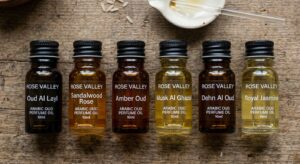
Notes, Longevity & Price at a Glance
| Fragrance | Scent Family | Longevity | Best Occasion | Approx. Price Range (AED) |
| Zumorod Arabian Oud Oil | Saffron, oud, rose, amber | Up to 18 hours | Evening, weddings, statement wear | Mid to premium |
| Ahl Ahmed Al Maghribi Oil | Fresh, floral-woody, amber-musk | Long, close-to-skin | Office, daily wear | Entry to mid |
| Ameer Al Lail / Jawad Al Lail | Floral, smoky oud, amber, musk | Long | Evening, date nights, special occasions | 35–260 (by size) |
| Aramis 900 Men’s | Woody, warm, classic | Long | Versatile – day or evening | Entry to mid |
| Sheikh Al Arab | Light oud-adjacent | Moderate to long | Daily, casual, first-timers | Entry-level |
| Attar Mikaj | Traditional, resin-forward | Long | Formal, religious, traditional settings | Entry to mid |
Quick way to read this table:
- The closer a fragrance sits to the “evening/statement” column, the more oud, amber, and musk dominate the base – and generally, the longer it lasts and the more attention it draws.
- One-bottle answer: Ahl Ahmed Al Maghribi Oil or Aramis 900 Men’s are the safest all-day, all-occasion choices.
- Signature-scent answer: Zumorod or Ameer Al Lail are the stronger picks for special nights.
How to Apply Arabic Perfume Oil for Maximum Longevity
Buying the right fragrance is only half the equation – how you apply it changes the entire experience. Most men apply oil-based Arabic perfume exactly the way they’d apply a Western cologne, which is a mistake.
Pulse Points Still Matter, But Technique Changes
- Apply to warm areas of skin – inner wrists, behind the ears, base of the throat, and inner elbows. These generate natural body heat, helping the oil “bloom” gradually.
- Don’t rub your wrists together. This is the single most common mistake – rubbing generates friction heat that breaks down the top notes prematurely. Dab, don’t rub.
- A little goes further than you think. A few small dabs is usually enough for a full day’s wear. Over-applying doesn’t extend longevity – it just overwhelms close quarters like small meeting rooms or cars.
Layering With Bukhoor and Complementary Products
- Bukhoor first, perfume second. Burning bukhoor before an event, then applying your fragrance oil afterward, creates a compounded, longer-lasting scent profile.
- Match intensities, don’t clash them. Pair an oud-heavy oil like Zumorod with a similarly warm, resinous bukhoor rather than a sharply different scent family.
- Clothing retains oil-based scent longer than skin. A light dab on the inside of a jacket collar or a thobe sleeve cuff can extend a fragrance’s perceived lifespan well beyond skin application alone.
Adjusting for Dubai’s Climate Specifically
- In summer: apply slightly less and reapply midway through the day rather than expecting one morning application to hold for twelve hours in extreme heat.
- In winter (Dubai’s cooler months): fragrance oils project less aggressively, so you can generally apply a touch more.
- Storage matters: keep bottles away from direct sunlight and heat – leaving a fragrance oil in a hot car can degrade the top notes and shorten the bottle’s useful life, not just a single day’s wear.
How to Test Properly Before You Buy
- Test on skin, not just a paper strip. Paper shows you the raw scent profile, but only skin shows you how it will actually wear on you.
- Give it at least 15–20 minutes before judging. As covered with Zumorod, the opening notes are not the full story – the heart and base notes are where the real character emerges.
- Test in the environment you’ll actually wear it in. If you’re buying for evening wear, step outside or into a cooler part of the store rather than judging purely under bright indoor lighting next to the counter.
- Note how it fades, not just how it opens. A fragrance that smells incredible for the first ten minutes but disappears within an hour isn’t necessarily the better buy compared to one that opens modestly but develops beautifully over several hours.
Common Mistakes Men Make When Buying Arabic Perfume in Dubai
- Judging a fragrance in the first thirty seconds. Arabic perfume oils are designed to develop over time – testing a strip or quick dab and deciding instantly is the biggest reason men walk away disappointed with a fragrance that would have suited them perfectly a few hours later.
- Testing too many fragrances in one visit. After three or four different oils, your nose loses the ability to distinguish between them (olfactory fatigue). Limit yourself to two or three per visit, with a break between each.
- Assuming price equals quality. An affordable oud-accord oil isn’t a lesser version of an expensive one – it’s a different formulation tier, often better suited to daily wear than a premium dehn al oud product.
- Buying based on how it smelled on someone else. Skin chemistry changes everything with oil-based fragrance. Use a friend’s recommendation as a starting point for what to test – never a substitute for testing it on yourself.
- Overlooking size options. Committing to a full liter bottle on an untested fragrance is a common, costly mistake. Start small, especially with multi-size products like Ameer Al Lail.
- Ignoring the season. A heavy fragrance perfect in December can feel overwhelming in August. A moderate, versatile pick like Ahl Ahmed Al Maghribi Oil or Aramis 900 Men’s serves better year-round.
- Rubbing the fragrance in after applying. As covered in the application section above, friction breaks down top notes prematurely – a habit carried over from spray-on cologne that actively works against oil-based perfume.
- Shopping only by brand name recognition. Sticking exclusively to internationally famous names can mean missing genuinely excellent, better-value regional blends like Sheikh Al Arab or Attar Mikaj simply because they’re less globally marketed.
Arabic Perfume as a Gift: Etiquette and Occasions
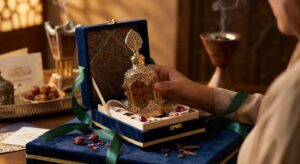
Fragrance is one of the most common and appreciated gifts across the Gulf, but gifting etiquette differs from personal buying in a few important ways.
When Arabic Perfume Makes an Ideal Gift
- Eid al-Fitr and Eid al-Adha – fragrance is a traditional gift during both Eid celebrations.
- Weddings – as a gift to the groom, or as part of gift baskets exchanged between families.
- UAE National Day and other national celebrations – gifting something rooted in regional heritage carries added meaning.
- Business and hospitality gestures – offering a well-regarded local fragrance to a business associate or houseguest is a common gesture in Gulf business culture.
Choosing a Gift-Appropriate Fragrance
- Favor universally appealing profiles over bold statement scents. This is why Aramis 900 Men’s works so well as a gift – its classic character doesn’t require the recipient to already love intense oud blends.
- Consider presentation, not just the fragrance itself. Ask in-store about gift packaging or box options.
- When in doubt, choose a mid-size bottle. A small entry-size bottle can read as an afterthought for occasions like weddings; a full liter can feel presumptuous as a first gift. A 100ML–250ML bottle tends to hit the right note.
- Avoid guessing on deeply personal or unusual blends unless you know the recipient’s taste well – save bold, idiosyncratic picks like Zumorod for someone who already loves intense oud fragrances.
- When gifting across generations, lean traditional. Older recipients often respond better to classical profiles like Attar Mikaj, while younger recipients may appreciate the more modern oriental character of Ameer Al Lail or Zumorod.
How to Choose the Right Arabic Perfume for You
Six good options don’t help much if you don’t know which one is right for your life. Here’s the framework we actually use when advising customers in-store.
Choose by Occasion
- Daily office wear: Ahl Ahmed Al Maghribi Oil or Sheikh Al Arab – fresh opening, soft close-to-skin base.
- Evenings and special occasions: Zumorod and Ameer Al Lail – built for lower lighting, closer conversations, and longer nights.
- Gifting: Aramis 900 Men’s – universally appealing without requiring a taste for intense oud.
- Religious occasions: Attar Mikaj – alcohol-free by nature, appropriate for mosque visits and prayer.
- Travel and long flights: Sheikh Al Arab or a small bottle of Ahl Ahmed Al Maghribi Oil – enclosed cabin air amplifies fragrance, so moderate intensity travels better.
- First dates or new social settings: A moderate, well-balanced fragrance leaves a positive impression without overwhelming someone unfamiliar with how intensely Arabic perfume oils can project.
- Formal business meetings: Even more than daily office wear, high-stakes meetings call for restraint – a light dab of Ahl Ahmed Al Maghribi Oil applied hours before the meeting, rather than immediately beforehand, lets the sharper opening notes settle first.
Choose by Climate and Skin Chemistry
This is the part almost no generic “best perfumes” article covers, and it matters enormously in Dubai specifically:
- Heat amplifies fragrance. A scent that feels moderate in an air-conditioned mall can feel much stronger outdoors. Apply a small amount and wait ten minutes outdoors before deciding it’s “too much.”
- Body chemistry changes oil-based scents more than sprays. The same bottle can smell noticeably different on two people. Always test on your own skin, not a paper strip.
- Layering matters in heat. In cooler months, one application of an oud-forward fragrance like Zumorod can last all day. In peak summer, a light afternoon reapplication keeps the scent consistent.
- Skin type plays a role too. Naturally oilier skin tends to hold and amplify fragrance oils longer than dry skin, which may fade a scent’s presence faster and require a slightly more generous initial application.
Choose by Budget
- Entry tier (roughly AED 35–60): Sheikh Al Arab and smaller sizes of Ameer Al Lail – great for testing a profile before committing further.
- Mid tier (roughly AED 100–260): Larger bottles of Ameer Al Lail, Ahl Ahmed Al Maghribi Oil, and Aramis 900 Men’s – where most men settle once they’ve found “their” scent.
- Premium tier (500ML–1L and beyond): For men who’ve committed to a signature scent, plus genuine agarwood and Dehn al Oud products, where raw material cost drives price significantly higher.
Practical tip: If unsure where to start, buy the smallest available size first. A 12–35ml bottle lasts months with normal use – there’s rarely a good reason to commit to a full liter before you’ve worn a fragrance for a few weeks.
On value versus price: The cheapest bottle on the shelf isn’t automatically the best value, and the most expensive isn’t automatically the most luxurious for your purposes. Value in this category is really a function of three things – how well the fragrance performs on your specific skin, how well it matches the occasions you actually attend, and how much of the bottle you’ll realistically use before your taste shifts. A modestly priced oil you wear every week for a year delivers more real value than a premium bottle that sits mostly unused in a drawer.
Visiting Rose Valley Perfumes in Dubai
Online research only gets you so far with fragrance – eventually, you need to smell it on your own skin. Here’s exactly where to find Rose Valley in Dubai, across both branches.
Main Branch – Murshid Bazar, Deira
- Address: Shop No. 34/A, Murshid Bazar, near Masjid Thani Bin Khaif, behind Deira Palace Hotel, Deira, Dubai, UAE.
- Hours: Open daily, 9:30 AM to 10:30 PM.
- Phone / WhatsApp: +971 4 235 3648 or +971 52 276 7436.
This is the flagship location, tucked into the dense perfume and gold trading district of Deira – a part of Dubai where fragrance shopping has been a local institution for generations.
Branch-02 – Gold Souq, Al Buteen
- Address: Opposite Gold Night Hotel, Al Utaiba Building, Shop No. 1, Gold Souq, Gate No. 2, Murshid Bazar, Al Buteen, Deira, Dubai, UAE.
- Phone / WhatsApp: +971 50 495 8514 or +971 55 133 2417.
Most visitors don’t realize Rose Valley operates a second location right near Dubai’s famous Gold Souq – useful if you’re already there shopping for jewelry and want to add a fragrance stop to the same trip.

Practical Tips for Visiting
- Best time to visit: Late morning on weekdays tends to be quieter than evenings, when the souq gets busy with both tourists and local shoppers.
- Getting there: Both branches sit within walking distance of Deira’s traditional souq area. If using the Metro, Palm Deira or Baniyas Square stations are the most practical drop-off points, followed by a short walk through the market streets.
- Testing etiquette: Ask staff to test a fragrance on your skin rather than a paper strip – oil-based attars behave differently depending on your own chemistry, and any experienced perfume shop expects this.
- Bring both budget and patience: Plan to spend at least 20–30 minutes if you’re serious about finding a signature scent rather than grabbing the first bottle that smells appealing.
- Ask about current promotions. Multi-size product lines and seasonal sets are sometimes bundled at a discount – it costs nothing to ask before you commit to a single bottle size.
- If traveling with fragrance, check carry-on liquid restrictions. Larger bottles (250ML and above) generally need to go in checked luggage; smaller sizes travel more easily in hand luggage.
Why Shop Rose Valley Over Other Dubai Souk Vendors
Deira has no shortage of perfume shops, so it’s fair to ask what actually sets Rose Valley apart:
- Natural, cruelty-free formulation. Rose Valley positions its entire range around natural ingredient sourcing and cruelty-free production – no animal testing, at any stage.
- Long-standing operation. Decades of trading in natural, authentic fragrances – sourcing relationships and formulation knowledge built up over years, not months.
- Trusted ingredient sourcing. Essential oils and aromatic raw materials sourced from established farms and suppliers internationally.
- Range depth. Beyond the men’s fragrance oils covered here, Rose Valley carries dedicated agarwood (oud), Dehn al Oud, bukhoor, and incense lines – so a customer who loves an oud-forward oil can explore raw agarwood or bukhoor from the same trusted source.
- Two accessible Deira locations. Both the Murshid Bazar main branch and the Gold Souq branch put customers within easy reach in either of Deira’s two major trading districts.
- In-person guidance over guesswork. Given how much skin chemistry affects oil-based fragrance, having staff on hand to guide testing – rather than buying sight-unseen from an anonymous online marketplace listing – meaningfully reduces the odds of an expensive mismatch.
- A range built for progression, not just a single purchase. Many customers start with an entry-level pick like Sheikh Al Arab, move up to a mid-tier bottle like Ameer Al Lail once they’ve found their preferred profile, and eventually explore premium Dehn al Oud or agarwood products – a natural path supported by having the full range under one roof.
None of this replaces testing a fragrance yourself – but it’s the difference between buying from an anonymous stall and buying from a house with an actual track record and a reputation to protect.
Frequently Asked Questions
What is the best Arabic perfume oil for men in Dubai?
There isn’t a single “best” oil for every man – it depends on the occasion. For everyday office wear, Ahl Ahmed Al Maghribi Oil is one of the most versatile picks. For evenings and special occasions, Zumorod Arabian Oud Oil and Ameer Al Lail are the stronger, bolder choices thanks to their oud, amber, and musk-heavy compositions.
Are Rose Valley fragrance oils alcohol-free?
Yes. Rose Valley’s attar-style fragrance oils, including its men’s range, are formulated without alcohol, following the traditional Arabic perfumery approach. This makes them suitable for use before prayer and for anyone who specifically wants an alcohol-free formulation.
How long do Arabic perfume oils last on skin?
Well-formulated Arabic perfume oils typically outlast standard alcohol-based colognes because of their higher concentration and oil-based carrier. Some of Rose Valley’s oud-forward blends, such as Zumorod, are designed to last up to 18 hours on skin, though actual longevity always varies with individual skin chemistry and climate.
What’s the difference between attar and regular perfume?
Attar is an oil-based, alcohol-free fragrance, usually more concentrated than standard perfume. Regular Western perfume (Eau de Parfum or Eau de Toilette) is alcohol-based, generally less concentrated, and designed to project strongly for a shorter period before fading, whereas attar develops more gradually and lasts significantly longer on skin.
Where is Rose Valley Perfumes located in Dubai?
Rose Valley operates two branches in Deira, Dubai. The Main Branch is at Shop No. 34/A, Murshid Bazar, near Masjid Thani Bin Khaif, behind Deira Palace Hotel. Branch-02 is located opposite Gold Night Hotel, Al Utaiba Building, Shop No. 1, Gold Souq, Gate No. 2, Murshid Bazar, Al Buteen.
What are Rose Valley’s opening hours?
The Main Branch is open daily from 9:30 AM to 10:30 PM. It’s advisable to call ahead – +971 4 235 3648 or +971 52 276 7436 – to confirm hours for public holidays or special occasions like Eid.
How much do Arabic perfume oils cost in Dubai?
Prices vary widely depending on size and ingredient quality. Entry-level bottles at Rose Valley typically start around AED 35, with mid-range options between AED 100–260, and premium sizes – including larger bottles and genuine agarwood-based products – reaching significantly higher based on the rarity of the raw materials used.
Can I get Arabic perfumes for men delivered outside Dubai?
Many Dubai-based perfume retailers, including Rose Valley, support delivery beyond their physical Deira locations. For current delivery coverage and options, it’s best to contact the store directly via WhatsApp or phone before placing an order, as availability can depend on the specific product and destination.
Choosing an Arabic perfume for men in Dubai ultimately comes down to matching the fragrance to your life – your climate, your schedule, and the moments you want to be remembered in. Whether that’s the boardroom-safe warmth of Ahl Ahmed Al Maghribi Oil or the unforgettable oud-and-amber depth of Zumorod, the only real way to know is to test it on your own skin. Visit Rose Valley Perfumes at either Deira location, or reach out via WhatsApp to ask about current stock and delivery – a scent this personal deserves more than a guess.